

How Long Do Owners Say Sony Headphones Usually Last?
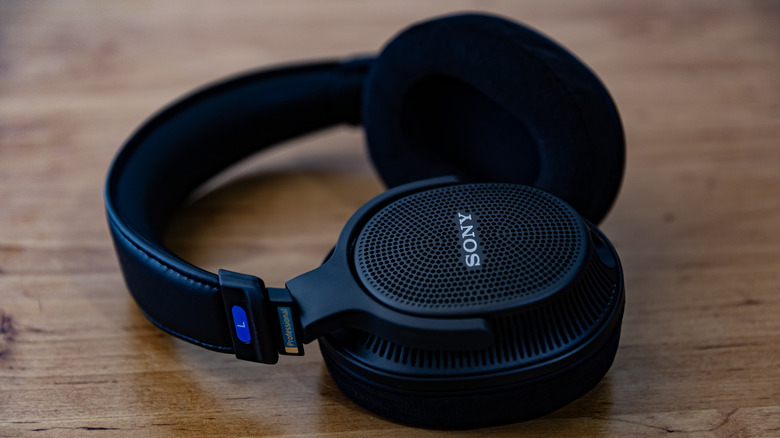
Sony is proof that the old adage of "jack of all trades, master of none" isn't always true. Along with having a cultural brainchild like the PlayStation in its rep sheet, the company is perhaps one of the best major headphone brands. In fact, Sony is so good that its XM6 model gives Apple AirPods Max 2 a run for their money. Cool, but how long do owners say Sony headphones last? Are they worth the big bucks?
It depends on the model: wired or wireless. According to users of the wireless models like the XM5, the expected lifespan is at least 2 years. Though some report that they managed to keep theirs alive for 4 years (one person squeezed about 5 years out of an XM4, reporting only battery problems), these instances are an exception and not the rule. Why? Most users mention hinge failure around the 2-year mark, along with other undisclosed hardware issues.
With wired models, like the legendary Sony MDR-7506 monitoring headphones loved by pro audio engineers and audiophiles, things are a bit different. This model may be priced at around $100, but it can technically last forever if you are okay with replacing the pads after they flake away. In fact, plenty of them are still being used daily after 20 years.
What do users say about wireless Sony headphones?
Sony's wireless headphones can be hit-or-miss in regard to their overall longevity. Taking Sony's flagship XM series as an example reveals that you're lucky if you get 2 years out of them without the hinge snapping. For instance, one commenter says that while the active noise cancelling (ANC) works perfectly on their XM5, the hinge did break after 2 years of use (which the user glued back together). Keep in mind that this is a $400 premium pair, which certainly isn't cheap.
The SoundGuys website even conducted a poll about XM5's failure rates, revealing that out of the 2000 participants, 47% said their headphones failed. As you'd expect, most saw the headband snapping, while 12% said that they experienced other problems. This doesn't paint a good picture; the only saving grace is that if the hinge survives, you can get a few extra years out of the XM5 because replacing the battery is fairly easy. Fortunately, the newer XM6 may be more robust, at least according to a user who also says that the new iteration may be the best pair of headphones they have ever used.
What about the budget wireless models? Not bad in terms of value, believe it or not. Take the $40 Sony WH-CH520. There is no high-tech stuff like ANC, but for $40, they're as robust as premium models, it seems. One person logged over 1000 hours on theirs, while another says they dropped the cheap set countless times and they lasted for over 2 years, so go figure.
Wired Sony headphones offer better longevity
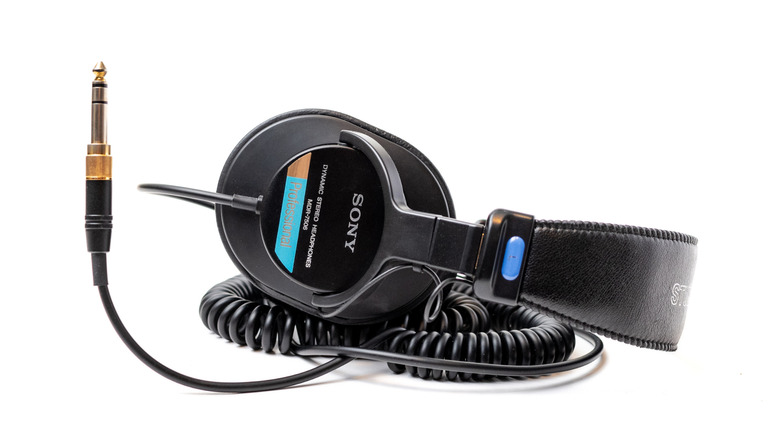
While owners say Sony wireless headphones are prone to breaking, wired models are a different beast altogether. For example, the legendary Sony MDR-7506 will serve you well for over 15 years, easily. Of course, the model is ancient and doesn't have any ANC or other bells and whistles, but that may not be a bad thing. In fact, the reason serious audiophiles still prefer wired headphones is that they're simple and don't have as many failure points as wireless models.
Granted, you'll eventually have to replace the foam earpads. It shouldn't be a problem, really, as that's a relatively cheap "consumable" you can purchase for around $24. Other than that, if your cable doesn't fail (although you can fix that too if you're skilled enough with a soldering iron), the headphones can practically last forever. It's a similar thing with other wired models in Sony's lineup. Look at it this way: Cash out $400 for something like Sony MDR-MV1, and you've got yourself a pair of "cans" for life. Yet, it all depends on your personal taste and how you plan on using them. Who knows? Maybe you can't "survive" without ANC, and you can't imagine yourself dealing with cables in a world where everyone is rocking Bluetooth; in that case, a wireless pair is going to be your best option.