

Does A Longer Cable Actually Make Your Phone Charge Slower?
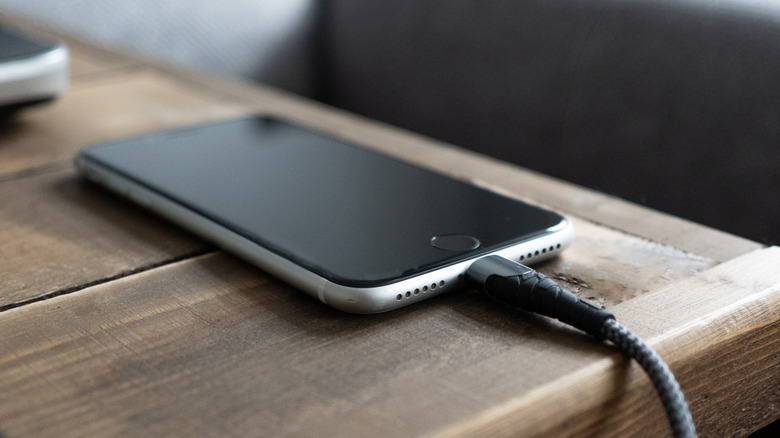
Your smartphone might have come with a standard-size, one-meter USB cable in the box. But its length feels inadequate when your electrical outlet is far from your table or bed. In such cases, buying a longer USB cable becomes necessary for convenience. Picking the correct cable is crucial, because longer, non-compliant cables have a reputation for slow charging speed. They cannot supply adequate voltage despite using a fast charger, and tend to malfunction faster. But does the increased cable length reduce your phone's charging speed?
From a pure physics standpoint, electrical resistance will increase alongside cable length, as the resistance negatively impacts the voltage. Your phone will undoubtedly charge slower with a longer USB cable than a shorter one. But the drop percentage matters: If you use a one-meter USB cable and switch to a certified, good-quality two-meter USB cable, there will be a negligible drop in charging speed that'd be difficult to notice. However, the cable length isn't the only deciding factor that affects your charging speed.
USB cable's gauge and certification matters
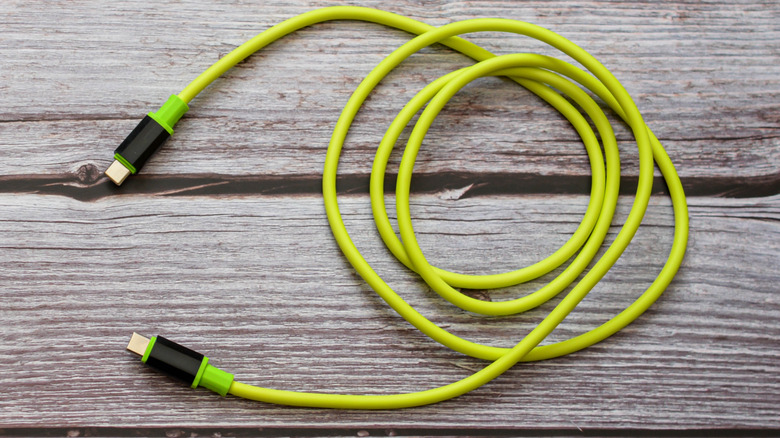
Looks can be deceiving, as a wire that appears extra thick with a robust cladding might not be able to transfer current at the same pace. USB cables use AWG (American Wire Gauge), a standard that indicates how thick the wires are inside the cable. Thick wires have less resistance and can minimize the overall voltage drop over longer lengths. Since USB cables can do charging and data transfer, there's an AWG rating for each one. For example, a 28/24 AWG USB cable rating means it uses 28-gauge wires (thin) for data transfer, and 24-gauge wires (thick) for charging.
A lower AWG number means the wires inside the cable are thicker. Typically, you'll find cheap USB cables with 28/28 AWG, but you must avoid this gauge for longer cables. A USB cable with 24 AWG will offer lower resistance than a 28 AWG cable, and will deliver consistent voltage over longer lengths (two meters or more). So, always pick the cable that clearly mentions the AWG on its body and manufacturing label.
If you cannot find AWG numbers on the web listing, product label, or box, you must check the cable certification. Usually, a certified cable will seek certification from USB-IF (an organization that manages and develops USB standards) and mention it on the box. USB-PD is also a common charging standard that reliable brands use to signify USB cables with fast charging support. These cables cost more because they use thick copper conductors, better connectors, and meet compliance standards.