

OpenAI Has Already Discontinued Its Controversial ChatGPT Atlas Browser
AI browsers have been popping up more and more over the past year or so, and ChatGPT's Atlas was only one of a few that started making waves back in 2025. Released in October for macOS, the browser put ChatGPT front and center when browsing the internet. However, after less than a year of being up and running, OpenAI is already discontinuing its Atlas browser. The announcement came as part of a series of tweets on X detailing big changes coming to ChatGPT with the release of GPT 5.6.
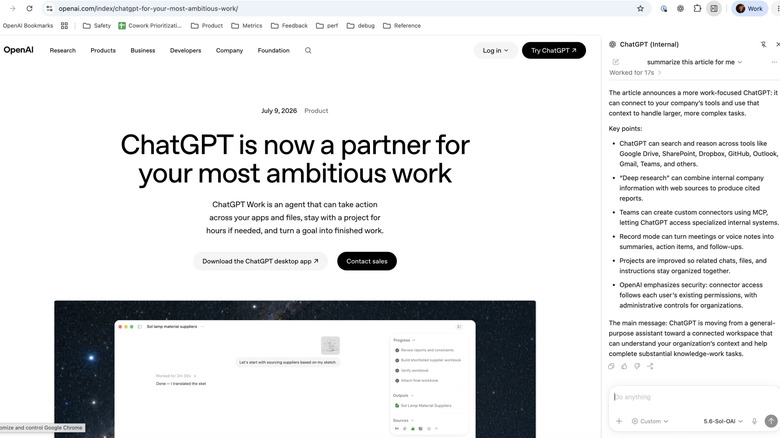
In the posts, OpenAI's James Sun notes how the browser team has been working to create some enhancements directly within the ChatGPT desktop app, as well as in the browser's new Work mode. In the final tweet of the announcement, Sun noted that the team is sunsetting Atlas, and that all of the things that the team has learned from Atlas have been incorporated into the changes that will debut alongside 5.6, including a new cloud browser for AI agents, as well as updates to the ChatGPT extension that will bring some of Atlas's best features to any browser that supports the extension (via Android Authority).
Atlas lives on, sort of
The death of ChatGPT Atlas is certainly surprising, though it is far from the first of its babies that OpenAI has killed off in the past year. Earlier this year, the company sunset its Sora AI video app after only a few short months of availability. In Atlas's case, though, the browser never actually made the leap beyond macOS, which means iOS, Windows, and Android users have never been able to take advantage of it. This already put the browser behind other AI-powered options like Comet and Chrome.
However, Atlas's features will live on, sort of, through new functionality built directly into the ChatGPT app and its browser extension. The app will include a full-powered in-app browser that supports password managers + autofill, full support for authentication keys, downloads, printing, multiple tabs, and a slew of other features important for browsing the internet. Additionally, ChatGPT and Codex will be available directly in Google Chrome with Side Chat. You'll need to install the ChatGPT extension to take full advantage of Side Chat and the features that it offers. The company also notes that support for other browsers is coming soon.
Atlas isn't dead in the water just yet, either. Sun says that OpenAI is targeting deprecation of the app for August 9, 2026. So you still have some time to continue using what Atlas offers if you've fallen in love with using it. Of course, there are tons of other AI browsers out there, including Perplexity's Comet, and Google Chrome and Microsoft Edge both have AI features built directly into them now.
Why OpenAI is ending Atlas

For the most part, it seems that many ChatGPT and Atlas fans are unhappy with the decision to kill off the browser, with one X user even responding to Sun's series of tweets noting that killing off Atlas "isn't a great look," especially since the company promised Android, iOS, and Windows versions of Atlas and then never even delivered them as a public beta. When pressed about the decision, Sun noted that the team decided to pull the plug on Atlas as it found that asking people to change their browser was a lot more difficult than just building the features they needed to work directly in the browser they already used.
Further, Sun says that the company realized that developing an entirely new browser wasn't playing to their strengths, which is their models and the AI agents they already have. It also didn't align with their mission to make AI useful to everyone. As such, the company decided to pivot, focusing its attention on bringing Atlas's best features to the browser that its users are already using.
However, Sun also mentioned that there would never be a 1:1 recreation of Atlas within the ChatGPT app. Instead, the team will focus on the functionality that its agents need to improve user's workflows and continue to iterate from there. ChatGPT already supports several apps, so seeing it get more widespread support across browsers might be a big win for users, too, especially now that Atlas is on its way out.