

H.R. Giger's Designs For Another Alien Franchise Deserve More Love From Sci-Fi Fans
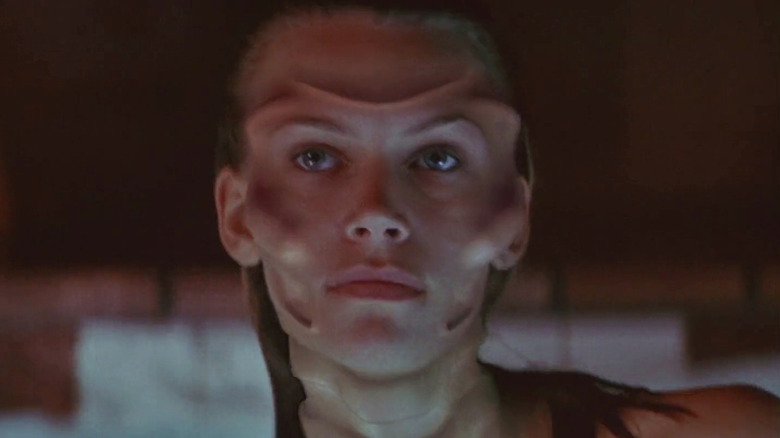
Undeniably, Hans Ruedi Giger, the late Swiss artist, was most famous for his design of the xenomorph in Ridley Scott's immortal sci-fi classic "Alien," for which he won an Academy Award for Best Visual Effects in 1980. But during his long career, Giger also contributed to other (though much less popular) films — in addition to having been approached to design the Batmobile for "Batman Forever" at one point – most notably the sci-fi-horror franchise known as "Species." The first entry in the film series, 1995's "Species," was no "Alien" by any means, but a rather straightforward B-movie with an A cast that combined body horror tropes with classic exploitation themes wrapped up in an over-eroticized sci-fi serving.
Or I should say that its standout star, the gorgeous Canadian bombshell Natasha Henstridge, played an alien-human hybrid created by a group of scientists who then went rogue, escaped, and seduced gullible men to reproduce and populate Earth with her extraterrestrial and lethal offspring. The creature codenamed Sil was another mesmerizing and beautiful abomination of Giger's uncanny imagination, full of intrigue, irresistible sex appeal, and gross tentacles, spikes, and whatnot hidden under the immaculate body of a 21-year-old actress destined to become a sex symbol of steamy '90s cinema.
The highly eroticized gore of Species is still a moderately entertaining feat
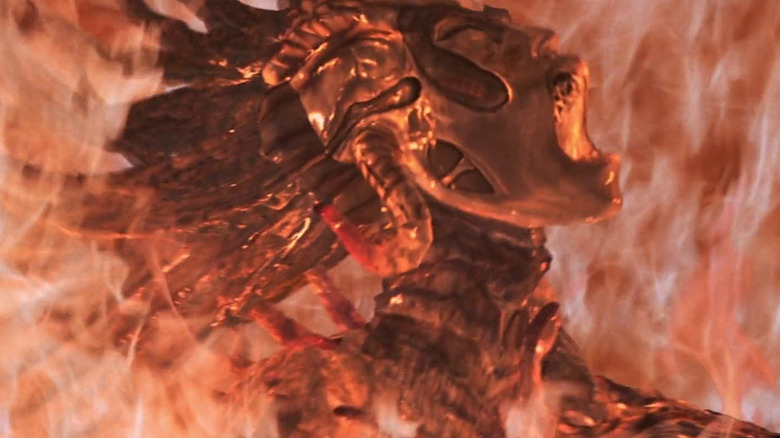
As someone who's been obsessed with movie monsters since he caught the first glimpse of that iconic xenomorph at around seven years old, I can confidently say that Giger's second alien was (and still is) pretty neat. With its humanoid shape mixed with desirable female features, you can see a bit of a resemblance in Sil to "Alien's" acid-blooded star, but Giger clearly went in a more eroticized direction here to serve the film's quintessential "sexy beast" vibe. I mean the creature has tentacles coming out of her breasts to rush into her unassuming victims' mouths, for Christ's sake.
That was the assignment "Species" had for Giger, and regardless of how good or bad you think the movie is, he delivered on that front. The real shame is that we don't get to see much of those gnarly practical effects (which are clearly the highlights of the first movie besides Henstridge's cold and preying performance) since cheap CGI has already been running rampant in mid-90s cinema.
And while you can overlook some of those cheesy visual effects in the first half of "Species" in favor of the gooey and slimy practical tricks, the second won't let you forget how atrocious and outdated early-days CGI could look in those times. That unflattering shoddiness (which didn't improve much in consequent sequels, either) kind of robs some of the quality of Giger's otherwise original, eerie, and peculiar work.
Species lasted for two features and two TV films with Giger's original design
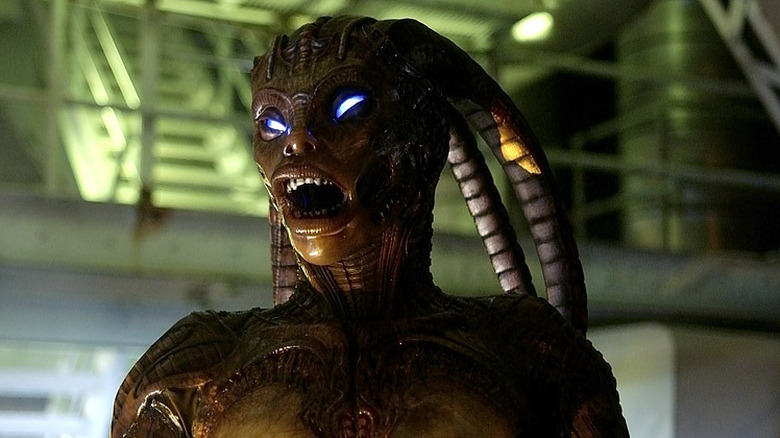
Although critics generally disliked it, "Species" managed to cash in on its unabashed steaminess (nobody could refuse taking a glance at Henstridge in her full glory) and slimy gore, grossing $113 million worldwide at the box office against its $35 million budget. That meant sequels were definitely in the cards, and lo and behold, three years later, "Species II" arrived in cinemas with many of its original actors (most importantly: Henstridge) and monsters reprising their roles.
Yet the second time wasn't the charm in the way the first had been, and the follow-up quickly died a miserable death both critically and commercially (making only $19 million worldwide against its $25 million production cost). That said, MGM simply couldn't leave the franchise alone and churned out two more TV movies, taking place in the same universe with a different set of actors and characters while trying to rehash the very ideas the first and second entries played to death.
And although H.R. Giger's initial creature design has been slightly altered (or extended) in each follow-up, the core structure and features of his aliens have largely been sustained over the years — even though he's only been officially credited as the original designer for the 1998 sequel (besides the first film).