

Studies Show That Phone Bans Might Not Improve Grades, But They Can Still Be Effective
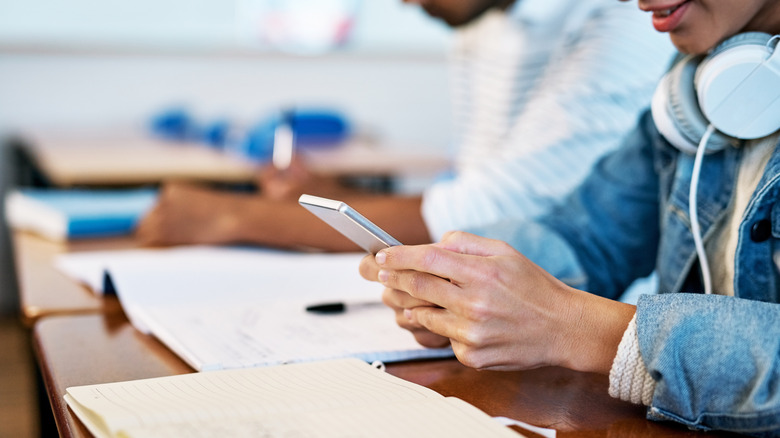
It's hard to imagine going anywhere and not seeing someone on their smartphone, but that is exactly what many schools are trying to accomplish. 35 states have banned smartphones in school for a number of reasons. With reports suggesting reading and math scores of students across the United States are lower than they were 10 years ago, many school leaders blame phone usage in schools.
The thought is that phones distract students, lower attention spans, and negatively impact mental health. A decade ago, smartphones were far less prevalent in classrooms, so it makes sense to wonder if their usage contributes to drops in grades. However, studies on schools where phone ban policies have been implemented have not seen significant positive impacts on academic achievement. That doesn't mean administrators are rushing to undo bans, though. Beyond a desire to improve student learning, phone bans aim to improve school climate and reduce in-classroom distractions, inappropriate phone use, and cyberbullying.
The majority of public schools at least have a policy to prevent phone use during any class, but some schools have implemented what is known as a "bell-to-bell" ban, which prohibits phone use from the morning bell to the dismissal bell. High schools are the primary target for these bans, but middle schools and elementary schools are also trying them out as well, and these K–8 grade levels often have the more restrictive bell-to-bell policy. Though grades may not be up as a result, there are other notable impacts. Plus, with phone bans being a relatively recent development, it is unclear what the long-term effects will be.
The reality of phone bans

When phone bans are introduced at a school, according to a report by the National Bureau of Economic Research, in the first year, disciplinary rates often spike, and students report lower subjective well-being. In the years following a ban, though, well-being improves to rates higher than seen before the phone ban, and behavioral issues decrease over time to pre-ban levels. The report also shows that cell phone use throughout the school decreases, so students aren't just sneaking in screen time.
The same report finds no significant association between phone bans and improved academic performance. Perhaps this is because students become distracted in other ways, including by using laptops that are allowed. It could also be related to continued phone use outside of school, such as sleep dramatically impacted by smartphone use. Test scores may not show a clear, quantifiable improvement, but the increased reported well-being and support for restricting phone use suggests that prohibiting phones in classrooms might make a real difference in student experience.
Ultimately, most of the studies have examined the effects of phone bans over the course of no more than three years, so the longer-term effects are yet to be found. While the lack of clear academic improvement may be disappointing, it's not cause for schools to roll back their bans just yet. At the very least, it will help teachers, many of whom find cell phone distraction a major problem (just think about how distracting your phone notifications really are), better control their classrooms.