

AirTag Vs. Third-Party Find My Bluetooth Tracker: What's The Difference?
We may receive a commission on purchases made from links.
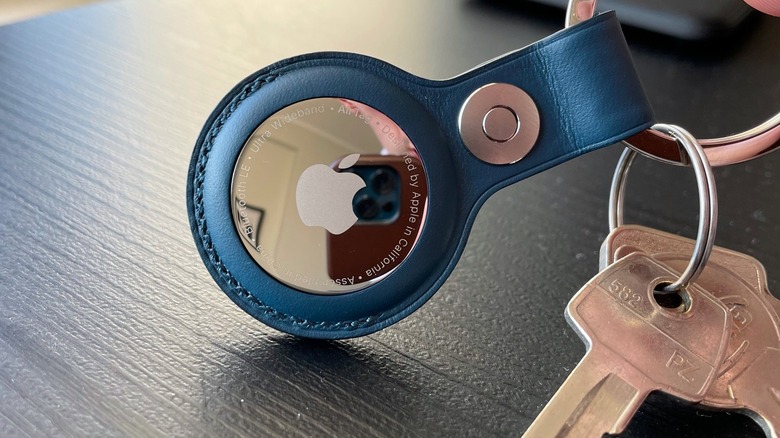
The main difference between Apple's AirTag and third-party Find My Bluetooth trackers is Apple's Ultra Wideband (UWB) chip, which enables Precision Finding to help iPhones find the location of their item when it's from 15 to 60 meters (49.2 to 196.8 feet) away when using AirTag 2. In other words, you get more precise tracking than with a third-party Bluetooth tracker. Additionally, Apple lets any iPhone (and Apple device) in the world find and report the position of the AirTag back to its user anonymously, a service that not all third-party Bluetooth trackers provide.
While Apple might have the advantage in how quickly you can find your belongings, an AirTag still has limitations. Proper compatibility with Android (even though Android users can tell if an unwanted AirTag is stalking them) is a big issue. If you want to use an AirTag, you're also using an Apple device to find it; no exceptions. Plus, there's only one form — a round, coin-like product that requires another accessory to attach it to something else, such as a loop or keychain. The best tracker option ultimately depends on your requirements. Factors like traceability, battery life, price, and form all play big roles in that decision.
Getting to know Apple's AirTag
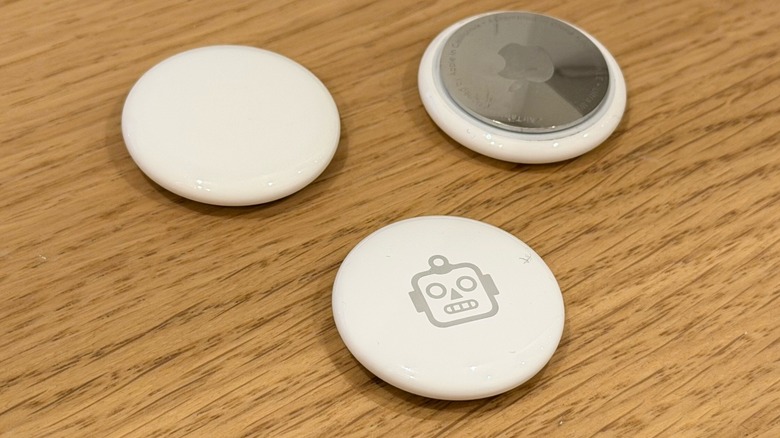
Apple first released the AirTag in 2021. This device featured IP67, which made it resistant to water and dust; built-in speakers to help users locate the misplaced item; a removable cover for customers to replace the battery once it runs out; and a "magical" AirPods-like pairing experience. You just need to get it close to the iPhone, assign the AirTag to the item you want to locate, and it gets synced with all your Apple devices.
Since its release, Apple has added several software tweaks to help people protect against stalkers, and it even worked with Google to release a universal standard to ensure that iPhone users can track Android trackers, and vice versa. In early 2026, after much speculation, Apple released the second-generation AirTag with the same form factor and battery life, but with up to 50% louder speakers and the second-generation UWB chip. This second-generation UWB chip gives the Precision Find feature a maximum of 1.5 times farther range when paired with a compatible device.
The new AirTag still requires an accessory so it can be added to a keychain, luggage, and so on. With that, users buying an official accessory need to pay an average of $35 to properly secure the device.
Three third-party Bluetooth trackers that can compete with the AirTag
If you're seeking a different tracker form, the Life360 Tile Slim could be perfect to put on your wallet, purse, or more. It looks like a credit card, features IP68 water and dust resistance, has a louder speaker than AirTag, a 350-foot maximum Bluetooth range, and a non-replaceable battery that can last for up to three years. It costs $29.99 on Amazon, and it's available for both Android and iPhone users.
Ugreen, for example, offers the FineTrack Air, which has a square shape, but with a built-in loop that you can attach to your keyring. It features Find My compatibility, has Bluetooth tracking, and other AirTag-like features, such as letting you know if you left an item behind. You can get a four-pack for around $20, making it very accessible, and it's exclusive to Apple devices.
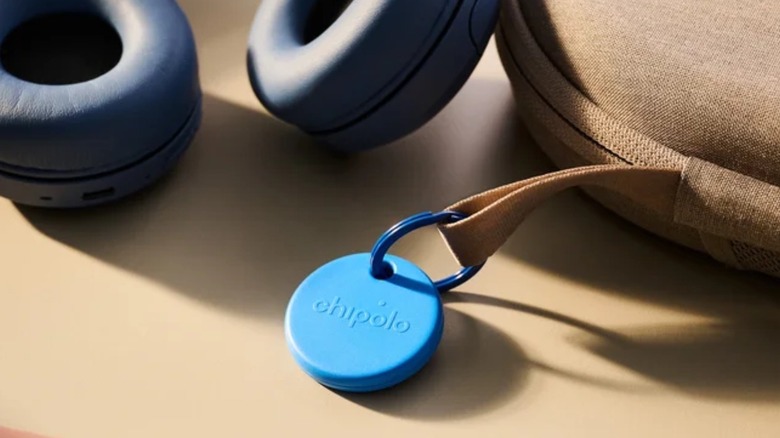
Another popular third-party brand is Chipolo. Its latest POP device lets you ring your phone with the press of a button, even if it's on silent. It features up to 300ft Bluetooth range and a replaceable one-year battery. It comes in six colors, has a built-in loop, allows you to enroll in either the iOS or Android network, and costs $29.
The differences between these trackers and the Apple AirTag are that a third-party accessory can give customers different price ranges, more shapes and colors, Android compatibility, and the ability to be used without extra accessories. However, if you're prioritizing locating your item as fast as possible, then the AirTag easily wins.