

How Long Do Users Say Liquid Cooling Systems Last?
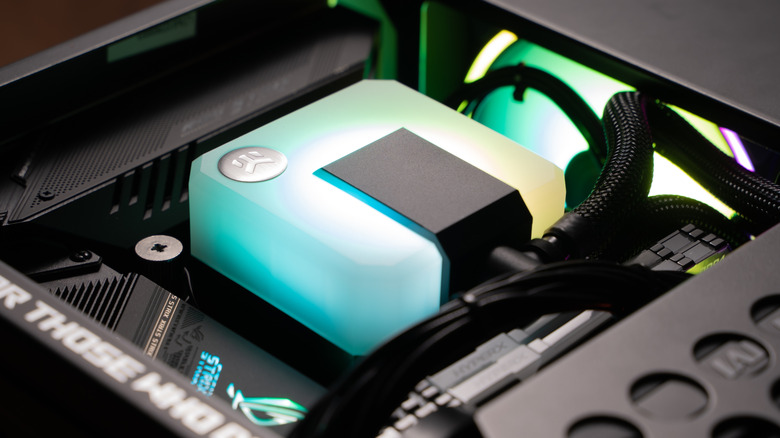
Keeping a gaming PC cool is a never-ending battle, and many gamers go to great lengths to achieve it. While some opt for the more niche liquid cooling methods, like using mineral oil to cool internal PC components, others are sticking to the tried-and-true all-in-one (AIO) coolers. Granted, this cooling method remains a gold standard among gamers in terms of temperature control, but there are also some valid disadvantages of liquid cooling, including the overall price and, sadly, the longevity of the system. But how big an issue is it, really? And how long do users say liquid cooling systems last?
According to gamers, the situation is not as bad as some would lead you to believe. Yes, most users agree that fans last a lot longer than AIO liquid cooling solutions, even if fan bearings can degrade over time. But generally, they agree that most AIOs last longer than their warranty period, so it's logical to assume that engineers have tested the products and found they're unlikely to fail in that time frame in order to minimize warranty payouts. For instance, Corsair offers between five and six years of warranty for its liquid coolers, depending on the specific model, so the brand's AIOs should last at least that long.
And indeed, users' personal experiences corroborate this idea with eerie accuracy. The majority of owners on Reddit say that five years is a solid expectation for an AIO's lifespan, but it can go as high as a decade, with some luck. Of course, results vary: One Redditor complained about the pump in their AIO dying after just two years, while another person was still using a 12-year-old Corsair system.
What fails on liquid cooling systems?
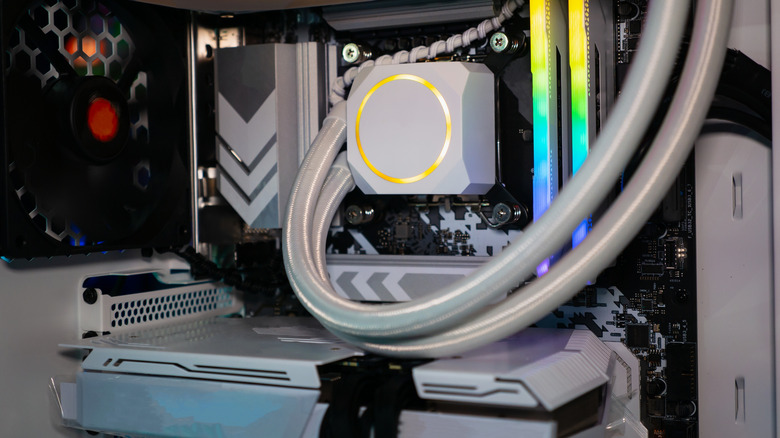
Most users agree that AIOs don't suddenly malfunction. Instead, it's much more common for the water to start evaporating or for the pump to start struggling over time. That makes the entire rig less efficient, and since the water isn't easy to refill (at least for complete kits and closed loops), it's as good as dead. This seems to be common knowledge among PC builders, and owners explain that this degradation takes time, so you can expect the system to work for anywhere between five and ten years.
Some owners also warn of leaks, claiming the tubes themselves can dry and crack, and slip from their position. You may call this a reasonable fear, but most owners agree that leaks are a fairly uncommon reason for AIO failure. A Reddit user HeavyDT notes that modern liquid cooling systems are a lot better than they were in the past, saying not all pumps will leak. They also added that tubes are unlikely to crack, given that you don't handle them each day.
Can you extend the life of your liquid cooling system?
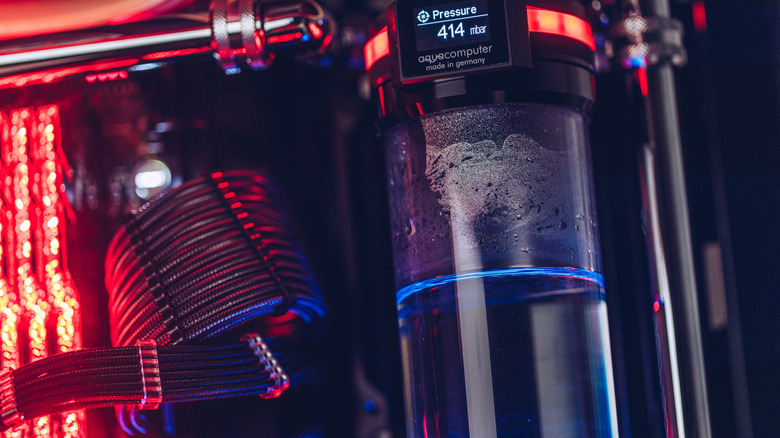
Ignoring high CPU and GPU temperatures is one of the worst gaming PC mistakes you could make, even if you already have a solid liquid cooler on board. Owners maintain that the clearest sign of the cooling system gearing up to join the choir invisible is if you notice your CPU temps are suddenly going berserk. With pumps, one person shared that theirs made a scratching sound before biting the dust. Either way, community discourse is typically sparse when it comes to extending the lifespan of cooling systems.
One important thing to keep in mind to extend the lifespan of your AIO coolers is to always install the radiator above the pump. A few knowledgeable users also shared a few nifty tips: One recommended shutting down the PC at night to give the system a breather, while another suggested that sticking to a static pump speed is the best setting since changing speeds will increase the wear and tear of physical components. And indeed, experts agree that you should never run your pump at 100%. Finally, some owners suggestoccasionally dusting out the radiator fins. But other than that, your hands are pretty much tied with a closed-loop system.
Fortunately, getting five years (like most liquid cooler owners say) isn't a bad deal, all things considered. So, even if your AIO doesn't truck on for a decade, you technically got your money's worth. The lack of repairability is unfortunately the biggest limitation of pre-built AIO coolers, though. So, if you're looking to build something repairable you can hold on to for much longer, building a custom loop may be worth it — that is, if you've got the patience and the money.