

How Does Google Maps Predict Traffic?
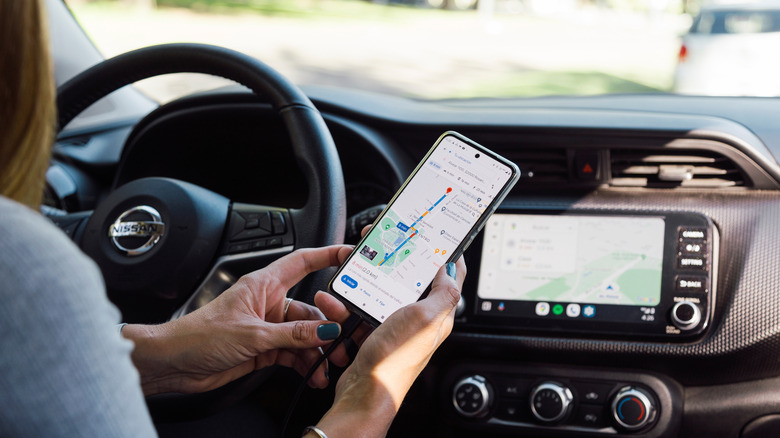
Google Maps helps users navigate in part by providing information about traffic congestion. By now, plenty of drivers frequently open the app to check potential routes, avoiding stretches that appear yellow or red on Google Maps whenever possible. That information, gathered by aggregating data from users currently on the road who are using the app, lets users know what current traffic conditions look like.
However, Google also selects routes by predicting future traffic patterns. Essentially, a few years before AI became something akin to a marketing term, Google Maps was already leveraging AI tech to forecast traffica sophisticated, using a process that combines current conditions with historical data.
Most days, traffic follows predictable patterns. Think about a popular commuting route. There are likely times during the day when it's consistently busier than others. But outliers can disrupt these typical patterns. If there's an accident, drivers might use other routes, resulting in traffic patterns that don't conform to expectations. That's why Google Maps can't rely on historical data alone to make traffic predictions. The app uses AI to analyze both current information and overall trends in trying to ensure accuracy.
Waze predicts ETAs using a method similar to what Google Maps uses

Of course, Google Maps isn't the only navigation app available to motorists. Waze is another example of an app analyzing both historical and real-time data to provide users with ETAs. When predicting how long it will take a user to reach a particular destination, Waze also accounts for details like the type of vehicle a user is driving to optimize its reports.
For example, a traffic jam will usually keep most car drivers stuck, all traveling at essentially the same speed as each other. However, maybe a user is driving a motorcycle. In this case, they might be able to weave in and out of traffic in a way that lets them achieve a speed other motorists on the road can't in the current traffic conditions. Waze accounts for this when synthesizing data.
Whichever navigation app you prefer, learning about how it works can help you maximize its usefulness. If you're a Google Maps devotee, you may want to familiarize yourself with "hidden" Google Maps features you possibly aren't aware of. Be aware, Google Maps often gets new features, so even if you think you know it well, there could be updates you haven't explored yet. But even if you only use the most basic features, as the technology improves, its accuracy is also likely to improve.