

Who Owns DJI?
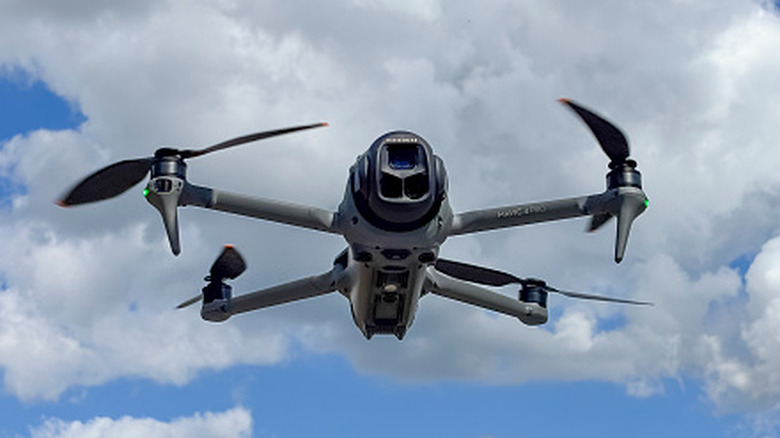
DJI has played a major role in making drones accessible for everyday consumers, its first big hit being the camera-equipped Phantom quadcopter in 2013 that let you capture dramatic videos and stills from the sky. Since then, DJI has transformed drone flying from a niche hobby into a mainstream consumer category, with easier-to-fly, more stable, and more advanced models bringing aerial photography to the masses. It's also branched into other devices, including 360-degree cameras like the Osmo 360, action cameras like the Osmo Action 6, and handheld gimbals. DJI's meteoric rise was driven by Frank Wang, who co-founded the company with two others in 2006. While his two partners left the company in its early days, Wang remains as the company's CEO and continues to be a central figure in its leadership. However, as a privately held company rather than a publicly traded entity, DJI does not disclose its full ownership structure.
While Wang is widely regarded as the company's dominant figure and retains significant influence over its direction, outside investors are known to have played a role in the company's growth. Among them are venture capital firms such as Sequoia Capital China and Accel Partners, which invested in the company during its rapid expansion in the 2010s as DJI scaled its consumer drone business globally. As a privately held company, DJI appears to have maintained a leadership structure centered around Wang, while at the same time benefiting from outside investment that helped to support its expansion.
How it all started
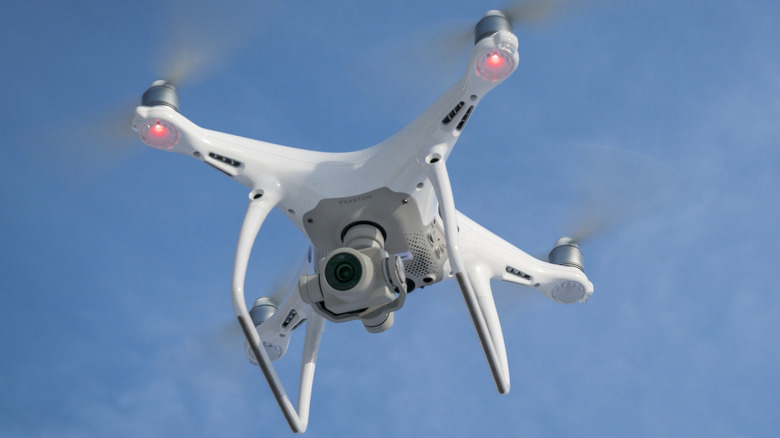
The name DJI comes from "Da-Jiang Innovations," which roughly translates to "Great Frontier Innovations," apparently reflecting the company's goal to succeed in consumer technology. Today, it sticks with just "DJI" for its branding; its official corporate name, however, is SZ DJI Technology Co., Ltd.
Frank Wang, who was born in mainland China, founded DJI while studying at Hong Kong University of Science and Technology. Intent on building a remote-controlled toy aircraft that was easy to fly, Wang rented a small workspace just over the border in Shenzhen, a city that was already emerging as China's electronics capital and which would soon become DJI's global headquarters.
The Phantom's success among recreational flyers established DJI as the leader in consumer drones and paved the way for a new generation of smaller, smarter quadcopters. They included the compact DJI Mavic Pro in 2016, which brought many of the Phantom's capabilities into a more compact, foldable design. Increasingly advanced and portable models followed, including the Mini line featuring the super-small and light Mini 4 Pro. The company continues to thrive but is facing challenges from geopolitical tensions in the U.S. over concerns around data security and its status as a Chinese tech company. DJI denies allegations of improper data access or state influence, but some U.S. government entities have restricted drone use nonetheless, particularly for public-safety operations, while the FCC is moving to ban the major drone brand from the U.S.