

Why Do Some iPads Still Use Touch ID Instead Of Face ID?
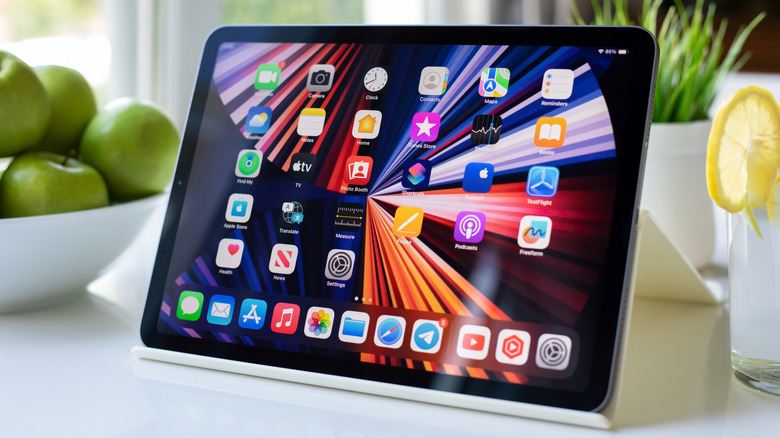
The Apple iPad can be a great middle ground for those wanting something between a smartphone and a laptop. Looking at something like the M4 iPad Air, its 11- or 13-inch display options can be great for those wanting a super portable machine, and Touch ID ensures your data stays protected. Setting up Touch ID will likely be one of the first things you do when you set up your iPad (and we've got some other tips for setup as well), but users should know why it's used over Face ID on certain devices.
Apple's Touch ID relies on your fingerprint to unlock your device or certain features in apps like Apple Pay, whereas Face ID relies on facial scanning. Useful as Face ID can be, it's unfortunately only available on the iPad Pro. Other iPad models still rely on Touch ID, and Apple may be doing this to further separate the iPad Pro from other devices in the lineup. There's also the issue that Face ID requires certain hardware other iPads don't have.
Those with an iPad shouldn't feel too bad, as many Mac users are also wondering if Apple will ever replace a Mac's Touch ID with Face ID. Since virtually every iPhone since the iPhone X is capable of being unlocked by a quick scan of a user's face, those without a Pro model iPad may feel like they're being left out. While getting Face ID involves paying a premium, Apple at least does its best to justify the higher cost.
Why do iPads still use Touch ID?
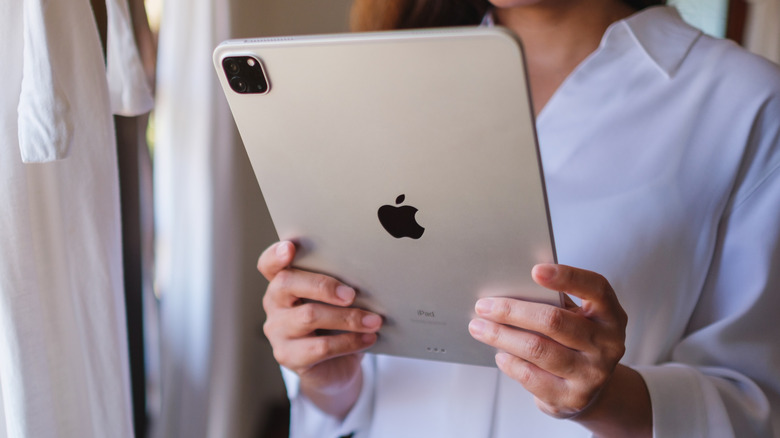
The reason is primarily hardware limitations and product fragmentation. Introduced in September 2017, Face ID is Apple's way of using biometric data to keep certain Apple products secure. However, many iPad owners still need to rely on Touch ID due to Face ID only being available in the iPad Pro lineup. One reason for this is because Face ID utilizes Apple's TrueDepth camera, which scans your face using invisible dots to measure your face.
Right now, only these models iPad Pro models support Face ID:
-
M4 and M5 iPad Pro 13-inch and 11-inch
-
iPad Pro 12.9-inch, third through sixth generations
-
The first four generations of the iPad Pro 11-inch
These models have the hardware to support the feature, and there may be a reason for this as well. For example, 9to5Mac claims that leaving Face ID to more premium models helps differentiate them from devices like the iPad Air or the baseline iPad. Prior to the iPad getting OLED, the only major differences between an iPad Air and the iPad Pro was a 120Hz display, a faster processor, and the aforementioned Face ID — despite a $200 price difference. However, Apple may eventually introduce Face ID to more iPad models, as OLED and things like a Magic Keyboard can help justify the price of the iPad Pro more. Even though there's still plenty of older iPads worth buying, users should likely expect to unlock them with a finger rather than their face.