

After Blue Origin's Huge Explosion, Will It Be Able To Launch To The Moon This Year?
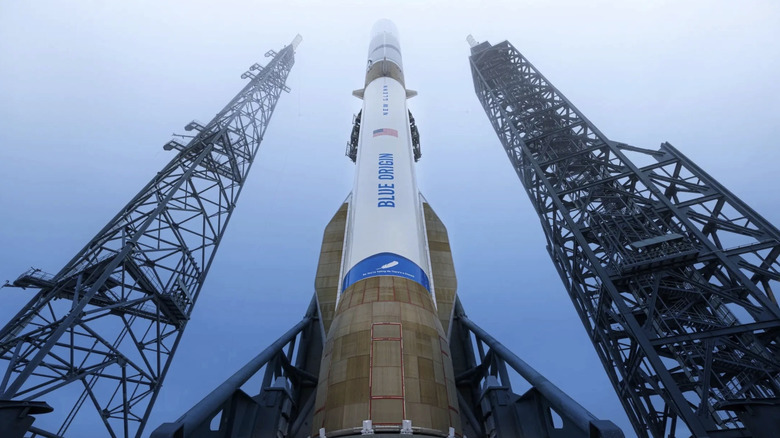
Blue Origin suffered a major setback to its spaceflight plans in May 2026 when a huge explosion wrecked its next-generation New Glenn rocket during a so-called "hot-fire test" at Cape Canaveral in Florida. The test involved firing New Glenn's engines while the vehicle stayed secured to the launch pad, but an anomaly in the rocket's first stage caused a sudden and spectacular fireball. No one was hurt in the incident, and while some pieces of ground equipment survived, much of it was destroyed. The explosion means that Blue Origin, led by Amazon founder Jeff Bezos, is unlikely to embark on its first lunar mission later in 2026, as originally hoped. But a subsequent statement, released by Blue Origin CEO Dave Limp, said that although it's still investigating the cause of the incident, the mission team is nevertheless aiming to return to flight "this year."
While Limp declined to elaborate on the nature of the mission, the absence of any reference to the moon suggests Blue Origin's next New Glenn flight could instead focus on low-Earth orbit, potentially carrying internet satellites for Amazon Leo, formerly known as Project Kuiper. A relatively low-risk flight like this would give the company a chance to further prove New Glenn before proceeding with a high-value lunar payload.
While a lunar mission before the end of the year can't be ruled out, it seems unlikely. New Glenn is still a relatively unproven rocket, having flown only three times, and with Blue Origin still investigating the anomaly, identifying and fixing any underlying issues could take considerable time. Limp didn't say when the investigation might be completed, but said that Blue Origin plans to return New Glenn to flight in the coming months by adjusting its launch operations.
Returning New Glenn to flight
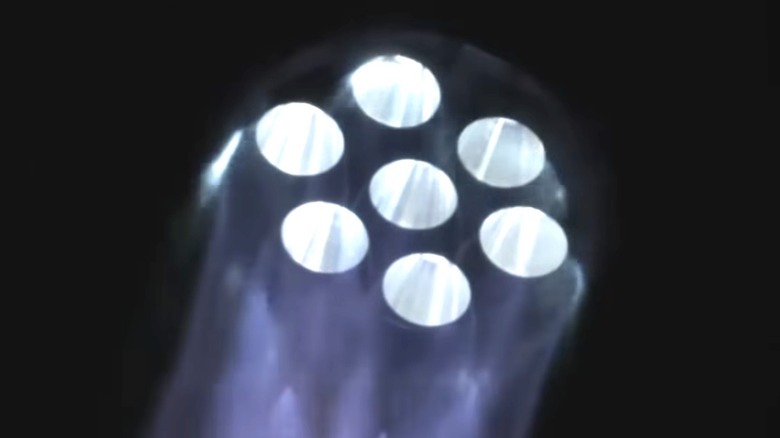
After more than two decades of investment in its spaceflight ambitions, and with New Glenn its first and only orbital-class rocket to date, Blue Origin is intent on establishing itself as a serious rival to American spaceflight behemoth SpaceX. This makes a rapid return to flight all the more crucial. But how does the company plan to do it?
According to Limp, the massive fireball that erupted on the Cape Canaveral launch pad earlier this year destroyed not only the rocket, but also the lightning tower, the transporter-erector, and the hydraulic cylinders that support the erector system. Fortunately, other facilities, such as the tank farm for storing propellant and support fluids, the integration facility (IF) where the rocket is assembled and integrated, the vehicle access tower, and the water tower, escaped major damage. Even better, inside the IF was another New Glenn rocket, including the first-stage Never Tell Me The Odds, which has flown twice to date.
Limp said the rocket should be able to launch again this year because engineers have worked out a way to avoid a time-consuming rebuild of the damaged launch infrastructure. According to the Blue Origin CEO, the company plans to adapt its launch operations around existing facilities. The revised launch strategy could allow Blue Origin to return to flight sooner, but it should be noted that it ultimately depends on whether engineers can identify the cause of May's explosion and fix it in the coming months. Blue Origin's ability to get New Glenn flying again will give it a chance to become a genuine challenger to SpaceX, the Elon Musk-led company that's transformed the modern launch industry.
The 21st-century space race
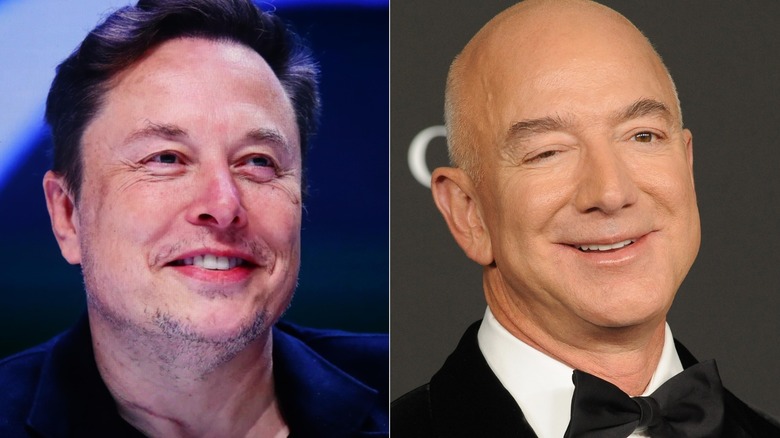
When news broke of New Glenn's catastrophic explosion, SpaceX CEO Elon Musk (above left) was quick to respond on X with the message: "Most unfortunate. Rockets are hard." Musk knows all about it. During its early development, SpaceX's workhorse Falcon 9 suffered a string of launch failures and failed landing attempts as engineers worked to perfect its reusable rocket technology. More recently, its Starship vehicle — the most powerful rocket ever to fly — has also experienced a number of setbacks during its ongoing test flights.
Musk's comment was notable when you consider the long-running rivalry between the SpaceX chief and Jeff Bezos (above right), whose companies are among a number competing for influence in the next era of spaceflight. SpaceX is currently some way ahead, with its space-based Starlink internet initiative already operating at scale, and Falcon 9 having transformed the launch industry thanks to its cost-saving reusable boosters and overall reliability. Meanwhile, Blue Origin is still trying to build trust in its New Glenn rocket, and there really is no guarantee that it can resolve the latest setback and get back on track before the end of the year. The prize, though, is a multi-billion-dollar market that includes NASA lunar contracts and satellite networks, as well as the delivery of space infrastructure to the moon, Mars, and possibly beyond.