

What Makes Nvidia Founders Edition Graphics Cards Different?
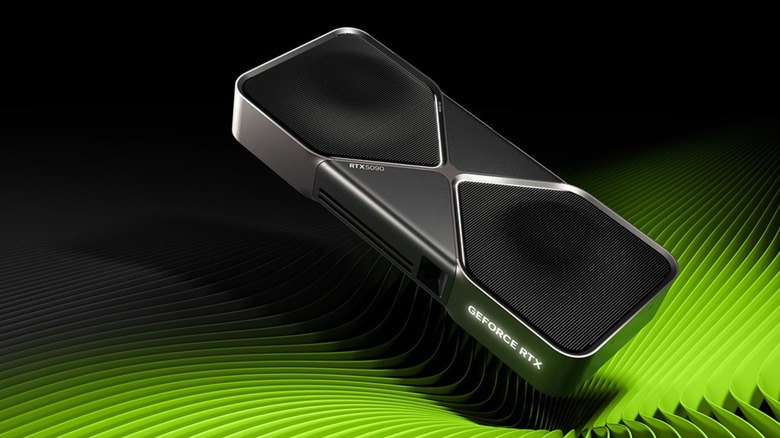
Shopping for graphics cards isn't easy. Granted, Nvidia GPUs come with great features that help it dominate the industry over its main rival AMD, so picking a card often comes down to figuring out which ones are compatible with your components and deciding whether to spend money on a flagship GPU or buy a cheaper model. However, this decision is complicated by the confusing nature of Founders Edition cards, since it isn't always clear how they differ from regular GPUs. In truth, this logic has things backwards.
Nvidia Founders Edition GPUs aren't called "Founders Edition" because they're limited edition, but because they're the first ones to leave manufacturing plants. These GPUs are, for all intents and purposes, the stock models that subsequent versions are based on. Whenever companies such as Asus and MSI develop GPUs, they take the blueprints Nvidia provides, manufacture cards that follow the blueprint's standards and specifications, and add a few new features. It's sort of like modding a PlayStation 4 to run Linux, except you're getting paid to do that instead of modding your console in your spare time as a hobby.
Let's look at Nvidia's RTX 5090. It's the latest GPU everyone wants to power their gaming rigs. This GPU sports 21,760 CUDA Cores (the processing units that make rendering 3D graphics possible, or at least more efficient), two cooling fans, and a basic clock speed (the number of processing cycles it can carry out per second) of 2.01 GHz. Comparatively, Asus' TUF RTX 5090 has the same number of cores, but has three fans and a clock speed starting at 2.41 GHz. Most people would consider that an upgrade.
Is there any point in purchasing a Founders Edition?
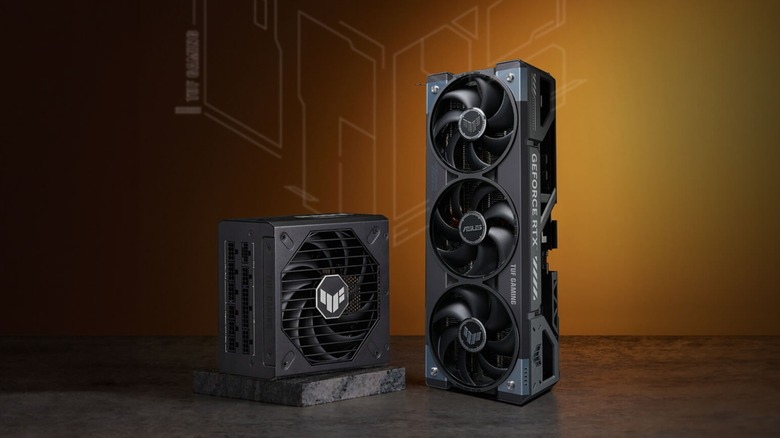
Since Nvidia Founders Editions are the vanilla models, they don't include as many bells and whistles. In fact, third-party manufacturers often release several variants of each graphics card, each with different prices and capabilities, but this increased number of options has several drawbacks built into its design and approach.
In order to fit all the upgrades into their cards, manufacturers frequently need to make them larger, thus they take up more space than Founders Edition versions. Look no further than the RTX 5090. The standard Founders Edition is 11.96 x 5.39 inches and only takes up two GPU slots. Meanwhile, Asus' TUF RTX 5090 is a far larger 13.7 x 5.7 inches and requires 3.6 slots. Not only does the RTX 5090 Founders Edition free up more room for other components, but certain PC cases and motherboards can't accommodate non-Founders Edition RTX 5090 cards.
Price is another factor. Yes, the cost of GPUs is skyrocketing, but since Founders Editions are the base models, they're also the cheapest. When the GeForce RTX 5090 hit the market, Nvidia sold the card for $1,999. Meanwhile, the TUF RTX 5090 came in several editions that ranged from $2,299.99 to $3,099.99. Granted, you currently can't buy an RTX 5090 Founders Edition without paying exorbitant aftermarket costs, but that's now. If you plan on buying a GPU, you generally end up saving money by adopting early and purchasing a Founders Edition at launch. Plus, waiting for GPU sales depreciates your other components.