

Some Android Phones Can No Longer Access Google Play — Here's Why
How long can you last with your smartphone? It's never been quite that easy, but if you've managed to outlast your carrier's payment plan, your manufacturer's last security patch, and all the chances you've had to destroy or lose the darn thing, you've lasted much longer than most of your friends and family: a recent survey found people are averaging two and a half years between smartphone upgrades. In 2016, the same survey logged an average of 22 months.
After years of lagging behind Apple with its long-term support for iPhones, Android manufacturers have stepped up to the plate. Google and Samsung offer their Pixel and Galaxy customers seven years of OS and security updates, while a handful of other brands offer comparable coverage for their flagship devices. That said, while old phones might slow down with use, in theory, they never truly become unusable if all the parts are still working.
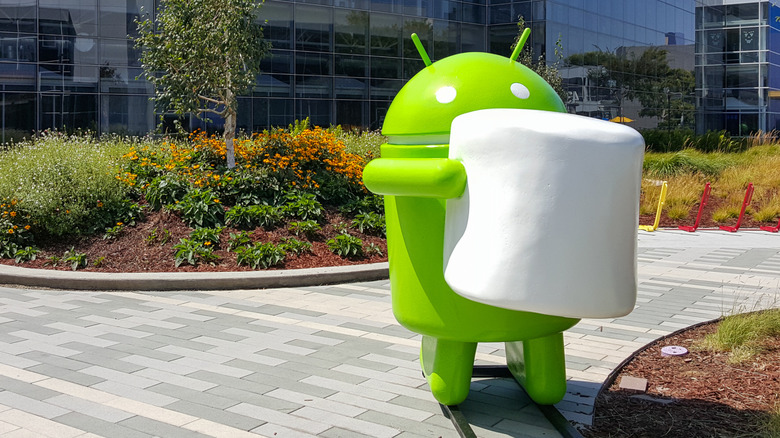
It does get more difficult living with an old Android phone, though, and Google holds the reins to a crucial aspect: easy access to applications. The company quietly released an update to its Play Store that blocked devices running Android 6 Marshmallow from accessing the store, increasing the minimum supported version to Android 7 Nougat. As Android Authority notes, the move ended nearly 11 years of support for that version, the longest span to date.
How long can an Android phone run the Google Play Store and its apps?
The Google Play Store has established an unspoken, but recognizable policy of supporting specific Android versions for about a decade from their launch. When Google deprecated Play Store support for Android 5 Lollipop devices in July 2024, that version of the operating system had already been out for more than 9 years. As of December 2025, Google reported that devices running version 6 or earlier accounted for 0.4% of the Android install base accessing Play Store servers. 0.8% of them run Android versions 7.0 and 7.1 — Nougat's 10th anniversary is on August 22.
App developers are required to comply with a litany of rules in order to host their apps on the Play Store, and one of them is to follow Google's version targeting guidelines. That means making sure updates adapt to features included in the latest version of Android and mirroring the Play Store's minimum support window as well. For those with Android Marshmallow devices, that might mean such apps can no longer perform their advertised functions. App publishers can also opt to support a higher minimum Android version, such as YouTube calling for Android 10 and higher.
You can download apps from alternative sources, such as directly from the developers or from another Android app store or repository like F-Droid or APKMirror, though with the same caveats for version contingencies and functionality. Heck, your device's ability to use the internet will almost certainly be compromised at some point down the line. All that being said, if you're committed to using up every last bit your old device has to offer, there are plenty of good ways to repurpose your old Android phone.