

The New Trend In Gaming Mice Is Hot-Swappable Battery Packs - But Are They Worth It?
We may receive a commission on purchases made from links.
Smartphones used to have batteries that were both removable and rechargeable, but nowadays, almost all rechargeables are secured within a device. However, gamers are now rediscovering swappable, rechargeable batteries via gaming mice. Lately, several companies have started selling — or announced they will sell — mice that use a hot-swappable battery system.
So, what defines a "hot-swappable" battery? Unlike standard rechargeable batteries, which are secured safely within a device, these batteries magnetize to the bottom of the mouse, so when the battery runs low (or dies if you're not paying attention), you can quickly snap it off and replace it with a fresh one. Plus, instead of recharging the battery via a USB cable, the dongle that plugs into your computer and communicates with the mouse serves double duty as a charging station. Depending on your hand dexterity, you can change out batteries in the time it takes to respawn after dying in a "Call of Duty" match.
If you have ever used a wireless mouse, you probably know that they take a few seconds to reconnect after losing power. Even the Logitech MX Master 4 exhibits this issue because that's just how wireless connectivity works. Yet companies such as Glorious claim their mice don't lose connection while swapping batteries. This is all thanks to a third battery: the Guardian Battery. Unlike the other two, this power pack is built into the device and takes over when hot-swappable battery is removed. That way, your mouse has a continuous source of power, so it no longer disconnects. Between the two removable batteries and the Guardian Battery, these peripherals can never run out of juice.
Hot-swappable wireless mice are a lot of money for middling performance
On the surface, mice with hot-swappable batteries sound like a novel solution to a common problem. Nobody wants their mouse to run out of battery mid match, but plugging the peripheral into a power source is annoying and takes time. However, if you want a mouse with a hot-swappable battery, it will cost you an arm and a leg.
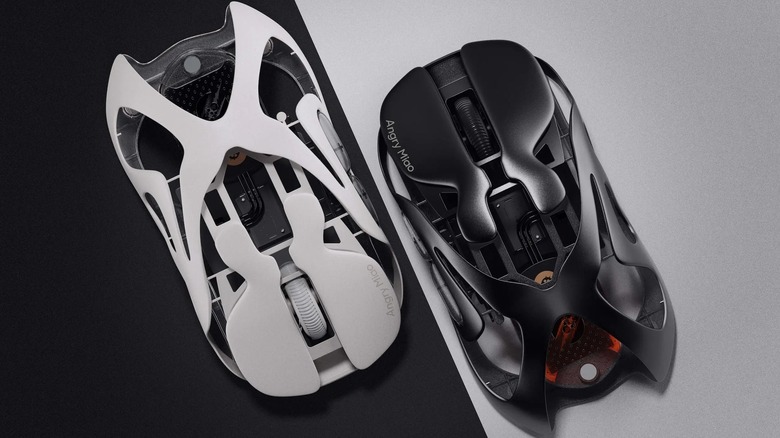
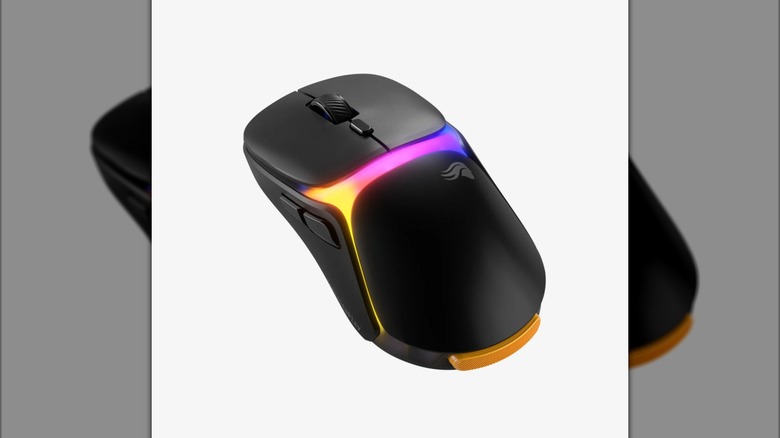
Let's look at Glorious first. The company sells two models of their V3 mice with swappable batteries: The O3 and the D3. Both devices have the same specs, performance, and button numbers; the main difference is that the D3 weighs a few grams more and sports a slightly different design. These V3 mice currently retail for $159.99. That's the same price as the Razer Viper V4 Pro wireless mouse. Meanwhile, a rival product, Angry Miao's AM Infinity Mouse, sells for $129.99, Unfortunately, currently most of the price seems to go toward the gimmick.
When PC Gamer reviewed the Glorious O3 mouse, the outlet praised its design, build quality, and of course, the ability to quickly swap batteries, but it found that the mouse's tracking was inconsistent. Meanwhile, the AM Infinity Mouse fared better in reviews, but it still had several issues, including somewhat stiff main buttons and an average scroll wheel. Compared to what critics and users think about, say, the Razer Viper V4 Pro, that mouse delivers so much more for roughly the same price. We aren't saying mice with hot-swappable batteries are bad, just that the current iterations might not be worth their price tags. Maybe wait for a sale.
Many gamers prefer wired mice for a reason
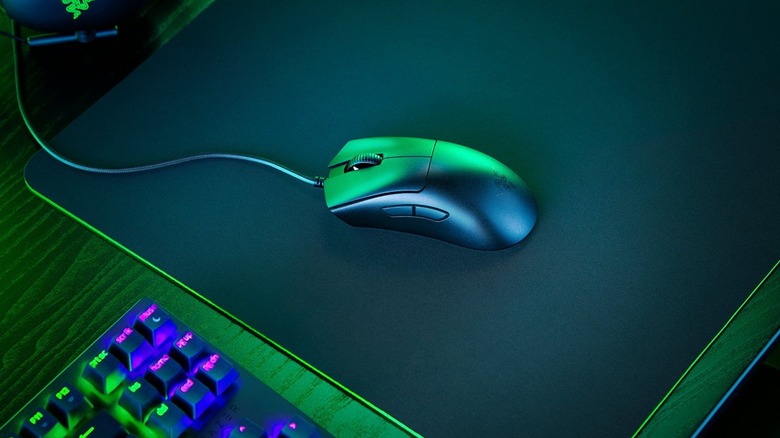
The main hook of a gaming mouse with a hot-swapping battery system is just that: The ability to quickly change batteries without missing a beat. However, that premise is flawed since its target audience tends to avoid battery-powered mice, not because of the batteries themselves but because of what they entail. Mice mostly use batteries to power wireless communication technology. Wired mice, meanwhile, receive all the electricity they need through a cable, which also provides a direct line for input signals. Wireless technology has come a long way, and while modern wired accessories are as reliable as wired ones in most metrics, they still lag behind physical connections in the responsiveness department. Wired gaming peripherals such as mice have next to no input lag so long as the polling rate (how often the mouse sends data) is high. Most regular wireless accessories, meanwhile, are often a millisecond or two behind due to the nature and physics of wireless communication, and there's always a risk of signal loss.
Wireless mice have several more disadvantages baked into their design that makes them less favorable than wired mice. The first is price. The cost of manufacturing and including battery compartments and wireless transmitters increases the price of the final product. Glorious' wireless O3 mouse with swappable batteries costs $159.99, while the wired O3 more than halves that price and retails for only $69.99. Furthermore, all the additional components in wireless mice, such as batteries, weigh them down, which makes user aiming and reaction time suffer. At the end of the day, even though hot-swappable batteries remove one hurdle that plagues wireless mice, most diehard gamers prefer wired alternatives since not even the novel battery system can fix the weight and latency issues that are part and parcel with wireless mice.