

Star Trek's 5 Most Iconic Sci-Fi Gadgets, Ranked
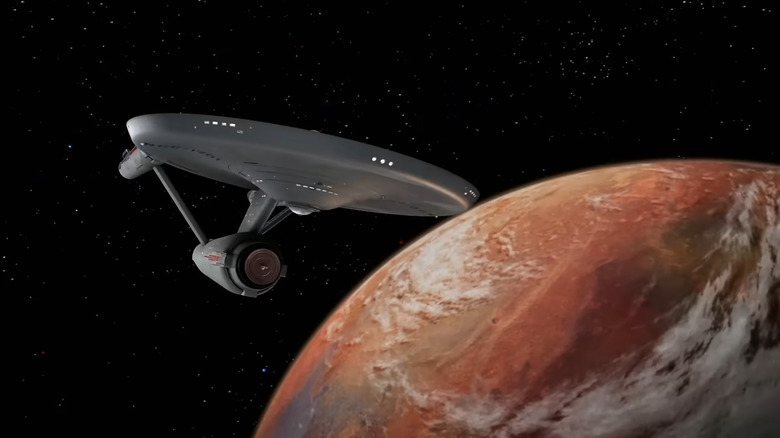
"Star Trek" is one of the most iconic science fiction brands ever. Its impact on modern culture and its role in redefining science fiction tropes can't be overstated. Many scientists, engineers, and others have stated that they entered their respective fields because of the series. And many of those people influenced by the show have been working to create the gadgets presented across its many iterations.
We've seen strides in the show's technology in the real world, like the transporter. Scientists recently demonstrated quantum teleportation, sending a quantum state of light over 18 miles across the internet. And while this technology isn't going to break you down and email you to your friends across the country, it's something that until recently was never thought possible.
There are many iconic gadgets from the world of "Star Trek" that no longer feel out of reach. They don't feel like technology from the far future, but rather, technology of tomorrow. The following are just a few of the most iconic handheld gadgets featured in the world of "Star Trek," ranked in their importance to the series and how close we might be to getting them in real life.
1. PADD

The Personal Access Display Device (PADD) is a small handheld computer, iconic across the "Star Trek" universe. Designed for basic data entry and retrieval, the PADD served much like a small, portable informational kiosk. Rick Sternbach conceived the PADD in 1987, seeing it as a possible near-future device and expecting similar devices to become available at some point.
Sternbach was correct, as the rise of the personal digital assistant (PDA) came only a few years later with the release of the Apple Newton. Considered by many to be the very first PDA, the Apple Newton would eventually lead to the Sony Reader, the first portable e-reader, in 2004. But it wouldn't be until 2010 with the release of the Apple iPad that the PADD would become a technology of the present.
Many Trek fans saw the iPad's name as a direct reference to the PADD from "Star Trek: The Next Generation". Apps for the device would quickly follow, allowing iPad users to turn their devices into a pseudo PADD, sound buttons and all. It's crazy to think that even powerful budget tablets today come pretty close to replicating everything the PADD could do.
2. Communicator
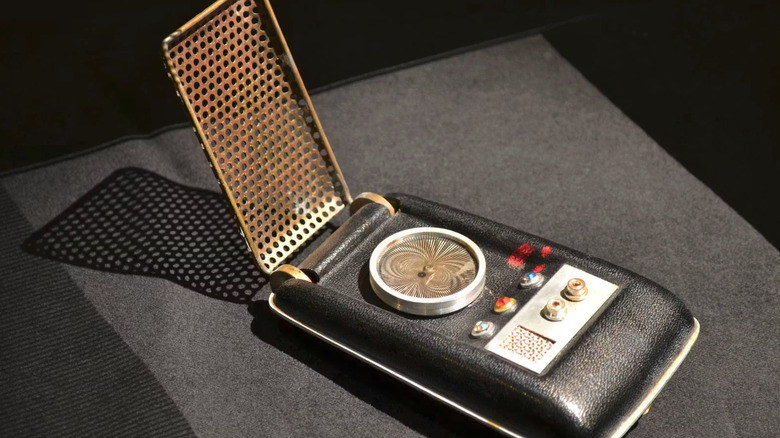
The communicator might be the most iconic and memorable thing to come out of the "Star Trek" universe. The sound of Captain Kirk flipping open a communicator has even become ingrained in popular culture. In the universe, the communicator was used for person-to-ship communications. These devices often used a flip-top design, reminiscent of the flip-phones we eventually got in the 90s and 2000s.
In later "Star Trek" series, the communicator would evolve and become a part of the combadge worn by Starfleet officers. These later iterations could also translate speech in real time, as today's AI apps do. In the remake series, these communicators could even transmit and receive text messages, much like the popular messaging apps on our phones. The device became so iconic that an official Bluetooth replica was created, even with a speakerphone so you could answer calls.
And it was this communicator from the original series that many say inspired Motorola to create the StarTAC, one of the first flip phones. And while mobile phone design and technology were being developed before "Star Trek," it's hard not to use a flip phone without at some point flipping it open and calling for a transport.
3. Hypospray
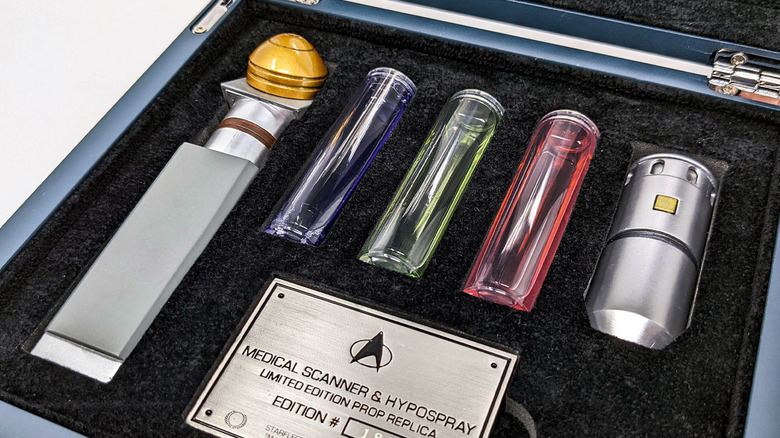
One of the most iconic pieces of medical technology in the world of "Star Trek" has to be the hypospray. This little device dispenses medicine to the patient by simply pressing it against their body. The medical professional presses a few buttons on the device's head to tune the medication before use. It's a needle-free experience, something that many can probably get behind.
It's painless, needle-free, and can be used through clothing, pushing liquids into the body using highly compressed air. And the iconic hypospray from "Star Trek: The Next Generation" was based on a commercial inhaler available at the time of filming. And while the hypospray is iconic to "Star Trek," a real-world counterpart has existed before.
Famously used in the 1960s by the United States military, the Jet Injector works in much the same way as the hypospray. High-pressure liquid would be shot into the skin by an air blast, all without the need for a needle. The device was so successful that it helped to eradicate smallpox in the 1960s. It was only abandoned over safety concerns with the re-transmission of diseases through single-use needles.
4. Tricorder
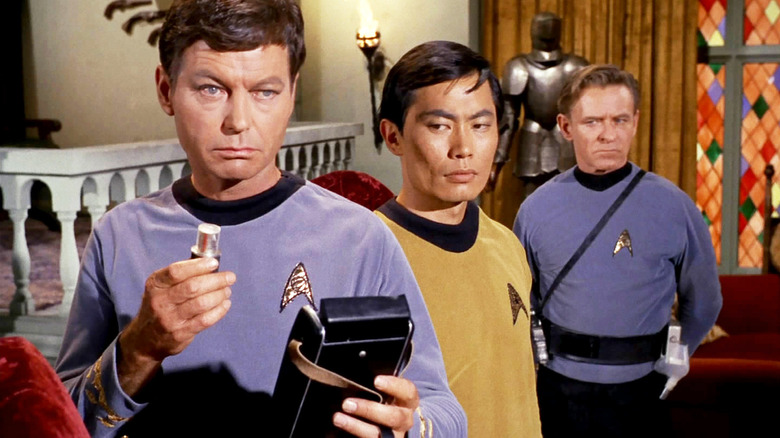
One of the devices that helped to define "Star Trek," the tricorder, has been around since the original series in the 1960s. This small, handheld device was essentially a portable computer with scanning capabilities. It could be used to scan objects and analyze them in the field. These devices became essential tools for every away mission carried out by members of a starship, with different types of tricorders available.
The medical tricorder could scan living beings and provide scans and analysis, even providing a potential course of treatment for various injuries. It was commonly used by medical staff, including Doctor McCoy during away missions. The science tricorder looked similar to the medical tricorder, but was tuned for scanning non-medical/non-living objects. As the series expanded, the tricorder changed design drastically.
In "The Next Generation" and beyond, the device became a flip-style model, similar to the cellphones we saw in the early 1990s. While still science fiction, we are closer than ever to an actual medical tricorder, thanks to organizations like XPRIZE funding the development of potential devices. Today, several medical scanning devices now exist, bringing us one step closer to getting one of "Star Trek's" iconic gadgets in real life.
5. Phaser
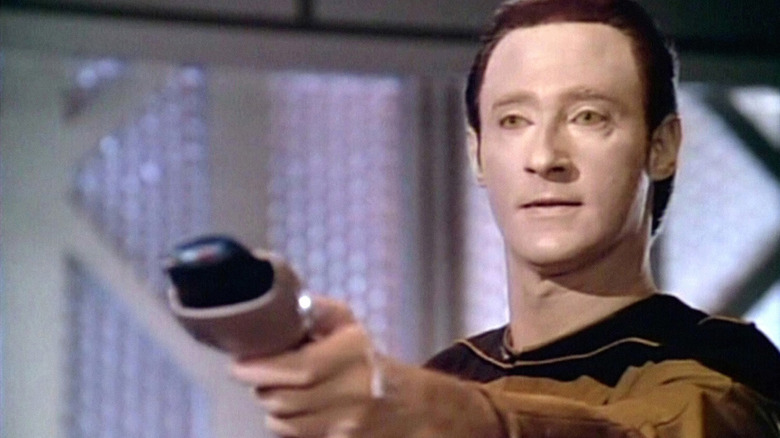
Perhaps the most iconic tool in the "Star Trek" universe, the phaser is the standard-issue sidearm that all uniformed officers used while on missions. The phaser has changed over time, losing its original, pistol-like design that came to define the original "Star Trek," its films, remakes, and its prequel television series, "Star Trek: Enterprise."
In the series, it's stated that the phaser is an energy-directed weapon that fires a beam of nadion particles. The term "phaser" is actually an acronym for "PHASed Energy Rectification". Its solid red beam became iconic in its own right. The beam could be adjusted by the user, enabling several uses beyond combat. It could stun others, cut through materials and even heat objects.
In the real world, the phaser is still out of reach, but only slightly. We can use laser technology to pop balloons and burn objects fairly easily. YouTube creator styropyro even managed to build the world's strongest handheld laser ever back in 2025. And with the military working with and demonstrating energy weapons, it's only a matter of time before we see the creation of a real-life phaser.