

Silk Might Be The Reason 6G Internet Is Coming Sooner Than You Think
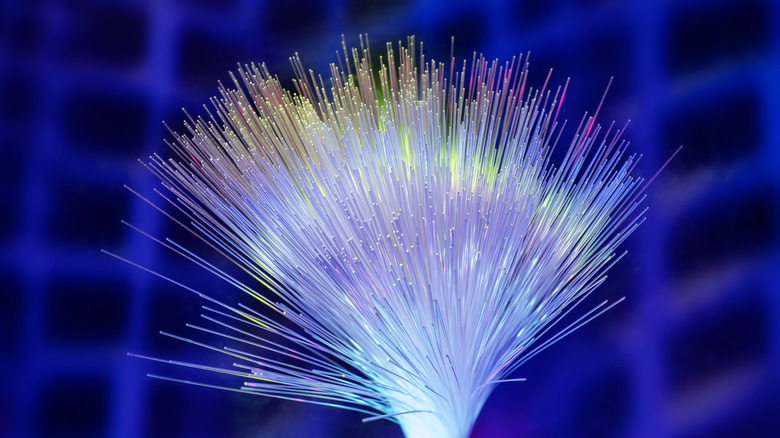
Optical fiber already plays a big role in delivering gigabit internet to your devices. It's even more important for service providers where they deal with speeds in the hundreds of gigabits to route all sorts of traffic to the right destination. Wireless carriers are riding off the back of that fiber, feeding their over-the-air 5G networks through wireline fronthaul and backhaul feeds. But the future is 6G. The industry is gearing up for terabit speeds, and that means fiber-optic connections are gonna have to step up, potentially with new types of fiber.
The same companies that promised remotely-driven robotic surgeries, virtual reality mainstreaming, and autonomous vehicle traffic management with 5G are now planning out 6G networks into the 2030s with a "Greatest Hits" compilation of the same promises. Okay. But to achieve everything they're envisioning, they'll have to ramp capacity and throughput by an order of magnitude at least across every last bit of infrastructure not to mention all of the devices we use at the very end of that pipeline.
Glass and plastic have long been transmitting pulses of light through fiber-optic bundles. Each material has embedded advantages and flaws in their properties that make one better for home connections and the other better in data centers. The push to 6G has meant laboratory tests to get existing materials ready for terabit speeds. But research is now putting silk — yes, the stuff that comes from worms and spiders that's used to make fancy nightgowns — into the spotlight as a cost-effective building block of 6G that could bring the best of both glass and plastic.
How silk might become part of 6G networks
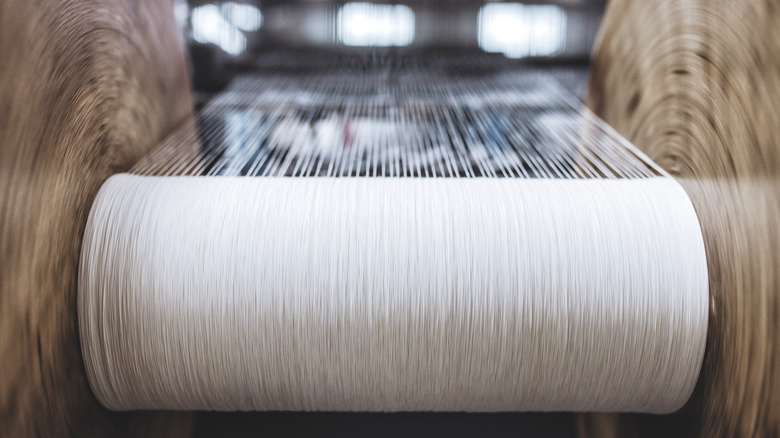
Silk might be known for its luxurious look and feel in clothing, but its fibers have also been of interest to materials scientists and the tech sector for their consistent geometric channeling, layered integral structure, transparency, flexibility, and tensile strength. All of these qualities make it a great candidate for fiber-optic transmission. The problem is that those fibers are bound by a mesh of protein, making them difficult to work with. Existing solutions to strip that mesh typically involve lots of water, chemicals, time, and money.
Researchers from Queen Mary University of London, Imperial College London, and Tufts University detail a simpler, less-costly processing method: just apply pressure and heat the silk at consumer oven temperatures of up to 420 degrees Fahrenheit. From that point, the silk fibers can be manipulated into different shapes. These findings were published in a paper for Nature Sustainability.
The biggest takeaways? Silk treated by heat pressing delivers better flexile and tensile strength, though at different pressing temperatures, than that which has been soaked in solution. It also is able to pass through light signals at terahertz frequencies with high integrity, even when the silk fibers are twisted. Most importantly, this treatment is said to work with many different types of silk (maybe even gene-edited spider silk), enabling further findings and practical uses for the material.
Will silk actually make a difference in 6G networks?

Much like how gigahertz spectrum made 5G and fast Wi-Fi a reality, terahertz spectrum is seen as a key element to enabling 6G data connections. On the wireless front, chipmakers are working to bridge the gap between transmitters and modems. The underlying wireline situation, however, is a bit more nuanced. When it comes to fiber-optic internet, plastic and glass are the two main materials in use right now. Plastic is the more affordable and durable solution with greater flexibility that's used for home-based connections while glass is the quality pick in terms of capability and signal integrity.
Silk, however, could come in as a versatile single material that could act as a better all-arounder or serve as a supercharged option for specific applications, depending on the way it's been treated. It also has different challenges than plastic and glass as a cultivated and harvested product rather than one of extraction and artificial synthesis. All told, there's plenty scientists have to learn over time before they know for sure how silk might change the fiber optic market. Given that 6G is targeted for rollout in the 2030s, time might be the most valuable resource they have.