

Not Water, Not Power: The Next Data Center Resource Race Might Be For Copper
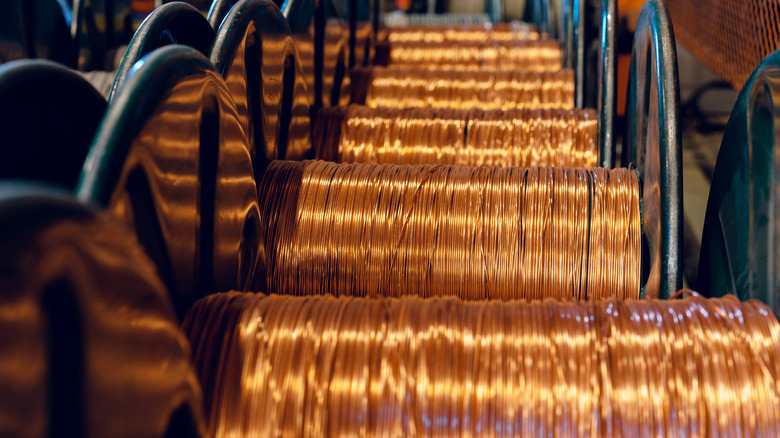
AI data centers are notorious for their water and power usage, as their servers generate a lot of heat and require fresh water for cooling. That eats into already strained natural resources and can present problems for local residents living near data centers. One possible way to address this comes from a group of American and Japanese scientists who produced pure copper plates that can cool data center equipment far more efficiently than the aluminum ones currently used.
While these plates could drastically reduce the amount of energy data centers use, the price of copper is already hitting record highs, and increasing demand from data centers would likely have a ripple effect. The researchers published their results in Cell Reports Physical Science, explaining how they used topology optimization algorithms to create the ideal design for the metal pin fins that cover the plate's base. These are attached to computer chips and emit cooling liquid, which is why it's referred to as liquid direct-to-chip cooling.
Since copper has a high thermal conductivity of 400 W/m·K, it can transfer heat faster than other materials like aluminum and steel. According to the study, these new copper plates have around 32% lower thermal resistance and 68% lower pressure drop, meaning they cool more efficiently while also using less energy. If implemented, the scientists estimate it would cause data center cooling to dramatically drop from around 30% of overall energy usage to just 1.1%.
Copper prices are already at record highs
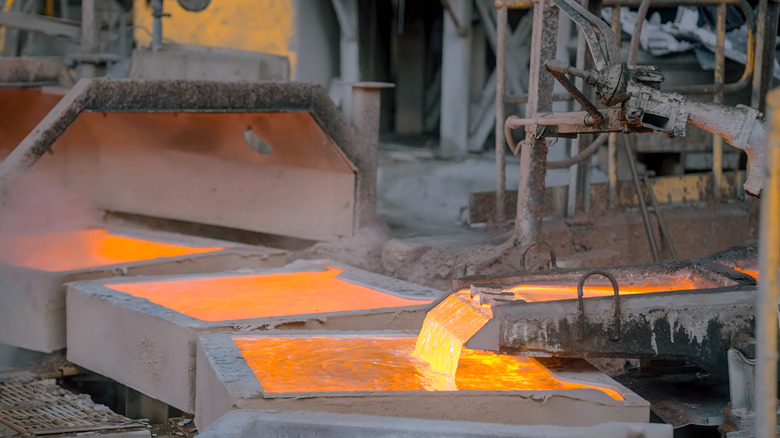
Addressing AI data center energy consumption is crucial, but producing and implementing these copper plates wouldn't be cheap. Copper prices have been skyrocketing since last year. In July 2025, copper was $9,769/ton; as of this writing, it's $14,182/ton, down a bit from the record $14,806/ton set in May 2026. There are several reasons for the spike in price, including issues at mines that impact supply and increasing demand, but one big reason is tariffs.
While there's been a 50% tariff on most copper imports since July 2025, refined copper has been excluded from that — for now. Experts have been anticipating a new 15% tariff, resulting in U.S. stockpiling. An announcement could end the uncertainty and help bring the price down, but even a fairly optimistic forecast from Goldman Sachs still expects copper prices to only drop to around $11,000/ton in 2027.
That's significant when you realize how many things require copper, from electrical wires and pipes to satellites and solar panels. If copper prices plateau or continue to rise, that will almost certainly impact consumer tech, which is already facing a chip shortage and price jumps for things like smart TVs, computer components, and smartphones. Data centers are already increasing demand for the metal to be used for construction and operations, so adding copper cooling plates into the mix would likely worsen the situation.