

Do All Data Centers Require Water?
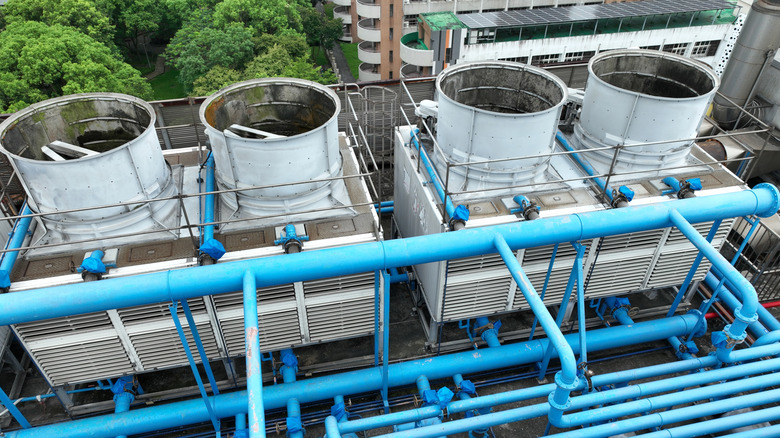
As resistance mounts against the ongoing construction of data centers across the United States, a common talking point is the impact that data centers have on local utility prices and availability, especially water supplies. AI data centers in particular tend to be extremely thirsty, with most requiring massive quantities of water in order to keep their various components cool and functional, which is how Amazon's data centers managed to consume over 2.5 billion gallons in a single year.
While all data centers require cooling, simpler data centers that only serve telecommunication purposes can get by with just air cooling from large fans (though large fans aren't especially energy-efficient). It's AI data centers specifically that get hot enough that air won't cut it, and so water-based cooling methods are effectively the only viable options. Of course, using water to cool the many servers and components in these facilities isn't as simple as just dumping buckets of water down the halls, and there are some cooling methods that use more water than others. Even so, almost all of them require regular injections of fresh water, with a single ChatGPT-written email consuming more water than you may expect.
Water is almost always necessary, but it can be used in different ways
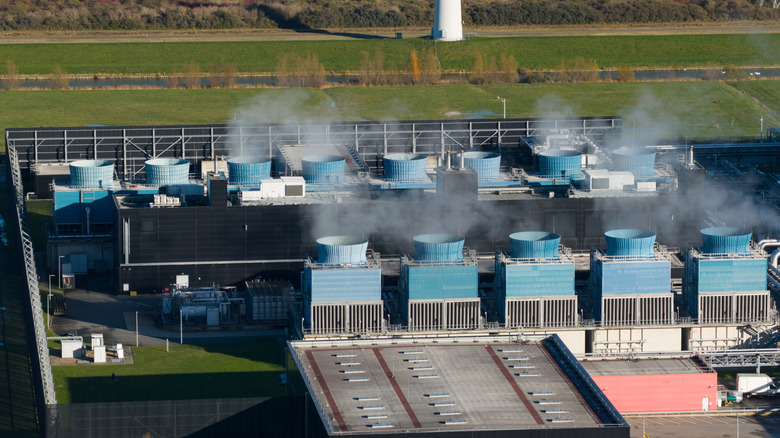
Cooling the equipment in a data center is not dissimilar to cooling the components in your own PC. Water is used to absorb the ambient heat generated by servers and GPUs, carrying it away safely and keeping the equipment from overheating.
One type of liquid cooling is evaporative cooling, a simple system used by a large number of data centers. It uses warm water to siphon heat from components, then sends the water to a cooling tower to evaporate into the air. Of course, once the water evaporates, it's gone, and more water needs to be piped in to replace it, leading to mounting water costs and consumption.
Another type of liquid cooling is closed-loop cooling, in which water is circulated through enclosed pipes, picking up and carrying away heat from components as it passes by. This type is more sustainable, as it consumes far less water than evaporative cooling, though it's also a lot harder and more expensive to set up en masse and can consume more overall electricity.
It is technically possible for even an AI data center to avoid the need for water-based cooling, but only if the center itself is constructed in an ideal location. For instance, data centers located in exceptionally cold locales, like the atNorth ICE03 data center in Akureyri, Iceland, can pipe cold air in from outside to provide temperature regulation that is comparable to or better than liquid cooling. However, this approach still takes a lot of power in order to keep the fans spinning. Additionally, research from the University of Hawai'i suggests that rising ambient heat and humidity levels around the world could one day threaten this particular avenue of cooling.