

Farmers Purpose-Bred A New Kind Of Cow Designed To Maintain Solar Farms
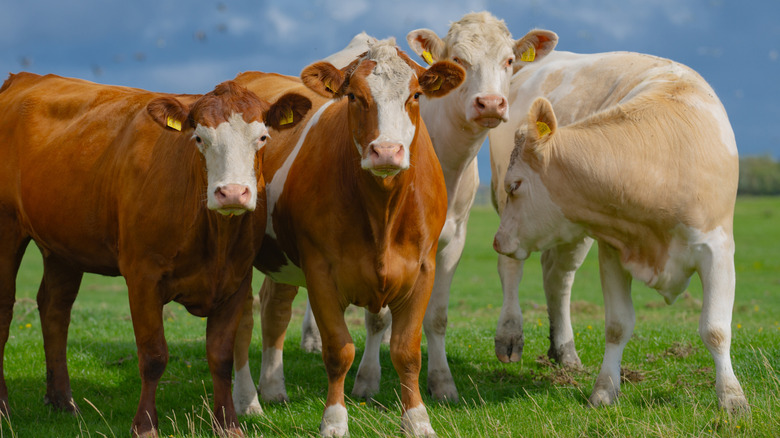
Agrivoltaics is a growing practice that involves using land occupied by solar panels for agricultural purposes, such as raising crops and grazing livestock. It's a mutually beneficial way to get the most use out of the land, and grazing sheep on solar farms has become a great source of income for farmers. However, it's been harder to get solar companies to agree to let cattle onto their land, which is why farmers Jess and Marcus Gray of Gray's LAMBscaping came up with a solution: breeding a new kind of cow.
Livestock-related agrivoltaics face some resistance, particularly from solar facility workers who aren't accustomed to or comfortable around animals. Though they're typically safe to be around so long as they have food, water, and adequate care, cows are still large, strong, and have a reputation for getting aggressive. Through selective breeding, the Grays successfully developed a composite breed with genes from Dexter, Belted Galloway, Piney Woods, and American Milking Devon cows that are suited for solar grazing.
As the couple shared with Michigan State University in a virtual conference, they determined traits cattle would need to prosper at a solar farm while being safe for others working on the grounds to be around. The composite breed measures at around 1,000 pounds and are bred to have a docile nature, no horns, and resistance to heat and disease, making them hearty and less intimidating. According to Jess Gray, the next step is grazing cattle and sheep in the same fields, which she says allows for "better pasture utilization, parasite control, predator abatement, and stacked enterprises."
Solar farms can serve multiple purposes
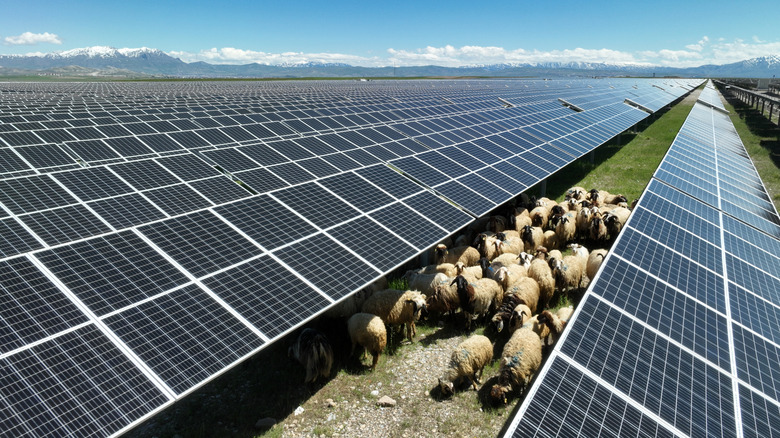
Breeding cattle that can effectively and safely graze solar sites is a great way to expand agrivoltaics and encourage more collaboration between solar companies and local farmers. It gives farmers an extra revenue stream by providing lawn maintenance. On top of that, Gray told MSU "Our animals on solar thrive and grow better, faster, and cheaper for us than the ones we have on pasture at home," as the cattle benefit from the shade of the solar panels that provide protection from extreme temperatures.
Solar grazing is just one way solar farms can serve multiple purposes using the space below the panels. Agrivoltaics frequently involves growing crops beneath solar panels. The panels block solar radiation from reaching the ground, which results in more fertile soil, as seen at China's largest solar farm where plant life has started growing in the desert. Crops also thrive under the shade, which can keep them cool amid rising temperatures.
Agrivoltaics isn't the only way to get more utility out of solar farms. Other projects and experiments, such as a floating Dutch solar farm that's become an underwater ecosystem, will be important ways to maximize these spaces. Expanding solar energy production will require covering more land in panels, so developing new practices like these will fight the perception that these facilities are wasting space.