

Grazing Sheep On Solar Farms Are Having A Major Effect On Farmer Incomes
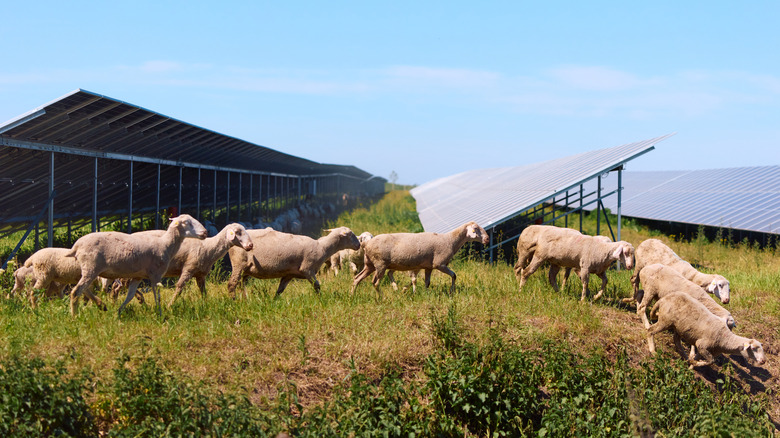
The more scarce land becomes, the more sense it makes to practice multi-purpose use. Take, for example, solar farms, which require massive stretches of land for the installations. Conventionally, that's space dedicated solely to the solar farm, and a lot of it goes to waste. Agrivoltaics addresses this problem by turning it into dual-use property or co-located zones. The panels are installed normally, but crops, livestock, and pollinator habitats are located beneath the panels or between the rows of the installation. Solar panels over crops are being used by Arizona farmworkers to great effect. Even simpler practices like allowing livestock to graze on the vegetation beneath panels offer huge benefits.
In fact, one of the more mature forms of agrivoltaics involves grazing sheep, or rather a new term dubbed 'solar shepherds.' Researchers from the University of Western Ontario's Ivey School of Business and a professional shepherd from The Lara Costa farm have published a new study assessing the financial benefits of solar shepherding. They found that some related businesses have garnered incomes as high as doctors, lawyers, and senior engineers, in places like Canada. It's worth noting that this practice is also gaining popularity and momentum in the region, in no small part thanks to its benefits, but also due to organizations like Agrivoltaics Canada.
The study looked at two solar shepherding business models commonly used in the area: breeding ewes, or female sheep, and purchasing lambs from a yearly auction instead. Both instances resulted in massive profits for farmers. A return on investment was shown to be in the range of 16% to 31% for breeding, versus returns of 22% to 43% for auctions. In other words, solar shepherds stand to make a lot of money.
Solar Shepherds can make two to three times as much as traditional shepherds
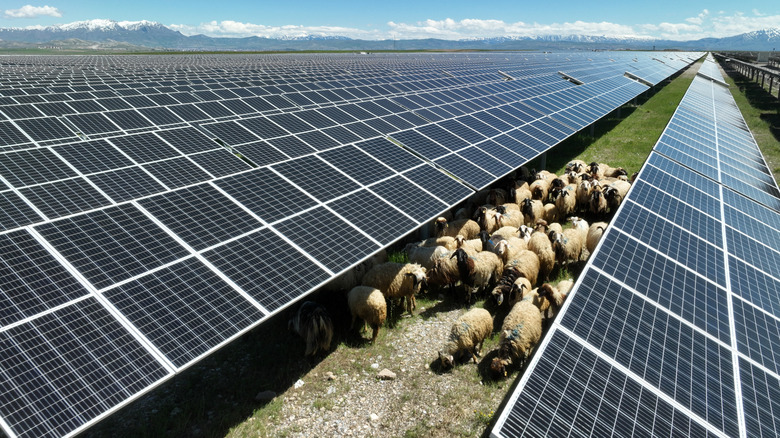
Looking at averages on Glassdoor, traditional shepherds make about $42,000 to $79,000 per year, with an average salary of $58,000. Yet the study found that 'solar shepherds' specifically could expect to earn two to three times as much. The sheep get a steady food supply at lower cost for the shepherds thanks to accelerated growth under the panel shade. Those shepherds also don't have to lease land or pastures from farmers for their flock to graze. Meanwhile, they earn a premium for vegetation management from the solar farm owners.
It's not all sunshine and rainbows, however. There are challenges to consider that can impact profitability. Predators are a huge concern that could easily reduce the number of sheep or harm flocks if protections aren't in place. Parasites and disease are of a similar concern for grazing sheep. Perhaps more costly is that, to effectively utilize grazing and control vegetation maintenance at the same time, fence and border boundaries need to be adjusted to encourage the sheep to move about — this is called rotational grazing. Plus, sheep need water, as well, and installing water sources could introduce some complex challenges on top of everything else.
The sheep are actually just mowing the grass
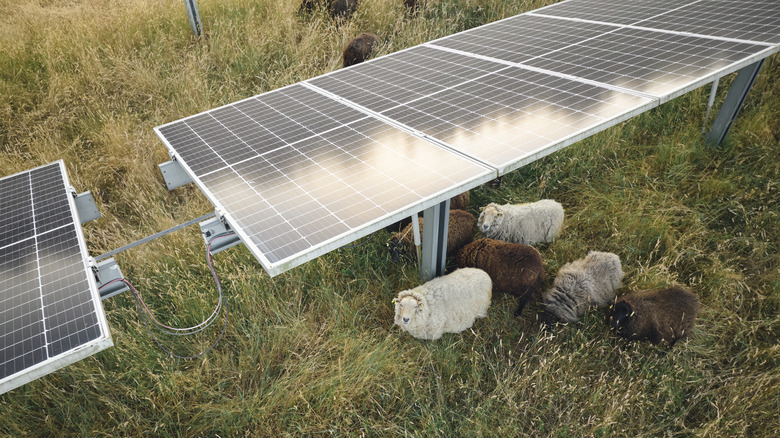
Looking at the basics and what the sheep are actually doing when they graze on land, it's nothing more than a natural form of lawn care. This is a common practice in areas with large stretches of flat land, where goats and sheep are used to maintain the land. They eat grass and weeds, most of all, and remove the leaves from plants within reach. Using animals like sheep rather than machinery or lawn mowers can bring many benefits, too. It reduces fuel costs, lowers emissions, and saves time — farmers or workers don't have to mow themselves. Meanwhile, the animal waste helps enrich the soil and rejuvenate the ground for planting.
On solar farms, the massive solar panel installations also provide some extra protection for those sheep. They're shaded on hot days, and that shade also speeds up the growth of grass and greenery underneath, giving the sheep a steady food supply. Moreover, keeping the grass maintained provides cyclical benefits to the solar and electricity production, because keeping the solar panels clear of weeds removes potential debris that could be decreasing power generation and efficiency. Additionally, there's always the chance that mowing or weed whacking the area will kick up dust, dirt, and other debris that could damage or dirty the panels. With sheep grazing regularly, there's no need to subject the panels to those risks.
Beyond all that, green and clean energy production is good for all. Solar panel farms in Tibet practicing agrivoltaics are having an unexpected effect on local residents. Solar farms used in this way can even provide unexpected benefits for endangered species.