

Old NYC Subway Cars Have An Unexpected Second Life On The Ocean Floor
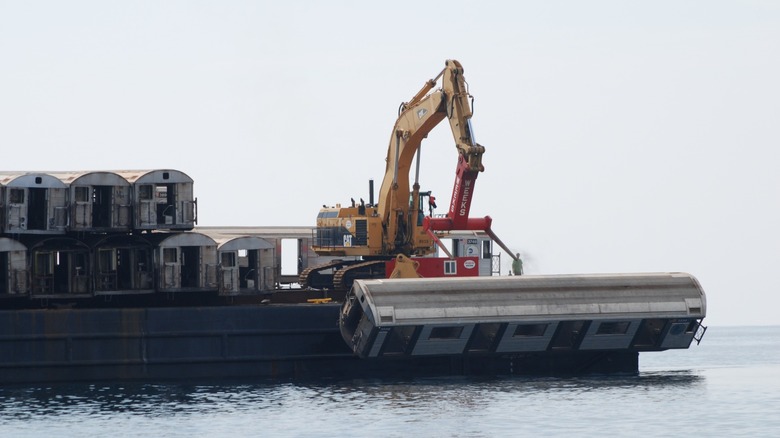
At the turn of the century, the Metropolitan Transport Authority (MTA) was faced with a problem. What should they do with all of their aging, decommissioned New York City subway cars? Let them rust in a scrapyard somewhere? The organization decided on a far more beneficial idea: Dump them into ocean waters off the eastern seaboard. The idea wasn't to pollute the ocean but instead give fish new homes. No, seriously.
Starting in 2001, the MTA began the lengthy process of depositing well over 2,000 subway cars, the majority of which consisted of Redbird trains (which began service in 1963). The rest were Brightliner cars; if you've ever taken the NYC subway, you've probably seen some of these trains in service. The photographer Stephen Mallon got to document not only the process but also the aftermath. Currently, the recycled cars serve as artificial reefs for schools of flounder, tuna, and sea bass.
According to Business Insider's projections, the project helped save the MTA $30 million. But more importantly, Redbird Ridge and Brightliner Bank (not their official names) give local fish populations a safe haven from overfishing. Even though dumping the subway cars took over 10 years, endemic life took to the objects in less than half that. Our fingers are crossed these subway cars can serve as the skeletons for new coral reefs now that existing reefs have reached catastrophic bleaching levels.
How the reef effect works
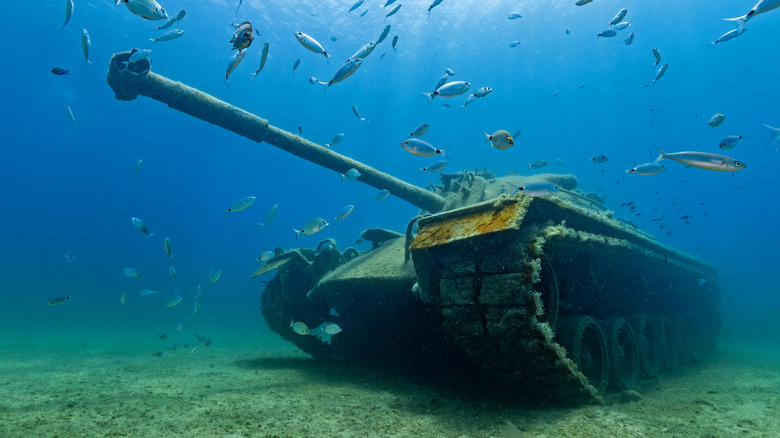
You're probably wondering how subway trains could help create reefs. It all comes down to the reef effect, a process where man-made structures serve as the building blocks for reefs. Reefs, especially coral reefs, are their own little ecosystems: densely packed communities of marine life that rely on each other for food and safety. Think of them like the natural equivalent of Kowloon Walled City (or for the more pop culture-minded readers, the Blocks of Mega-City One in "Judge Dredd" or the Hive Cities of "Warhammer 40K").
Reefs start off as small rocky outcrops that attract small organisms such as plants and coral polyps. These in turn attract invertebrates and bivalves (oysters and mussels), which attract fish. Over time and under the right conditions, these underwater hamlets grow in size and scope until they become the monolithic megastructures we know as coral reefs. The calcified remains of coral communities might serve as glue and scaffolding for these locations, but they always start with a few lone settlers colonizing an outcropping.
When the MTA started dumping subway cars (after they were stripped and cleaned), the organization picked areas that lacked these natural underwater crags and cliffs. The result was the same as what you get from natural reefs: a flourishing community of oceanic wildlife. Of course, nobody is quite sure if the subway reefs are supporting new populations of fish or just encouraging immigration. Still, if these artificial ecosystems start to falter, at least we know that underwater speakers can help revitalize the reefs that sprung up from the train cars.