

The Twilight Zone's Name Is Also A Very Real Scientific Phenomenon
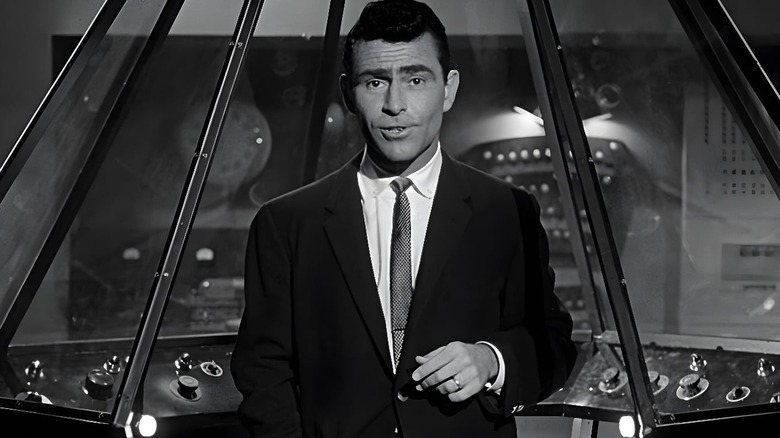
Rod Serling's classic show "The Twilight Zone" features aliens, evil dummies, and other strange beings. As such, many associate the show's title with the supernatural and otherworldly, which isn't wrong by any means. However, the term "twilight zone" also applies to a real-life scientific concept used to describe the deepest layer of the ocean that receives sunlight before fading to darkness – 650 to 3,300 feet down, to be exact.
Twilight is essentially the transition between night and day, and that concept applies to the oceanography term that shares its name with Serling's legendary sci-fi series. It separates the sunlight zone from its midnight, abyssal, and hadal counterparts, with the latter three being the darkest and deepest corners of the sea. Megalodon sharks are extinct, but some believe that if these prehistoric creatures still existed, they would lurk beneath the twilight zone.
Megalodon sharks aside, the twilight zone is home to trillions of other water creatures. When the sun goes down every night, they surface from the dark to feed, marking the largest migration of animal life on the planet. When the sun rises again, they return to the twilight zone and the cycle repeats. Serling's TV series didn't borrow its name from oceanography, but it has a basis in another real-world concept.
How aviation inspired The Twilight Zone's title
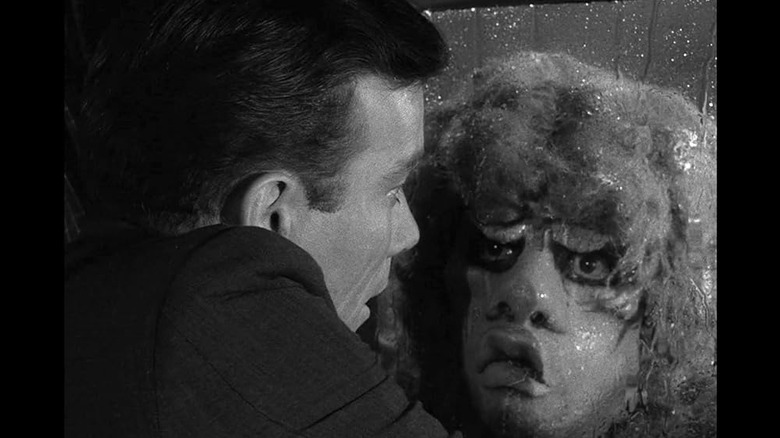
The twilight zone has several meanings. In the early 1900s, it was used to describe the intersection between fantasy and reality. That seems like the most obvious inspiration for a mind-bending show like "The Twilight Zone," but Serling believes that he subconsciously named the series after some United States Air Force lingo.
The Air Force definition pertains to the moment when an aircraft descends from the sky but the pilot can't see the horizon. Serling served as a paratrooper in World War II and his brother worked as an aviation editor, so he was familiar with Air Force concepts and history. Look no further than Season 2's "King Nine Will Not Return" episode, which Serling created after being inspired by a missing U.S. World War II aircraft that mysteriously turned up in the Libyan Desert.
Other "Twilight Zone" episodes inspired real-life airplane features, too, so aviation was a big part of the show. Not only did the term inspire the show's title, but it also produced some great episodes.