

What Is The Best Subwoofer Size For Your Car?
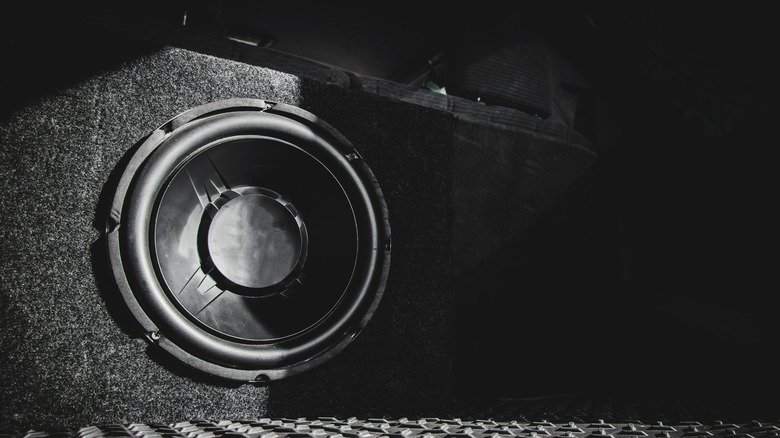
Car audio subwoofers come in a plethora of shapes and sizes, from shallow mount 8-inch woofers meant to excel in the smallest of spaces, to behemoth 15-inch subs that deliver big bass at the expense of your cargo space. No two subs sound exactly the same, but they're all designed to add meaningful bass to the music you love.
The thing is, similar to picking the right subwoofer for your home audio system, there isn't one universal size woofer that works for all vehicles. Bigger subwoofers don't always sound better. To determine the best subwoofer size for your car, it's necessary to consider everything from the physical space you have available to the enclosure size you can utilize. With that said, here's what you need to know about finding the right woofer.
Mounting depth makes all the difference
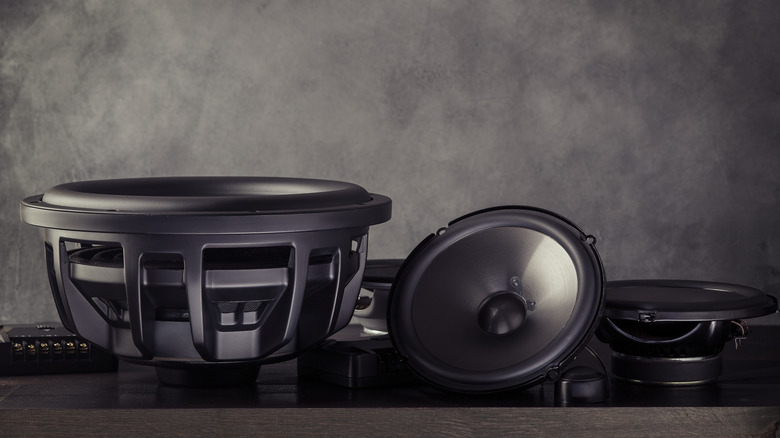
A subwoofer is more than its cone; or the part of the driver that moves air to create low-frequency sounds. There's an entire collection of components beneath it, from voice coils to powerful magnets, that work together to help a woofer work its magic. Larger subwoofers come with beefier coils and magnets which demand several inches of mounting depth out of their environment. Trucks and other compact cars lack the space to make these woofers work without making drastic alterations.
The good news is several car audio brands have shallow-mount subwoofers available, which require just a few inches of depth and can fit underneath the back seats of most trucks with relative ease. Better yet, this particular style of subwoofer has made extraordinary strides over the years.
The gap hasn't completely closed, but you can get deep, impactful bass out of shallow mount subwoofers without having to sacrifice exorbitant amounts of space in your car. They do tend to be pricier than their depth-dependent counterparts, but for those who want the best of both worlds, it's a worthy expenditure.
Subwoofers need proper enclosures to sound their best
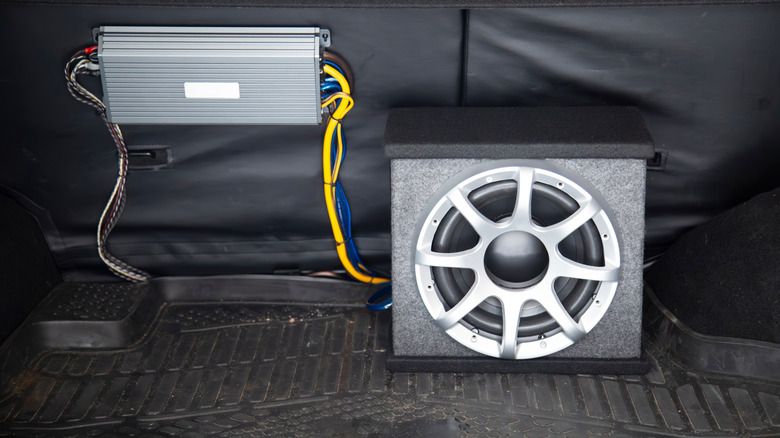
Subwoofers carry different levels of sensitivity and power requirements, and it's essential to pair woofers with an amplifier that meets their continuous power handling capability, also known as RMS (Root Mean Square). Another key specification to focus on, however, is volume requirements. Car audio subwoofers all come with recommended volume requirements for sealed and ported subwoofer boxes alike. They won't live up to their full potential without being paired with a proper enclosure.
For example, let's say you scored a JL Audio 13W7, one of the most coveted car audio subwoofers on the market. It's a massive driver, and its recommended volume for a sealed box is a whopping 1.875 cubic feet. You might be able to fit it in something smaller, but it won't deliver the incredible, game-changing bass that has made it famous. Conversely, some subwoofers can suffer in a box that's too big for their needs.
Essentially, it's not enough to find a subwoofer that fits based on size and power alone. You need to make sure you can provide the right enclosure for it to truly shine. Of course, a subwoofer won't fix all your audio needs, and you may want to explore other ways to improve your car audio. But if you can place it in an environment that supports its depth and volume needs, you'll be bumping bass notes in no time.