

The Physics Challenges Holding Back Orbital Data Centers
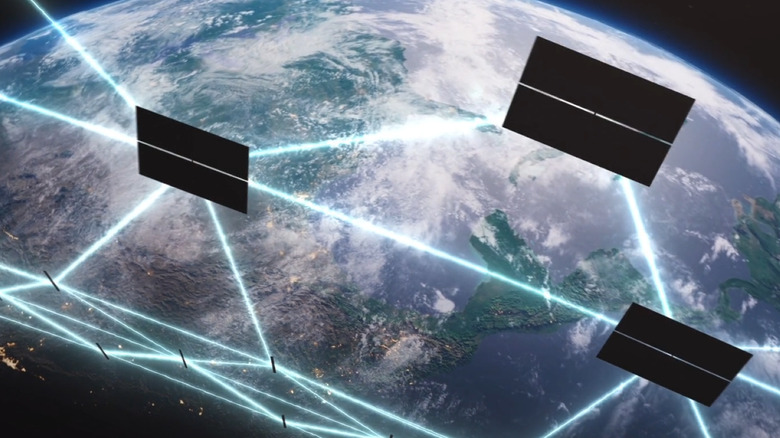
The race to create orbiting data centers in space is heating up in response to the digital infrastructure crisis back on Earth. Earth-bound data centers required for powering AI models are notoriously power-hungry and many are known to use a lot of water for cooling purposes. Thanks to the exponential growth in AI usage globally, companies cannot build data centers fast enough, and alternative solutions are required. The concept of housing processors on space-based platforms involves using one or more racks of AI-grade GPUs that are wirelessly interconnected and communicate back to Earth via microwave links.
From a physics perspective, one of the biggest problems with putting AI data centers in space is cooling. While solar arrays can generate the necessary power, heat generated by processing units like these cannot be dissipated in the same way heat does back on Earth. While low-Earth orbit is known to be very cold, reaching temperatures as low as minus 250 degrees Fahrenheit, it doesn't necessarily provide a free cooling solution. Space has no atmosphere, which means concepts like conduction and convection don't apply. The only plausible way to dissipate heat in space is by radiation, which would require radiators with very large surface areas. And that's not the only problem from a physics perspective.
Ionizing radiation caused by sources like cosmic rays is likely to cause degradation of solar panels, heat radiators, and the processing chips themselves. While modern satellites are equipped with radiation-hardened processor chips, they lack the immense processing power demanded by modern large language models (LLMs), which means that new radiation hardening techniques will have to be developed for AI-grade chips before the idea could work in reality.
The companies in the race to take data centers to space
Companies as large as SpaceX and Google are putting serious investment behind the concept. However, the idea of creating orbiting data centers was pioneered by a startup called Starcloud, which launched an Nvidia-powered GPU to space in 2025 as a proof of concept. The company's Starcloud-1 satellite is processing queries from an open LLM from Google called Gemma, based on existing models used by Gemini.
Google itself is putting its efforts into this concept as part of what it calls Project Suncatcher. The project aims to deploy Google's improved AI chips using Tensor Processing Units via a networked satellite constellation. The constellation will operate in a dawn-dusk sun-synchronous orbit, which Google aims to take advantage of due to its potential in maximizing solar energy collection. Google has already addressed the technical hurdles associated with the concept, citing satellite networking, controlling the satellite cluster formations, radiation issues, and high costs.
In May 2026, SpaceX included tantalizing details about the possibility of creating orbiting AI data centers in its IPO filing to investors. The company claims that it could deploy AI compute satellites as early as 2028, targeting over 100 kW of compute per metric ton. The IPO addresses the technological challenges with space-based data centers as well as other concepts. The filing said, "Many of our initiatives described above under 'Our Growth Strategies,' including those to develop orbital AI compute at scale, manufacture AI chips at scale, establish a lunar economy, transport humans and cargo to the Moon and Mars, and develop human augmentation systems, involve significant technical complexity, unproven technologies or technologies that do not exist, and such initiatives may not achieve commercial viability."
Terrestrial data centers are going nuclear
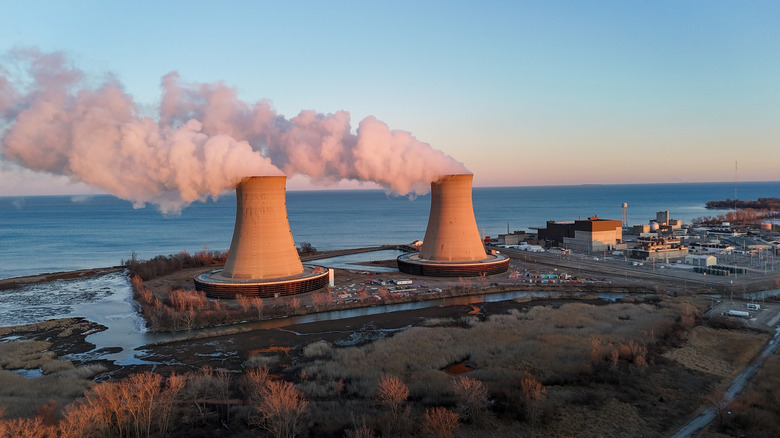
While getting data centers to space is an innovative way to resolve high energy demands and water wastage, large companies like Microsoft, Meta, Amazon, and Google are putting significant investment behind nuclear energy to power future data centers back on Earth. The push toward nuclear energy remains one of the more feasible ways of powering future data centers, and will have the secondary effect of driving down the cost of nuclear energy generation in general.
In 2026, Microsoft signed a $16 billion contract that will pay to restart Three Mile Island's Unit 1, which is set to feed Microsoft's data centers. Google has signed deals with two nuclear developers alongside a 1,800-megawatt deal for its data centers. Amazon has also invested $700 million into X-energy, a company that specializes in compact nuclear reactors.
The world's AI and cloud infrastructure powerhouses are all moving toward a future where nuclear energy powers their existing and future data centers. This demonstrates that nuclear energy is the preferred near-term solution to AI computing power needs, and is a far more solid solution than the space-based concepts being explored today.