

Solar Pumps Were Supposed To Help Farmers – Now They're Backfiring In A Big Way
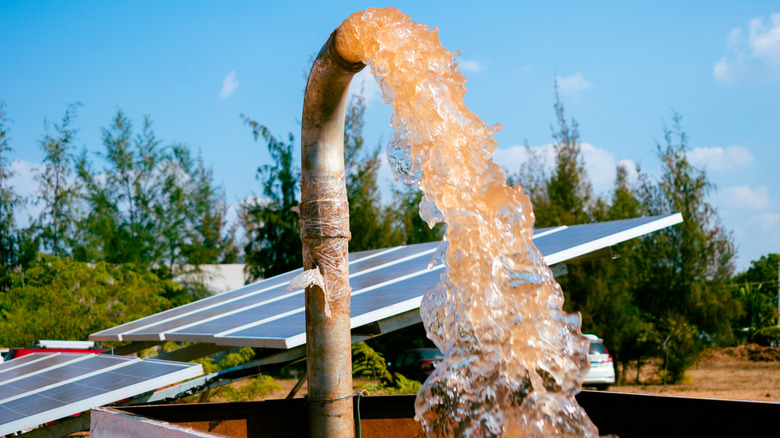
Solar energy is making a substantial positive impact on human life. Solar panels are saving lives, changing deserts, and even having an unexpected effect on an endangered species. Another useful and life-changing use of it is solar pumps, which have emerged as an affordable way for farmers in arid regions to water their crops and improve their agricultural yield. They have become particularly popular in countries with active government subsidies or incentives for their use. While this has essentially been a boon for a lot of farmers, the inconsiderate and unregulated use of solar pumps is creating another problem that has the potential to be disastrous for the farmers in the long term.
According to a report published by The Yale School of Environment, the solar pump revolution in several regions of the world, including parts of Asia, parts of Africa, and elsewhere, is having a direct impact on the underground water levels in these regions. With little to no rain in many of these areas to replace the water extracted by the pumps, the aquifers are drying, and underground water reserves are depleting. Unfortunately, governments in the affected regions aren't making notable efforts to solve the problem; instead, solar pump usage continues to be promoted. For example, according to a report from the Kleinman Center for Energy Policy at the University of Pennsylvania, India is aiming to install two million new solar pumps this year and convert another 1.5 million existing pumps to use solar power. This is in addition to existing solar pumps.
Why are solar pumps so popular?
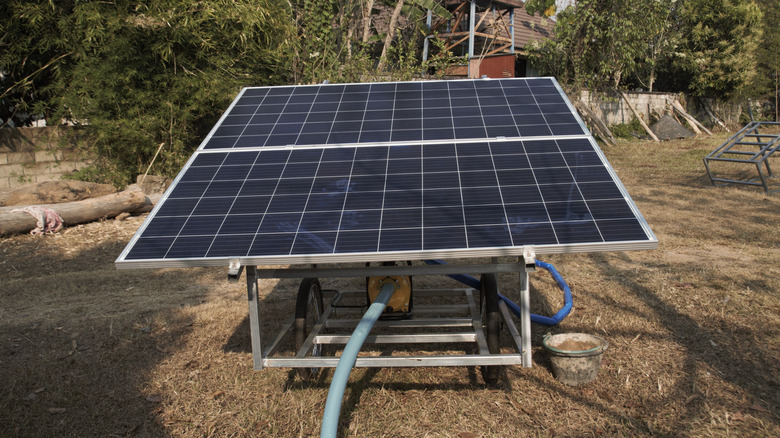
Over the past three decades, farmers, with little to no access to water from rivers, canals, and ponds, have moved to tap groundwater as an on-demand source for irrigation. However, these borewell pumps have traditionally been powered by either diesel fuel or electricity, both of which have their own issues. For example, diesel is not only expensive but also pollutes the environment, whereas grid power — although cheaper and relatively cleaner — is not available everywhere, and many regions face frequent power cuts. Solar pumps help solve both of these issues.
Besides a one-time set-up cost, which is being subsidized in many countries, there is very little cost associated with running a solar pump. As long as the sun is up, a farmer can keep running the pump without incurring any cost or depending on grid power. This, unfortunately, has led to unprecedented use of groundwater.
Underground water levels depleting rapidly
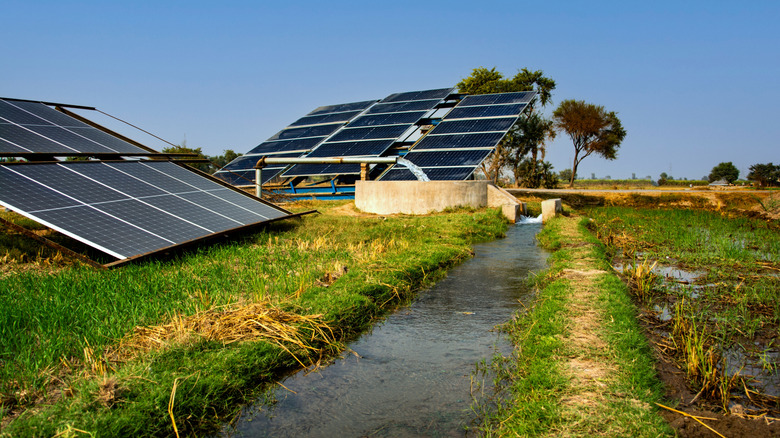
A research study suggests that because of solar pump usage, underground water usage is seeing an average increase of 16-39% in Rajasthan — one of India's driest states — and has been a pioneer in promoting solar pump usage. This increased water usage has resulted in the water table going down as much as 400 feet in parts of the state. Part of Pakistan's Punjab state has also seen underground water levels dropping below 60 feet — a 25% increase in depth since 2020. Yemen, a Middle Eastern country with dry regions, has benefited from solar pumps; however, their use has resulted in groundwater reserves depleting severely and farmers having to pump water from as deep as 1,300 feet. These are just a few examples, as there is no active tracking of the groundwater levels in many of the regions using these solar pumps.
While there have been some initiatives to help farmers focus on more efficient use of groundwater in certain countries, substantial efforts remain to be seen. For example, Morocco is pushing farmers to use drip irrigation rather than indiscriminately use underground water. India is also asking farmers to sell the excess electricity generated using the solar pumps to the grid, essentially providing an incentive against unnecessary extraction of groundwater. Still, there is a need for a more thoughtful approach that involves educating the farmers on conservation and alternative solutions, as farmers using solar pumps don't really have any other source for crop irrigation.