

What Is Psychohistory? The Unique Science Of Isaac Asimov's Foundation, Explained

Apple TV's "Foundation" follows mathematician Hari Seldon (Jared Harris) as he trains a new prodigy and debates with the government — a group of cloned emperors — about the validity of his chosen field of study. Seldon invented psychohistory, a discipline that would allow him to predict the future. The TV series is based on Isaac Asimov's "Foundation" story, though psychohistory predates the author's work, even if it's used a bit differently in this fictional sphere.
In "Foundation," psychohistory is best described as using math to anticipate upcoming events. Specifically, it is using mathematical models in efforts to predict the decisions of large populations. Basically, it means mathematicians like Seldon are trying to calculate human choices by quantifying previous patterns of behavior. This combines psychology and history with math.
Seldon is using psychohistory to determine when the emperors' reign will end. In his findings, the government will collapse in about 500 years. However, society would not bounce back right away, and there would be thousands of years of brutality. The emperors believe that if this information became public, it would ultimately lead to the population not taking their authority seriously, causing the fall to happen sooner. As a result, it's locked within the titular Foundation to ultimately protect humankind.
Psychohistory has roots in psychoanalysis
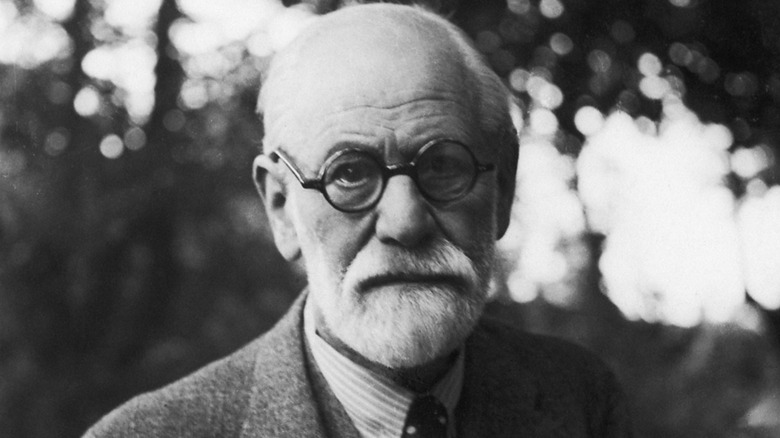
Psychohistory in "Foundation" is a bit different than how it's defined in real life. The discipline can be traced back to the 1950s and is focused more on the intersection of history and psychology. Rather than trying to predict the future based on previous choices, it's looking to determine why decisions were made based on someone's personal history, putting the analysis on a smaller scale. This idea is also seen in psychoanalysis, a field which originates with the ideas of Sigmund Freud.
Both seek to anticipate human actions, but Hari Seldon quantifies past behavior to create models for calculating probabilities, whereas the real field looks more into analyzing why different things happened. As "Foundation" continues, Seldon uses his work to try and change the future — much like these essential alternate history shows — attempting to delay or shorten an era of brutality that will come after civilization's collapse. Whereas those studying psychohistory in the real world are interested in topics like parenting and child development.
Both versions of the discipline are alike in that they've had pushback. Seldon is initially thought to be committing treason with his models, until he's pardoned and sent to build the Foundation. During its prime in the late 20th century, psychohistory received criticism for its methodology, which in turn caused academics to renounce the field. While it isn't commonly used today, some historians still argue for the importance of this discipline.