

5 Essential Alternate History Shows Everyone Needs To Watch At Least Once
Sometimes escaping reality and watching an alternate version play out on the TV is exactly what some people need. Alternate history series highlight how one change, one different decision, could truly modify the future, no matter how small the choice may seem. They can be fun thought exercises or great projects that reflect current events, displaying how history can repeat itself.
There are plenty of options in the genre — even "Bridgerton" is an alternate history show, with Queen Charlotte as a woman of color changing how people of color are considered within the aristocracy. While the Netflix project tackles Regency romance, most alternate history entries look at wars in history, like the Cold War or World War II, through a different lens.
If you aren't sure which shows to watch, don't sweat. After considering critic reviews, the five that are essential to watch become clear. They tackle events like the Space Race in "For All Mankind," different World War II outcomes in "The Plot Against America," and even "Fallout's" retro-futuristic adaptation rooted in nuclear fallout. Despite their differing versions of history, each series on this list is worth a watch, even if it's just once, because of how well they build their different timeline.
The Plot Against America
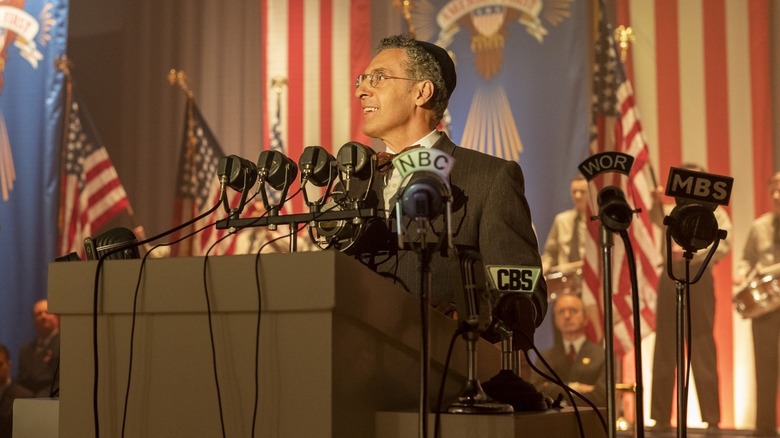
What would happen if Charles Lindbergh, a man known for his aviation and military achievements today, became president in 1940? That's the alternate history HBO's "The Plot Against America" follows. Lindbergh runs on a policy rooted in xenophobic populism, which capitalizes on fears related to immigration. In the show's case, it's rooted in the antisemitism of World War II.
The miniseries spans two years, from 1940 through 1942. Political unrest continues to grow on both sides of the aisle, and the country aligns itself with Adolf Hitler and spirals into a fascist regime. Without giving too much of the narrative away, be prepared for an unresolved ending. "The Plot Against America" ends with an election, but it never reveals who won. This forces audiences to consider what the outcome could be, based on the two-year period presented and the state of the country at that time, leaving things more open-ended than others in the genre.
"The Plot Against America" has an 87% from critics on Rotten Tomatoes, with an audience score of 73%. Positive reviews highlight how well the series tackles topics that feel increasingly more relevant today, with Alan Sepinwall of Rolling Stone describing it as "chilling in the ways that life has begun to imitate its source material's art."
SS-GB
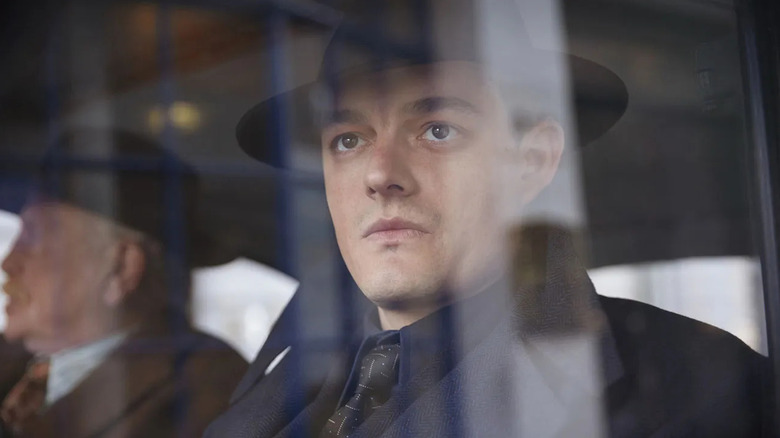
Like "The Plot Against America," "SS-GB" shows a different outcome to World War II, but in the BBC One project's case, it's if the United Kingdom became controlled by Germany in 1941. During the actual war, the United Kingdom was part of the Allied Powers, alongside the United States and Soviet Union. However, "SS-GB" shows the country falling to Germany after the assassination of Prime Minister Winston Churchill, with the Soviet Union siding more with Germany and the United States not providing aid.
The BBC miniseries frames itself more like a procedural, with Scotland Yard investigator Douglas Archer (Sam Riley) trying to solve a murder that was seemingly carried out by members of the political resistance. It presents a different framing than most alternate history projects, since the politics of the time influence the investigation and help reveal different details, like a possible motive, and it's through that lens that scientific innovation and other key parts of the war are revealed.
Audiences and critics alike enjoyed "SS-GB," with a 92% and an 89%, respectively, on Rotten Tomatoes. Because of the murder mystery at the center, reviews credit the show for having a more human aspect than others in the genre. "There are plenty of human strands woven into a murder plot that feels satisfyingly convoluted," Jasper Rees wrote for The Telegraph.
For All Mankind
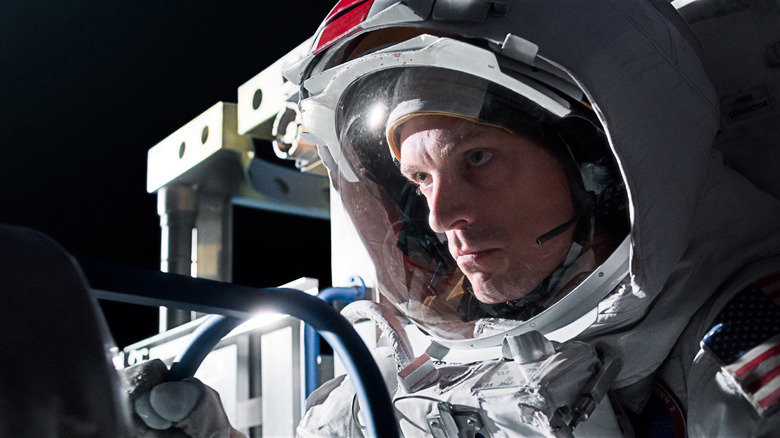
The Space Race is an important era of history, not just because of the scientific innovation it encouraged, but because of the tensions behind it. In "For All Mankind," the Soviet Union wins the race, landing the first cosmonauts on the moon, rather than the American moon landing that did happen. Because they are now behind the curve, NASA is trying to catch up, not just in scientific discovery, but in social capital, developing a female astronaut program.
"For All Mankind" gives a great look at how the United States may have continued to push scientific discovery if they hadn't been the first on the moon. As the series progresses, there's a station on the Moon and on Mars, and things get more fantastical as the show explores the idea of a Mars colony. It's the kind of alternate history that somehow both gives you hope and makes you question just how far we should go when it comes to space exploration.
The Apple TV project boasts an average of 91% from critics on Rotten Tomatoes across five seasons. While the first season is rated the lowest, it provided the perfect foundation to build on. "'For All Mankind' distinguishes itself by speculating how far a truly dedicated space race could've gone without shying away from the ugly realities of Cold War America," Christian Holub wrote for Entertainment Weekly.
Fallout
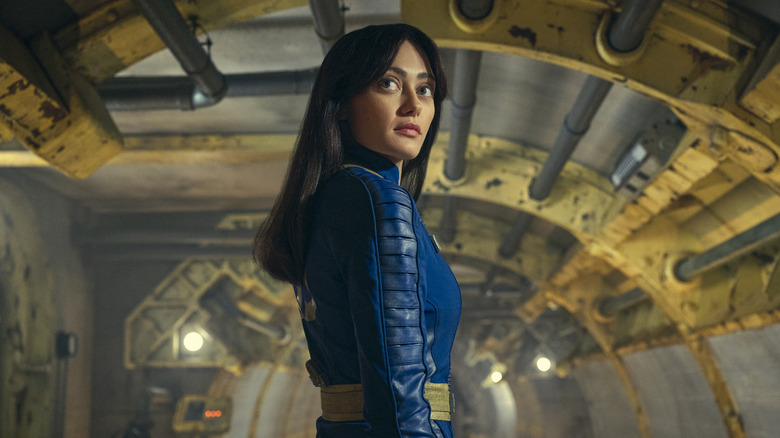
In an alternate timeline, a nuclear war takes place in 2077, causing people to live underground in vaults to protect themselves from the radiation on the surface. Fast forward 200 years, and "Fallout" is about Lucy (Ella Purnell), a young woman who grew up in a vault, as she leaves everything she's known to find her missing father. While she's initially naïve to the world around her, interactions with The Ghoul (Walton Goggins) and Maximus (Aaron Moten) help her adjust to her new environment.
Based on the video game franchise of the same name, "Fallout" follows a different history in the post-World War II world. The United States and China end up in a nuclear war over resources, and corporations take advantage of people's worries by selling spots in the underground vaults, commercializing the panic. Combined with interesting scientific efforts and political involvement, it makes for an intriguing premise as the audience and Lucy try to work through the true history of the vaults.
"Fallout" averages 94% from critics and 96% from audiences across its two seasons so far on Rotten Tomatoes. Reviews compliment how well Prime Video adapts the games, with RogerEbert.com's Brian Tallerico writing that the series "both thoroughly understands these influences on the source and allows itself a new identity."
Watchmen
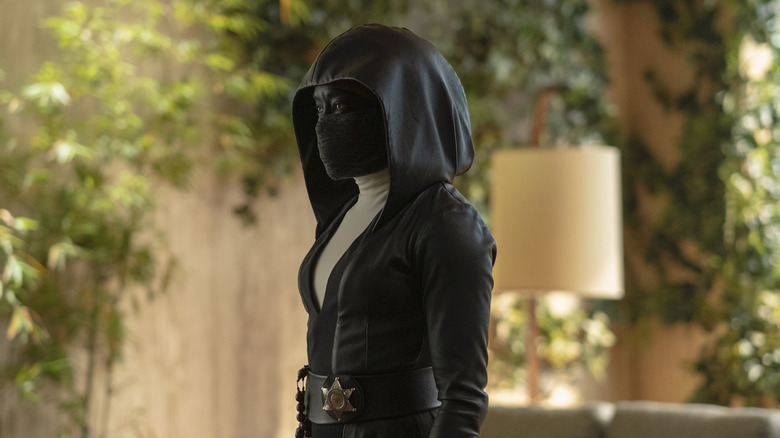
"Watchmen" features an alternate reality where being a superhero, sometimes called a vigilante, is illegal. Unsurprisingly, a world in which superheroes exist means parts of history change, especially with regard to racial tensions. The series takes audiences to different places in time, sometimes as early as the 1920s during the Tulsa race massacre, to see how different ideals build, and how rhetoric changes policy, especially in Tulsa, where police officers are now masked as a protective measure.
While the work of a superhero forces the world to come together to prevent a war, things only go downhill from there. "Watchmen" shows how vigilante talking points are used for the worst, leading to the development of a white supremacist group in the future that continues to terrorize Tulsa. The series is unique in that, through the superhero framing, it hits on important themes like racial injustice and vigilantism.
Critics loved "Watchmen," with the show boasting a 96% on Rotten Tomatoes. Audiences weren't as favorable, only giving the project a 57%. It seems that while critics complimented it for the inclusion of the Tulsa race massacre and the discussions regarding race, audiences didn't like it, with some believing the creative team was trying too hard to make the story "woke." "'Watchmen' paints a chilling portrait of politically and racially divided 21st-century life," Nick Schager wrote for The Daily Beast.