

Who Owns Casetify, The Smartphone Accessory Brand?
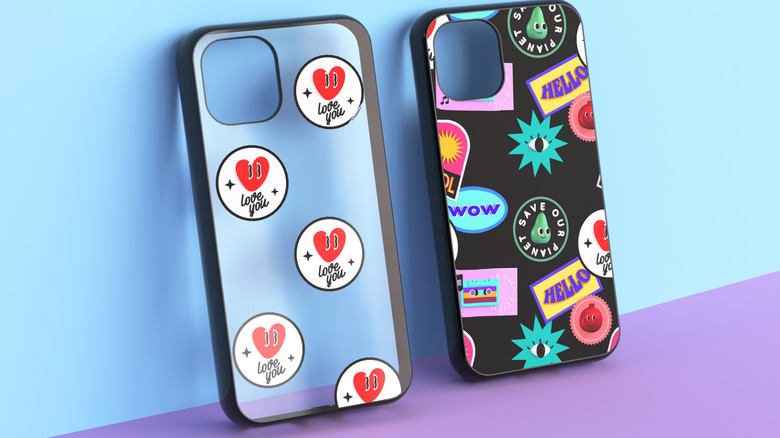
Casetify is famous for injecting some color into the tech space, which oftentimes tends to look drab and boring. Sure, the prices of its offerings are on the higher end ($60-plus for a phone case may seem ludicrous to many), but the company's more expensive cases are generally worth it, as they're well-built and offer solid protection. So, how did a company that focuses purely on expensive phone accessories get so big? Who owns Casetify?
Casetify is a privately-owned company with headquarters in Hong Kong and offices in various locations like Los Angeles, Tokyo, and Taipei, to name a few. Co-founded in 2011 by Wesley Ng and Ronald Yeung, it's a bonafide success story and a prime example of "pulling yourself by your bootstraps". From humble beginnings, Casetify eventually got so prominent in the accessory business that some of its partnerships include the likes of Bandai Namco, which allowed it to roll out a collection of Tamagotchi-inspired products for iPhone and Samsung Galaxy — not a small feat by any means.
Despite its success, the brand retains its friendly charm. Casetify is still led by its founders, and even though it's prominent in the phone accessories market, it remains a mid-size company, employing under 1000 people. It's relatively standard practice for companies (sometimes even large chunks) to be owned by private equity firms, but Casetify goes against the grain, so to speak. The only external investor so far is Andrew Cheng of C Ventures, who owns a 10% stake in Casetify, meaning that the founders retain majority ownership to this day.
The charm behind the success of Casetify
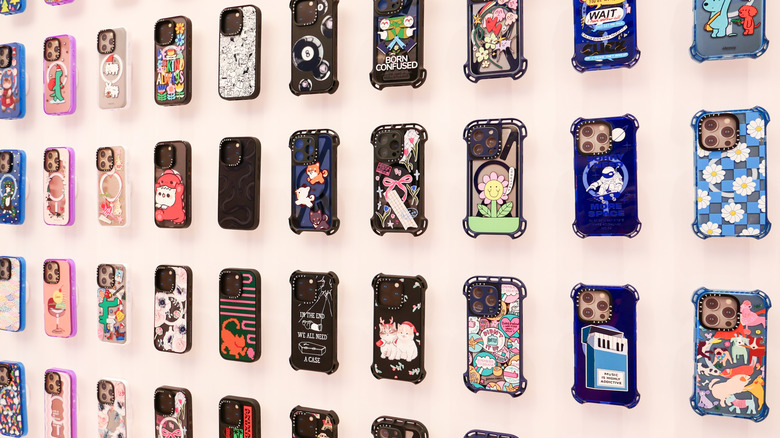
An early bird getting the worm doesn't only apply to waking up in the morning: it's also true for running a business, and Casetify is proof. Back in 2011, when fourth-generation iPhones were released, Wesley Ng snagged one quickly. The co-founder was disappointed by the cases that were available at the time. He believed that, while offering protection, they ruined the phone's design. Thus, an idea was born to use the case as something of a canvas, letting users express themselves with a case that actually looked decent. Initially, Casetify started as a straightforward e-commerce platform where customers could order fully-customized cases with their own photos.
With just $200,000 in capital, the platform was a far cry from the lifestyle brand it is now. It eventually hit so big it struck up partnerships with giants ranging from BMW and Disney to Gen Z pop stars like Olivia Rodrigo. Ng believes that the key to the company's success was the fact that it rewrote the narrative around smartphone cases as a simple commodity, with a singular goal of protection, making them a tool of self-expression.
The key word behind its success, one could argue, is authenticity. Casetify's mission is to turn drab objects into artistic canvases, and this philosophy permeates most of its outings, not just phone cases. Take Casetify's entry into the realm of carry-on luggage as an example. It took something as boring as luggage and made it another outlet for self-expression.