

When (And Why) Did Google Sell Motorola?
Google was already a huge company when it acquired Motorola Mobility for $12.5 billion in 2012. Founded in 1998 by Larry Page and Sergey Brin as a Stanford research project, Google grew quickly from a dorm-room experiment into a proper company with an office, its first search engine, and, crucially, financial backing.
In the 2000s, it had expanded to become a huge web entity thanks to the success of products like search ads, Gmail, Maps, YouTube (acquired in 2006), and Android. Google acquired Android Inc. in 2005 as a way to move into mobile and protect its search business as smartphones became the main gateway to the internet. The first public release of the Android mobile operating system was in 2008, and by 2012, when it bought Motorola Mobility, Android was already central to Google's mobile strategy.
The setup was short-lived, however, as just two years later, with Motorola Mobility's hardware unit suffering losses, Google decided to sell it off while retaining other parts of the business. Chinese firm Lenovo bought Motorola Mobility for $2.91 billion in 2014 in a deal that saw Google retain the vast majority of the patents. Let's take a look at the broader picture, including why Google wanted to hold onto those patents, and who owns Motorola Mobility today.
Why did Google go for Motorola in the first place?
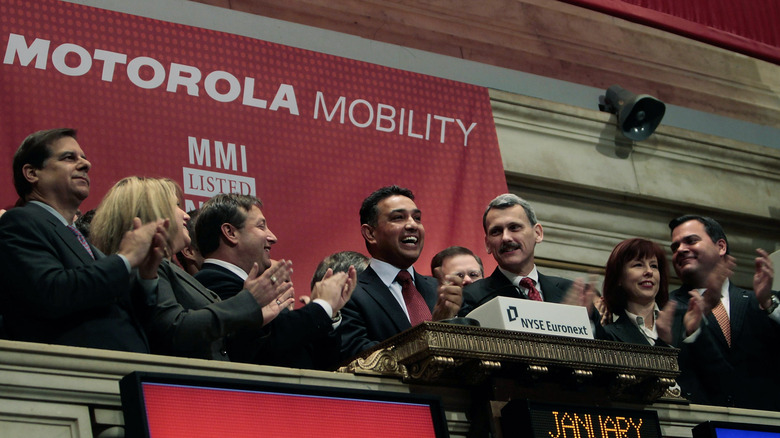
You may be surprised to learn that Motorola has been around a long time. A really long time. The company started life in Chicago in 1928 as Galvin Manufacturing Corporation before adopting the Motorola name in 1947. It began as a radio and communications equipment maker and then expanded into related technology fields that later included mobile phones and network infrastructure.
A year before Google came knocking in 2012, Motorola split into two companies — Motorola Mobility and Motorola Solutions — dividing its business between consumer mobile devices and communications equipment, respectively. It was the Mobility unit that piqued Google's interest as it offered a path to move further into mobile hardware. It was also an opportunity to bolster Android through Motorola's know-how, and ultimately drive innovation. Google also concluded that Motorola's huge number of technology patents could help to better protect Android from patent-related lawsuits from rivals like Apple and Microsoft, whose legal challenges against Google and Android device makers were intensifying in the 2010s. Motorola was also able to use those patents in lawsuits that it launched itself, for example, in a 2010 case against Apple regarding 18 patents covering features such as location services, antenna design, email transmission, touchscreen motions, and 3G wireless technology.
When Google sold Motorola Mobility to Lenovo in 2014, Lenovo acquired the handset business, the Motorola Mobility brand and trademark portfolio, and more than 2,000 patent assets. Google, meanwhile, retained around 15,000 of the remaining patents and applications, though Lenovo was able to use them as part of the deal. As of 2026, Motorola Mobility still exists within Lenovo as its own smartphone division. So, how's it doing?
Lenovo gets Motorola back on its feet
Motorola Mobility had a shaky start with Lenovo. In 2016, two years after Lenovo had acquired Motorola for nearly $3 billion, the Chinese firm revealed that attempts to integrate it into its business "did not meet expectations," explaining that sales of Motorola's mobile products had tumbled 85% in its latest quarter, compared to the same period a year earlier. Lenovo also said the transition to the new Moto G in North America went badly, partly because the handset launched later than expected.
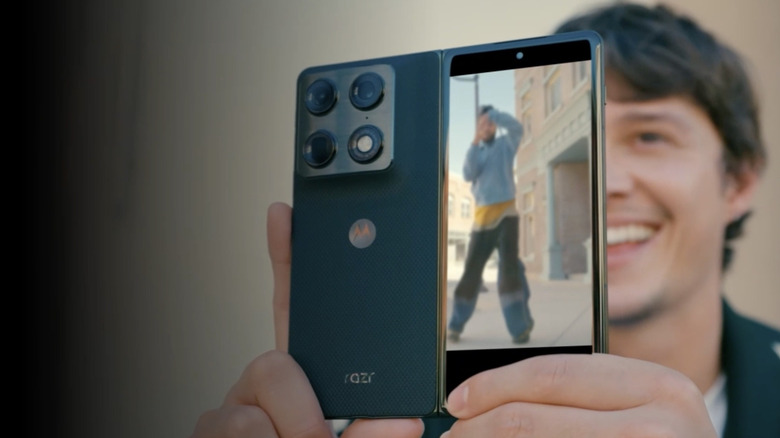
But Lenovo wasn't about to give up on Motorola. After evaluating the challenging situation in 2016, the company worked on boosting sales in regions such as Latin America, India, Japan, the Middle East, and North America, partly by shifting from carrier sales toward unlocked phones. It also sought to continue offering handsets across a range of tiers, from the budget Moto G phones to higher-end Edge models, and foldables like the Razr that include the premium Razr Fold. With planning and patience, Lenovo was able to turn things around, and in the fiscal year 2024/25, it announced that its smartphone revenue had hit its highest level since the Motorola acquisition, with Motorola's business helping drive 27% year-on-year growth.
Sudhir Chadaga, a long-time Motorola Mobility executive, sounded a confident note in an interview in 2025 in which he stated a goal to double Motorola Mobility's business "in three to four years." Motorola Mobility's journey, including its time with Google, has been a turbulent one, but a renewed strategy seems to have paid off, with the business now seemingly on a firmer footing.