

Netflix Lost A Hard Drive That Contained A $45 Million Nicolas Cage Movie
Netflix has been sued over the apparent theft of a hard drive containing an unreleased movie called "Fortitude" starring Nicolas Cage, most recently seen in Spider-Noir. The movie's producer, Simon Afram, together with his company Op-Fortitude, is asking for $105 million in damages, claiming the theft has ruined "Fortitude's" exclusivity and impacted its marketability. The spy thriller had been sent to Netflix for an internal screening.
In a document filed in California federal court, the filmmakers claimed that following the theft, no potential buyer would pay millions for a movie that could be leaked online and watched for free. A producer for "Fortitude" is said to have delivered an unencrypted DCP (Digital Cinema Package) to Netflix with instructions to delete the files after the screening. This didn't happen and it wasn't until 10 days later that Netflix notified the film team of the theft, which included multiple hard drives.
In a statement to The Hollywood Reporter, Netflix notes that it "disputes any claim that it bears the risk of loss for a film delivered without the proper industry-standard safeguards." The streamer says it is carrying out an investigation and monitoring piracy sites for any leaked or resold copies of "Fortitude". In a plotline worthy of a Netflix Original, the lawsuit revealed that Afram invested some $45 million of his own money in the project, so the stakes — at least for the producer — are high.
Movie piracy in days gone by
Before hard drives and downloads, pirates physically stole movies. Back in 1983, prints of "Return of the Jedi" were stolen from theaters and turned into bootlegs. The film was the long-awaited finale to the original "Star Wars" trilogy, which helped to make it one of the biggest movies of 1983. Six thefts from movie theaters occurred in the space of just two weeks in the U.S. and the U.K.. One of them, in California, involved perpetrators in clown masks brandishing guns.
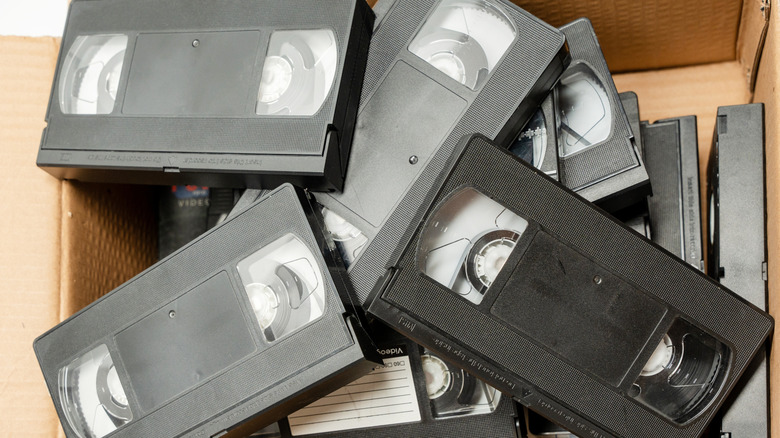
Another, in Kansas, saw an armed robber force a theater worker to hand over the reel. At least one of the stolen prints was recovered after a teenager tried to sell it to undercover FBI agents for $10,000. But what could thieves do with a movie reel when there was no internet to distribute it? Well, this was the era of the VCR — one of those gadgets from the '80s we can't help but love — when stolen films could be copied onto videocassettes and circulated through the fast-growing home-video market.
Hollywood piracy goes back to the industry's earliest years. In 1903, Thomas Edison sued movie producer Sigmund Lubin for copying one of his films, and movie studio Biograph sued Lubin the same year over a similar matter. Edison was one of the first to take legal action against a practice that was already common in early filmmaking. It shows how the temptation to pirate popular movies has always been there, and will no doubt continue for as long as movies keep making money.