

Why Did PlayStation Stop Making Handheld Gaming Consoles?
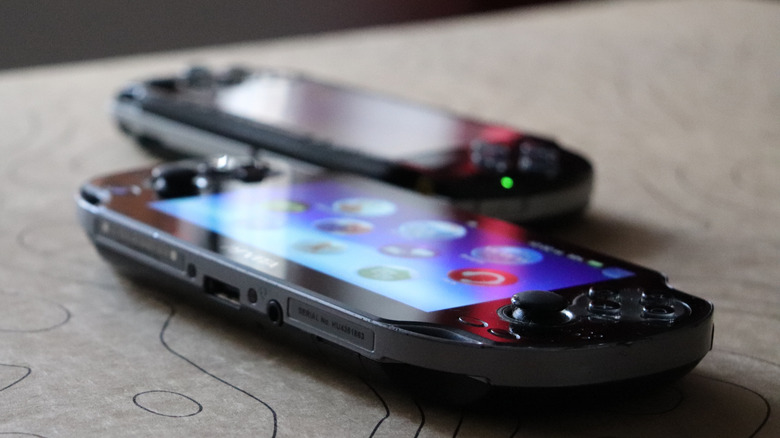
When PlayStation released the PlayStation Portable (PSP) in 2005, it successfully filled the hunger for a handheld version of the popular PlayStation 2 console. Sony began sunsetting the original PSP in 2012, releasing the Vita as its successor in February 2012 – the hope was to ride the wave of the PSP, which sold over 76 million units by the time it was discontinued in 2014. However, the Vita failed so spectacularly at becoming a viable handheld version of the PS3 that it didn't even reach a quarter of the sales of the PSP. In fact, by the time it was discontinued in 2019, Vita had only sold just 10-15 million units, prompting PlayStation to stop making handhelds ... rather abruptly, as it turned out.
Sony announced the PS Vita in early 2011, and at the time, the PSP was still in production. So it was a bit strange when Sony announced it was ending production of the PS Vita without naming its successor (though rumors of a potential PS Vita 2 have lingered for years). This was a clear indicator that Sony was exiting the handheld console market (at least for the time being). Sony even announced that it was shutting down the PS Vita store by January 2027, which came with the highly divisive decision to ditch physical disc production by 2028. It did release the PlayStation Portal for the PS5, but that is more of a remote play accessory than a true standalone handheld console. It at least showed that Sony still has some interest in handheld gaming, though.
Why the PlayStation Vita flopped
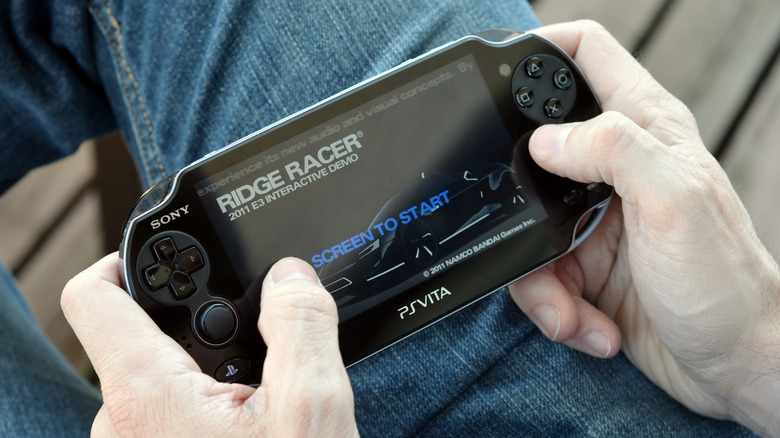
In a 2015 interview, Shuhei Yoshida (via Eurogamer) made the argument that the Vita failed due to the rise of mobile gaming, seemingly arguing that the barrier to entry for mobile gaming is low and that "many games on smartphones are free, or free to start." However, the Nintendo 3DS, which launched earlier in 2011, went on to sell 75.94 million units by the time it was discontinued in 2020. But an argument can be made that Sony seemed to forget the Vita existed at all.
Instead of flooding the system with high-quality, first-party titles and porting PS2 games (the Vita could play digital PS1 and PSP games at least), Sony abandoned it. Instead, the company began positioning the peripheral as a third-party accessory for the PS4 and then ended development of first-party games for it in October 2015 after very few exclusives, like Uncharted: The Golden Abyss and Killzone: Mercenary. Many third-party AAA developers had also abandoned the system, leaving it to become a console for indie games.
There were several other reasons the Vita failed. Price was a big one, with the Wi-Fi model retailing at $249.99 and the 3G model checking in at $299.99 at a time when the 3DS cost $169.99 (after a major price cut from $249.99). There was also the fact that in order to be able to play downloadable games on the original Vita, which had no built-in flash memory, you had to buy an expensive proprietary memory card.
Could Sony return to making handheld consoles?
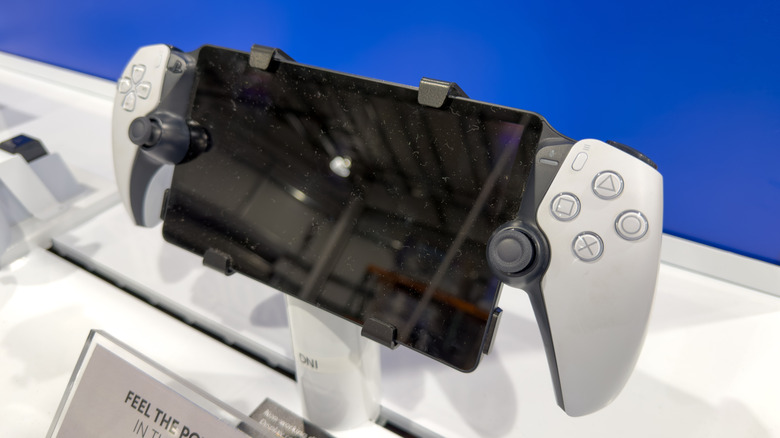
The PlayStation Portal has actually been somewhat of a success for Sony. In a Bluesky post, Matt Piscatella, a video games analyst at Circana, essentially said that for every 100 PS5 consoles sold in the United States, seven PS Portals have been sold, as well. This shows that there's still an appetite for Sony's handheld offerings. There's even a rumor circulating that the PS6 might be a hybrid console like the Nintendo Switch.
This rumor started because of what Hideaki Nishino, the President and CEO of Sony Interactive Entertainment, said in a Q&A session published by Sony in June 2026. It was in response to a question about whether Sony is planning drastic changes for its next-generation console to bring back players that migrated to PC during COVID. Nishino said that in recent years, Sony has been moving PlayStation away from being a living room console brand by selling monitors, speakers, and other peripherals. Then he said Sony is thinking of being more than just an alternative to PC, and that "includes not only technological advancements but also an expansion of usage styles, enabling a seamless experience that can be enjoyed naturally beyond the living room."
This sounds like a hybrid experience that's built directly into the console. But if Sony does take the plunge and go for a Switch-like experience, it will most likely support it better than it did with the Vita since the PS6 will be a flagship console.