

Data Centers Vs. Property Value: How AI Could Change The Price Of Your Home

Data centers are showing up in cities, towns, and farmland across the country. With more than 4,100 data centers in the United States, they appear as giant windowless buildings that require a lot of power to operate the artificial intelligence (AI) that powers well-known brands like Claude, ChatGPT, and Copilot. Data centers have made news headlines for raising electricity and water bills -— with Amazon's data centers using over two billion gallons in a year -— but they may be doing more than that for (or to) your home.
A study from George Mason University's Center for Regional Analysis uncovered that homes may actually be worth more if they are near a data center. The report found that the prices of homes in the area of Virginia colloquially known as "data center alley" are worth more than similar homes located farther away from data centers. This goes for all types of homes, including single-family units, townhomes, and condominiums. The farther away a home was from a data center, the lower its sales price tended to be, according to the study. However, there may be more to it than just being near a data center.
Data suggest that this phenomenon is linked to a few different aspects, including access to transportation, the job market, and infrastructure. Homes are built near power, utilities, and where the internet already exists, and the same is true for AI data centers. That desirability also correlates to the increased price for homes in the area, not just being near an AI data center.
Higher values doesn't always mean homes are more desirable
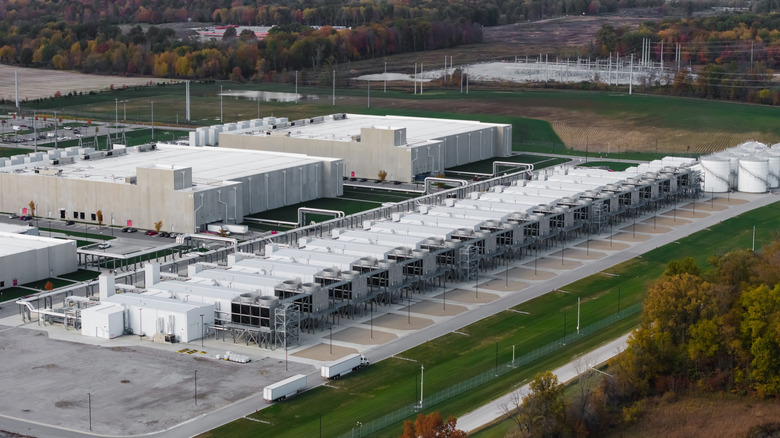
AI data centers are not particularly welcomed by the general public, and a recent poll shows that. The results from Emerson College show that 63% of United States voters do not want AI data centers to be built near their town, city, or neighborhood. That is up 21% from when the same question was posted in December 2025. Even home prices being higher near a data center isn't enough to sway people on this topic, at least not on the whole.
One way the presence of a data center nearby could impact a homeowner is an increase in traffic. Workers traveling to and from their jobs at these data centers can lead to more congestion headaches for local drivers. Aside from making traffic more difficult, this situation also increases noise, one common problem of a data center in a community. It's another factor that makes current owners fear that data centers will make their neighborhoods potentially less inviting for potential home buyers.
Data suggests that as more jobs are created with the increase of AI data centers, the economy of the region is boosted. This can also have an impact on the housing market, thus supporting higher home prices. However, homes and residents near an AI data center may also have to deal with increased water and electric bills, industrialization, a decrease in green space, and visual impacts, due to how distracting and imposing the data center buildings can be. It's a tradeoff, the real impact of which on home prices won't be known for years to come.
How might this impact the future of the housing market?
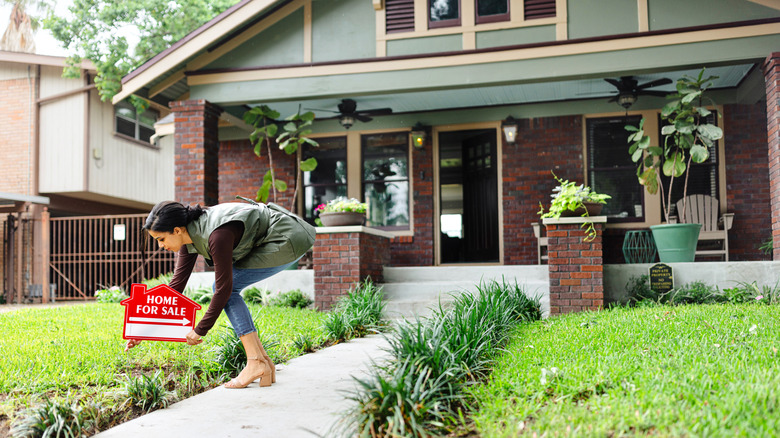
Having a home near an AI data center may be good for the seller, but only if they're able to find someone to buy it. Homeowners who live near an AI data center may think, "If I ever want to sell my house, would it be more difficult to do so?" According to some real estate agents, homes next to data centers and construction sites may take more time to sell. Buyers interested in purchasing a home may also ask more questions while viewing a home.
Data centers require space and land, as do homes and neighborhoods. They are both competing for space to build new sites, but data centers may be outbidding contractors who oversee the construction of homes. For instance, Virginia saw two separate land deals purchased by Amazon and SDC Capital Partners. Either area could have been a new neighborhood, but the businesses bought both of them within a few days for the express purpose of building new data centers.
Homeowners who live near a data center are struggling as they watch the behemoths devour resources and buy up nearby houses to gain even more land. As data centers continue to expand and new sites are built, the land necessary to build new homes shrinks. Those who already live near a data center or a potential site may see a theoretical increase in their home's value, but they also may not have an easy time selling their homes.