

Plan Vs. Upfront: Which Is The Cheaper Way To Buy A New Phone?

When buying a new phone, opting for a plan from a carrier is often the easiest, most straightforward solution. That being said, buying your phone outright from a supplier, like Apple, can be a huge cost-saving measure. If you're wanting to find the cheapest way to buy a brand-new phone, the latter may take a little more legwork but is more affordable in the long run.
Let's use Apple's iPhone 17 as our example for pricing things out. Buying directly through Apple, the base model iPhone 17, with the A19 chip and 256GB of storage, is $799, but if you want to keep your options open down the line and not choose a carrier up front, that will cost an additional $30, raising the price to $829. Now, if we use Verizon and go through one of its plans for an iPhone 17, the cheapest 36-month plan will cost you $78.05 a month (not including promotions, activation, and other one-time fees), which ends up totaling $2809.80 over the life of the contract. Unlike buying the phone outright from Apple, this Verizon plan does include service, so let's dig deeper to see if it's cheaper to sign up for a plan or pay upfront when buying a new smartphone.
Finance phone and sign up for a carrier plan
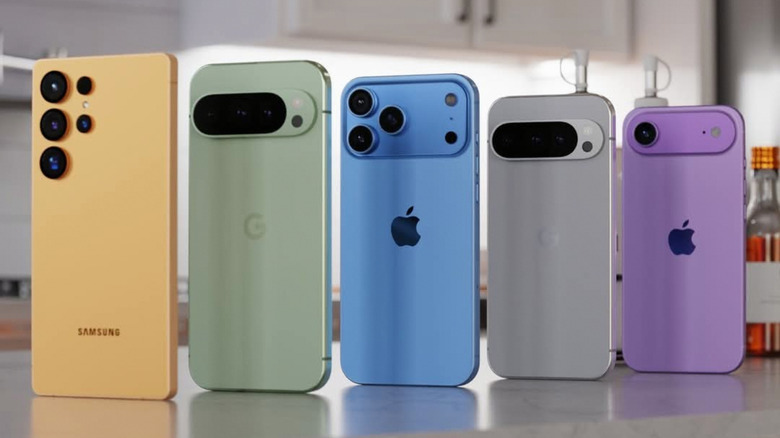
Carriers often offer the best deals when you finance a new phone and activate service, making this kind of deal look more appealing to customers on the front end. There are finance options that can be as low as 0% interest for qualified buyers, but financing your device locks you into a carrier. Verizon isn't your only option for a mobile carrier, and T-Mobile, for example, charges $84.59 per month for an iPhone 17 — including $50 per month for the line — over 24 months, totaling $2,030.16. AT&T will cost in a similar range to other devices on a 36-month contract at $2,773.80. As you can see, you might be paying more up front to buy a phone outright, but you'll pay a lot more on the backend when financing with a service plan that you're locked into.
Being locked into a carrier also affects how you can use your service. All three major providers give unlimited data on their cheapest plans, but they dish it out differently. AT&T provides 5GB of "high-speed data", while T-Mobile bundles 50GB. Verizon doesn't state any cap, but it will slow down speeds when traffic on the network is busy. All of this can be circumvented by buying a phone outright, but it's potentially getting harder to recommend in the current climate.
Buy phone upfront from a supplier
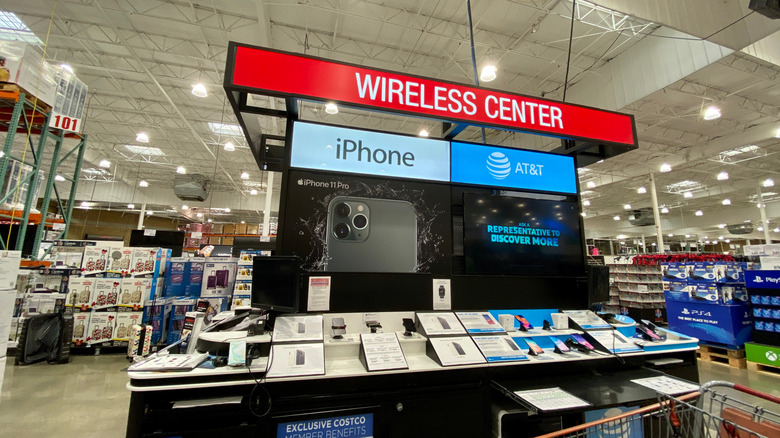
Of course, when you buy the phone outright, you still need to activate service, but the good news is that there are plenty of carriers with affordable unlimited plans under $50 a month. Most carriers offer attractive discounts for users transferring their devices, such as Verizon's "Simple Plan" for $30 a month. Using this price and the above example of a 36-month plan from Verizon, you'll be paying just $1,909 to buy and use the iPhone 17, which is $900 less than financing and signing up for a plan. The real benefit to buying a phone outright is that you then have a fully unlocked device. There's no dictation for where or who you go with, allowing you to go with the best deal for you, rather than whatever a carrier can muster up online.
As the industry continues to be impacted by rising prices, it's recommended that if you're planning on buying any tech — phones, laptops, etc. — in the near future, you consider buying sooner rather than waiting for a deal later. Samsung has already raised prices on its phones and tablets, and while the iPhone hasn't had any drastic spikes for consumers, Apple has increased prices on various devices. The upcoming iPhone refresh is expected to see a price increase compared to the current generation.