

Should You Switch To A Smaller Physical Keyboard? Here's What Users Say
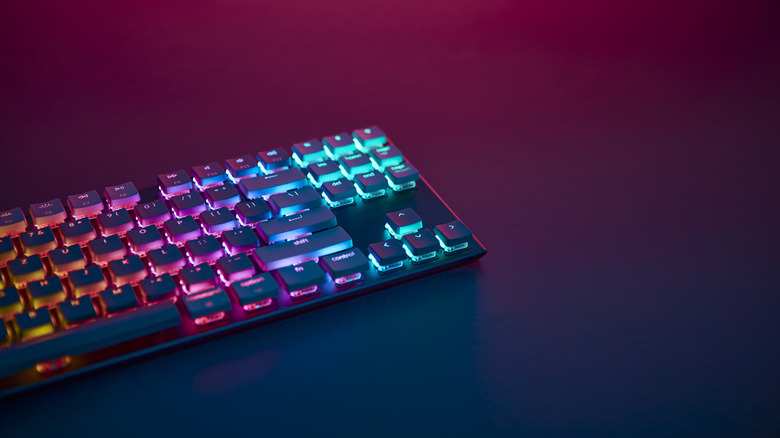
It's possible to find mechanical keyboards at all budgets and sizes. Granted, the form factor depends on your personal preference and what you plan to use the keyboard for. A tenkeyless keyboard may be the best-sized keyboard for gaming, as it eliminates the numpad, which you may not use in games like "Valorant" or similar titles. However, a tenkeyless may still be too bulky. Should you make the switch to something smaller, though? Do users who started rocking, say, a 60% or 65% keyboard regret their decision?
On the contrary, after a short adjustment period, some gamers eventually fell in love with their keyboards, even if they were the more compact, 60% variety. For reference, this particular keyboard is minimalistic and lacks F-keys or arrow keys, which might make navigation a bit tricky for some. Thus, 65% is quite popular, as it maintains both types of functions (though the F-keys are on layers) and can commendably do double duty in a gaming rig as well as for remote workers/typists.
Why are 65% keyboards so popular?
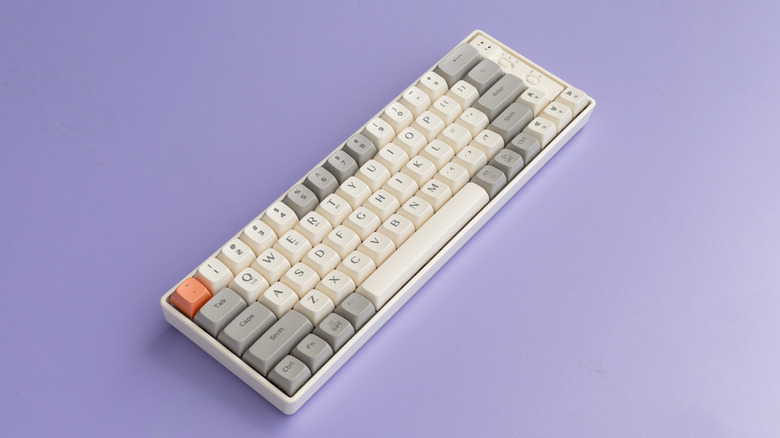
Online sentiment surrounding 65% keyboards is generally positive. Many users say they love that their device maintains a compact design while preserving arrow key functionality. A Redditor who used a 65% for four years maintains that, in addition to the arrow keys, they love the fact that it still has PgUp, PgDn, and DEL buttons. Speaking of usability, another user said its smaller layout doesn't take much extra time to get used to. According to them, switches and specific functions (such as F-keys) are generally smoother to use than on more compact keyboards.
A perfect balance between design, function, and compactness may not be enough to make everyone happy. Some believe that their popularity is nothing more than a trend, pointing out that 75%-sized keyboards once enjoyed a similar standing a few years earlier. Different strokes for different folks in action, one might say: a user who thinks 65% keyboards are a solid daily runner for gaming still prefers a tenkeyless because it retains dedicated function keys.
What are some alternatives to a 65% keyboard?
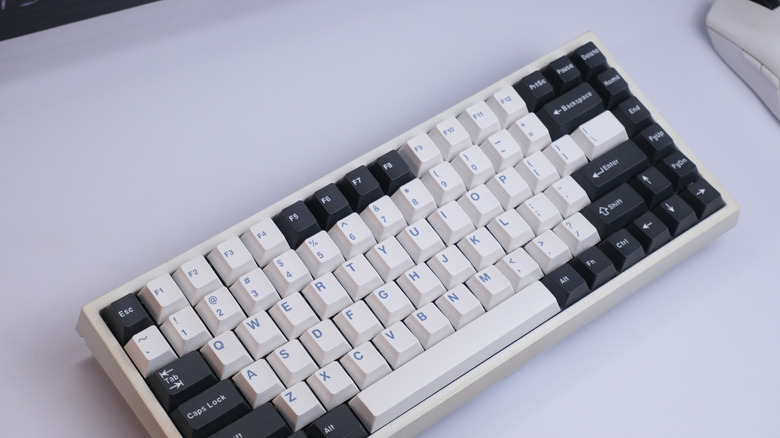
Sticking with the idea that keyboard size is a personal preference, one user claimed that the F row is outright useless, but commenters quickly sprang to the defense of this keyboard row. A person who uses their keyboard for working actually got rid of the 65% and had to switch to a 75% because they missed the F-keys. In one of the comments, a software developer agreed, saying that a 65% size is perfect for gaming, but a 75% size is much easier to use. A good rule of thumb, perhaps.
A 75% keyboard sports a function row, is easy to navigate, and you don't need to learn any hotkeys or combinations if you're switching from a full-sized version. Naturally, they may not look as sweet or be as compact as a 65% size, but if you prioritize function over space, then you'll be right at home with it. One user tried multiple versions, and after ditching a tenkeyless for a 75% and then a 65%, they maintain that the 75% is compact enough (it axes the media keys that many tenkeyless designs implement) and has a full F row.
When picking out a mechanical keyboard, the size absolutely matters because it will ultimately have a huge role in the comfort. It's also a matter of sacrifices. Full-sized keyboards are, in many cases, overkill for those who aren't working with numbers, but the further you shrink from a tenkeyless, the more functionality you lose in exchange for compactness. A 75% is a great option for professionals and gamers if the 65% seems simply too barren.