

The World's First Mobile Phone Call Was A Perfect Example Of '70s Tech Rivalry
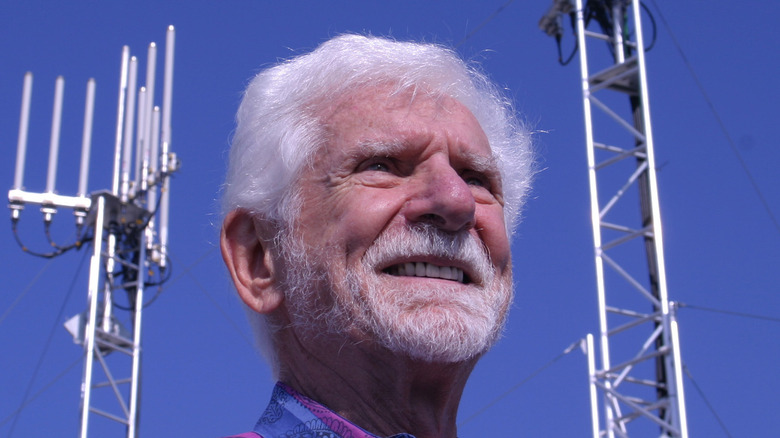
The first mobile phone call ever made happened on April 3, 1973. Dr. Martin Cooper, who worked as an engineer at Motorola, made the historic move when he called Joel Engel, his rival at Bell Laboratories. Dr. Cooper informed Engel that he was placing the call from a "personal, handheld portable cell phone," but all he heard back was silence as he presumes he had left his competitor speechless.
Back then, the two companies were duking it out for innovation in the space, and this first mobile phone call was Dr. Cooper's subtle way of telling his competitor that he won. He achieved what both companies had been setting out to do, which was take the concept of calling mobile. The move was indicative of an era that was defined by tech innovations, and the 1970s also saw the beginnings of rivalries between companies like Apple and Microsoft, AMD and Intel, and Nintendo and Sega.
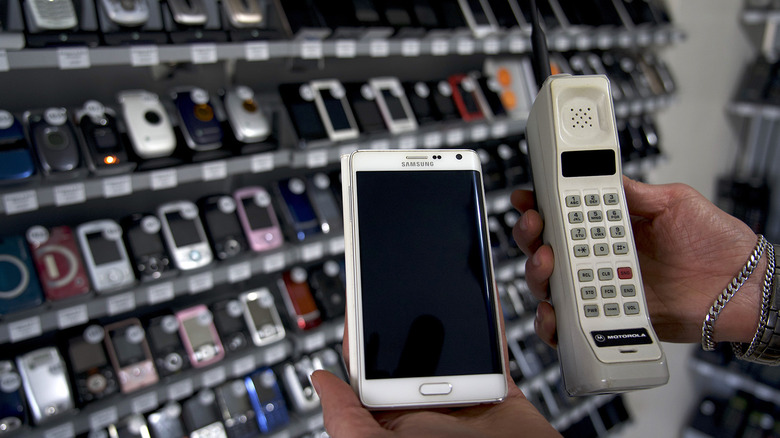
Many cellphone brands have come and gone since then, but the biggest rivalry today is arguably between Apple and Samsung. Apple exists in its own silo, while Samsung ranks among the best Android phone brands. But back then, it wasn't about one-upping with features and designs like it is today. It was about creating technologies that would pave the way for the smartphone as we know it. Nowadays, cellphones have evolved so much that making voice calls is the least exciting thing we do on a daily basis, but Dr. Cooper's not-so-subtle gloating was more than warranted.
The history of the first mobile phone call
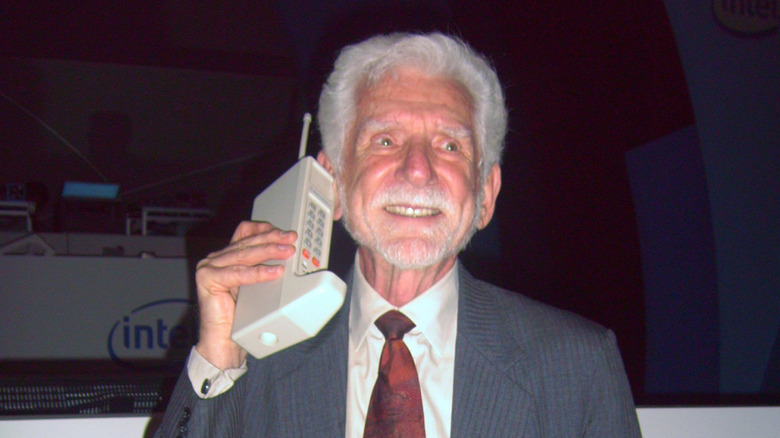
Back in the '70s, Bell Laboratories was focusing its efforts on phones you could use in the car. Anyone who grew up in the '80s might recall the jaw-dropping moment when they saw a friend or family member grabbed a receiver from their vehicle to make a call. Maybe you were one of the ones lucky enough to afford that first mobile phone. The first actual cellphone available to consumers was the Motorola DynaTAC 8000X, and it cost a hefty sum that would equate to about $11,700 today. While Dr. Cooper made that call in the early '70s using an early prototype of what would eventually become this phone, the device didn't reach the market until 1984.
Dr. Cooper was right in assuming that locking us to our vehicles instead of our homes to make calls wasn't the right way to go. And he proved that in the best way possible by placing this call to let his rival know what he was able to achieve, standing in the middle of a busy street instead of tied to his car. The phone was rudimentary by today's standards. It could only make calls for about half an hour before the battery died, took 10 hours to recharge, and weighed 1.7 lbs. But back then, it was revolutionary.
What Dr. Cooper has to say
I had the pleasure of interviewing Dr. Cooper back in 2013 during the 40th anniversary celebration of that first mobile phone call. During our conversation, he said his goal in launching the phone was simply to stop AT&T, which owned Bell Laboratories at the time, from "creating a monopoly in the cell phones. And not only that, but a monopoly in car telephones." He acknowledged that AT&T invented the cellular technology back in 1947, but he didn't want them to be the sole carrier once the devices came to market. "We thought the world was ready for the freedom you get in having personal communications. And we sure didn't want to get put out of business."
So, the call wasn't just about rivalry or winning, it was also about ensuring that the market would remain open for consumers. Interestingly, that's a debate we still have to this day, especially in countries like Canada were there are only three major cellphone carriers. That said, the call was still rooted in rivalry. In 2023, Dr. Cooper told NPR that he was "not averse to rubbing [Engel's] nose in our achievement." That he did, in the best way possible — in the middle of a busy New York City street. There's no doubt that call changed the course of communications history, and it made Motorola and Dr. Cooper household names.