

4 Companies That Did Modular Phones Before Fairphone
Fairphone, which is a Netherlands-based smartphone brand, is known for selling easily repairable Android phones. Its latest phone – the Fairphone (Gen. 6) – features 12 user-replaceable parts, such as the battery, screen, speaker, and cameras, and even supports swappable lower back plate accessories. While Fairphone remains the only notable brand offering this level of modularity or repairability in 2026, it's hardly the first company to work with modular phones.
Several phone brands, from big to niche players, have tried developing modular phones over the years. While some, like Phonebloks, remained largely limited to viral concept videos, others like Motorola saw more success and actually released several "modular" phones. There have also been other smartphone brands, like Google, which spent years trying to produce a truly modular phone but never really succeeded. Here are some notable brands that did or tried to make modular phones before Fairphone, and what they achieved.
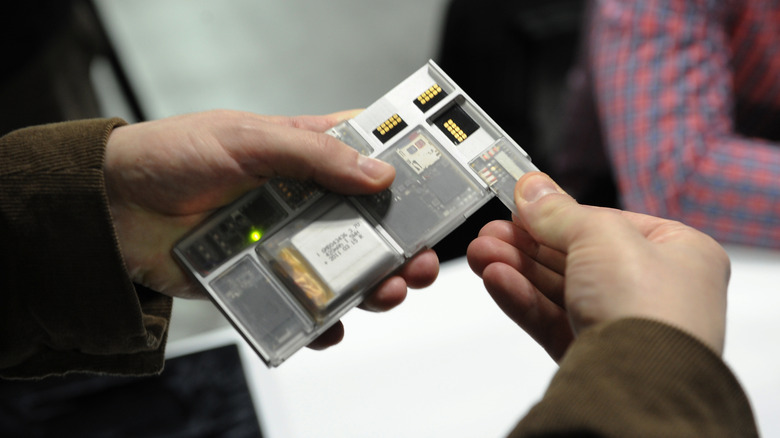
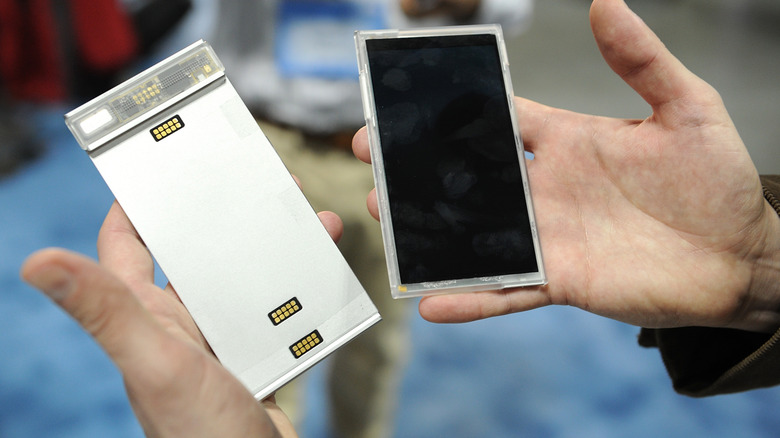
Google's modular smartphone project is probably the best-known and most ambitious. Called Project Ara, it essentially attempted to build a truly modular phone in which there was a primary endoskeleton to which you could simply attach all the relevant parts, like the display, battery, CPU, and camera. It began as part of then-Google subsidiary Motorola Mobility's Advanced Technology and Projects (ATAP) team. When Google sold Motorola to Lenovo, it kept the ATAP team, which continued working on Project Ara. It was influenced by Phonebloks, a modular smartphone concept, and Phonebloks's creator and designer, Dave Hakkens, worked as a consultant on Project Ara.
The Project Ara smartphone was supposed to debut in 2017 after delays; however, that never happened, after Google unceremoniously killed the project in September 2016. Several prototypes emerged while Google actively worked on it; however, none achieved the true modularity Google promised at the unveiling. The last prototype and a developer version Google showed at I/O in 2016 were a significant departure from the original idea and included many non-upgradeable parts, such as the CPU, GPU, antennas, sensors, battery, and display. It was an interesting and ambitious idea, but the technical challenges were simply too big to overcome.
Motorola
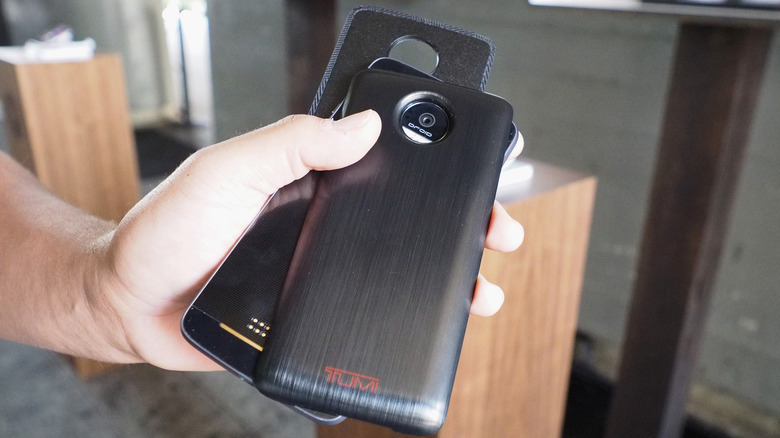
While it was still a subsidiary of Google, Motorola offered semi-modular smartphones as part of its Moto Z lineup. Rather than go too ambitious, Motorola opted for a more feasible approach. It essentially sold regular smartphones with all the essentials you need for a proper smartphone experience, but let users expand the phones' functionality with optional Moto Mod attachments. These Moto Mods were connected to the back of the phone using pogo pin connectors and magnets.
Motorola, along with third-party manufacturers, sold quite a few Moto Mods, including battery extension packs, speakers, camera attachments, projectors, game controllers, an Alexa-powered smart speaker, and more. You could simply clip any of these Moto Mods to the back of a Moto Z phone and enjoy the extra features. Besides the original Moto Z, which started the Moto Mods concept in 2016, the Moto Z Force, Moto Z Play, Moto Z2 Play, Moto Z2 Force, Moto Z3, Moto Z3 Play, and Moto Z4 smartphones were compatible with the Moto Mods ecosystem. The Moto Z4, which was launched in 2019, was the last Motorola smartphone to support Moto Mods. The company didn't launch a Moto Z5 or any other phone with pogo pins and magnets to support Moto Mods. While Motorola never explicitly revealed the reasons for killing Moto Mods, it was likely due to the subdued adoption of these expensive accessories.
LG
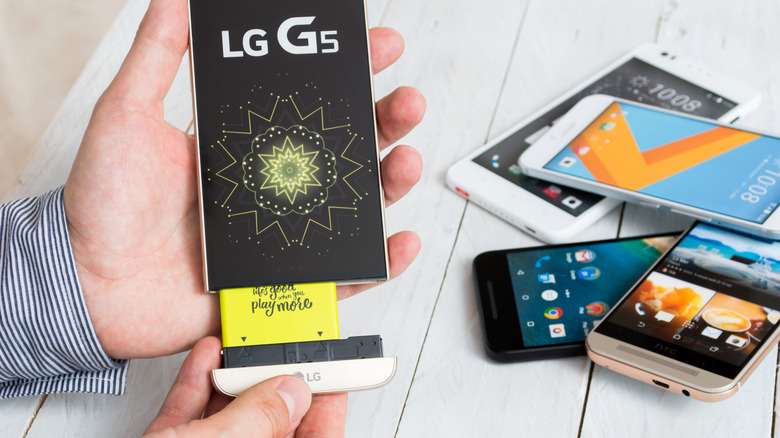
LG no longer sells smartphones, but the company has a history of trying weird and interesting concepts. The company offered its own take on modularity with the LG G5 smartphone, which included a removable bottom segment. You could swap out the default bottom for one of the quick-install "Friends" modules. Some of the offered modules included Cam Plus and Hi-Fi Plus with B&O Play. While the Cam Plus added extra battery, more camera controls, and better grip, the Hi-Fi Plus with B&O Play module brought a 32-bit Hi-Fi DAC and Amp.
The major downside of LG's system was that you had to turn off the phone every time you wanted to swap out the module. This was because removing the bottom segment removed the phone's battery, and you had to attach the new module before installing it. While the phone itself was well-reviewed, the concept didn't take off, and besides the G5, LG didn't launch any other modular smartphones. The follow-up to the G5 was a traditional Android phone, the LG G6. The company later tried other bizarre and interesting concepts, such as a swiveling dual-screen phone like the LG Wing or dual-screen case accessories for the V-series, before it stopped making smartphones in 2021.
Modu
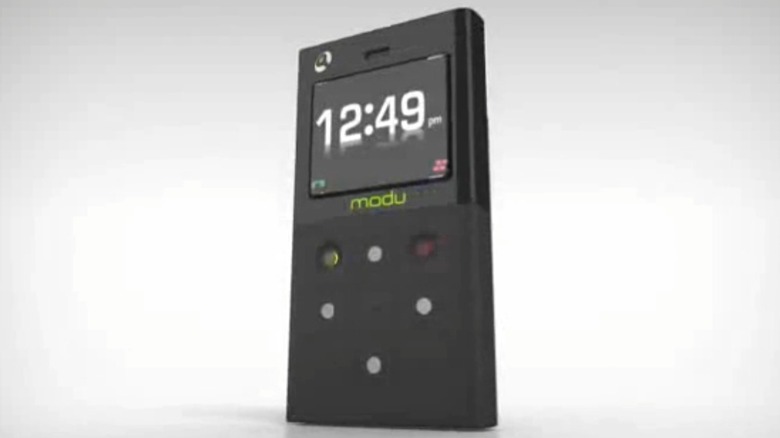
Israel-based Modu was one of the first companies to build a modular phone in 2008. It launched two modular phones: Modu 1 and Modu T. The concept was to create a core phone you could slide into different "jackets" to add functionality like a camera, GPS, or even a bigger screen. The Modu 1 was originally unveiled in 2008 but reached store shelves in 2009. It was a tiny, lightweight phone that included the basics: a keyboard, an OLED screen, 2 GB of storage, and the chip, memory, and cellular hardware to run it. For any other features, you needed to get a jacket. Two jackets shipped with every Modu 1 purchase. Some of the announced jackets for Modu 1 included a "street-art" jacket with built-in speakers and an "express" jacket that basically changed the look of the Modu 1 and its user interface to look more fun and playful.
The Modu T came in 2010, and it was physically bigger than the Modu 1. Its core unit included a resistive touchscreen and used Qualcomm's Brew OS. It offered a different lineup of jackets, including "Camerafy" to add a 5 MP camera, "Textify" to add a physical QWERTY keyboard, and "Sportify" to add fitness tracking and music player capabilities. Sadly, the company didn't see much success, and mounting debts forced it to shut down in 2011. Google ended up purchasing Modu's patents, which likely came in handy as it developed Project Ara.