

Major Underwater Internet Cable Damage In Australia Raises Suspicions Of Targeted Attacks
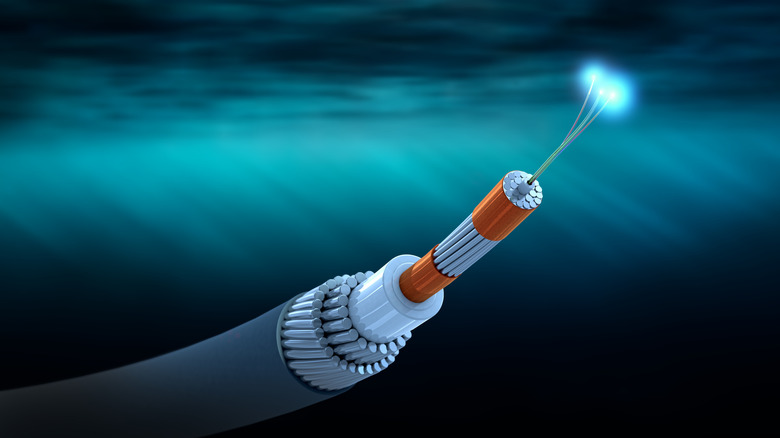
While we rely increasingly on wireless accessories, wired gadgets are generally more reliable than wireless devices — or at the very least, they provide faster data communication speeds. This logic holds true for international communication: The majority of internet traffic between continents relies on undersea cables, so when one gets damaged, people start to worry.
Earlier this week, two subsea cables that connect Australia to the rest of the world's internet experienced "shunt faults" (a short circuit caused by damaged cable insulation). The CEO of the company that manages these cables, Subco, posted on LinkedIn that the cables were "in close proximity to each other," and the faults happened within a short time span. Despite being a sovereign nation, Australia's economy is heavily dependent on its ability to connect to the rest of the internet — just like every other country in the world — and any disruption could prove catastrophic. While Australia's internet flows in and out of 16 underwater cables, the circumstances behind the damage were highly suspicious.
Around the time of the shunt faults, Subco detected "some suspicious/coincidental activity from a vessel." This information has fueled the theory that the damage was intentional, possibly terroristically so. Dr. David Brewster, senior researcher at the National Security College at the Australian National University, has cited similar attacks over the past four years as credence for the claim. He doesn't know who sliced the cables, or if anyone did, but he did say that, like with the prior cable attacks, countries such as Russia or China would be the most likely suspects.
Who owns Australia's subsea internet cables?
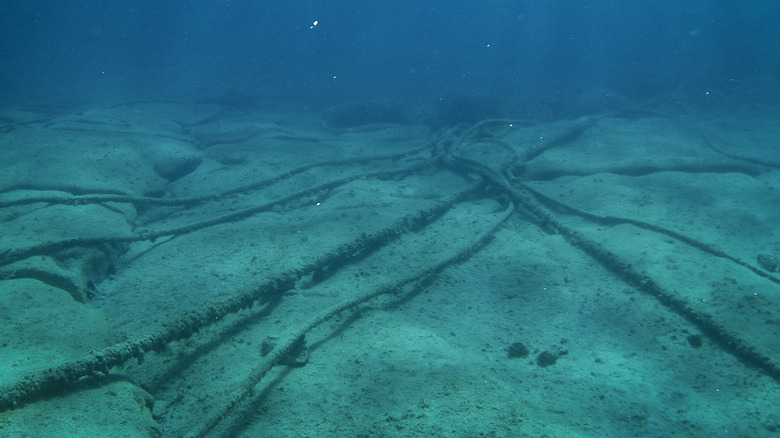
In the spirit of fairness, shunt faults are a semi-common occurrence, as these underwater internet cables are easily cut. An errant ship's anchor can slice through the insulation, and sharks have been known to bite underwater cables and test whether they are edible (sharks hunt by following magnetic fields, and these cables are veritable roman candles of magnetic activity). However, once a cable is damaged, either due to an intentional attack or accident, bureaucracy can get in the way of repairs.
While the shunted cables were situated in Australian waters — specifically, an area known as a "cable protection zone" — not all lines placed in this location belong to the Australian government. According to Dr. Brewster, many of these cables actually belong to U.S. tech giants, including Meta, Google, and Amazon. And even when a cable is 100% Australian property, ownership and responsibilities are never cut and dry. Even though Subco owns the damaged cables on paper, Dr. Brewster has clarified that no single governmental agency was responsible for them. These metaphorical monkey wrenches make it almost impossible to determine who needs to take responsibility or patch the physical damage.
As of writing, people involved in the investigation are working under the assumption that the shunt fault was an act of deliberate sabotage. According to an email from the Australian Federal Police that Tom's Hardware received, officials are still examining all the information and will comment on the situation when they can.