

How Do Underwater Internet Cables Avoid Breaking All The Time?
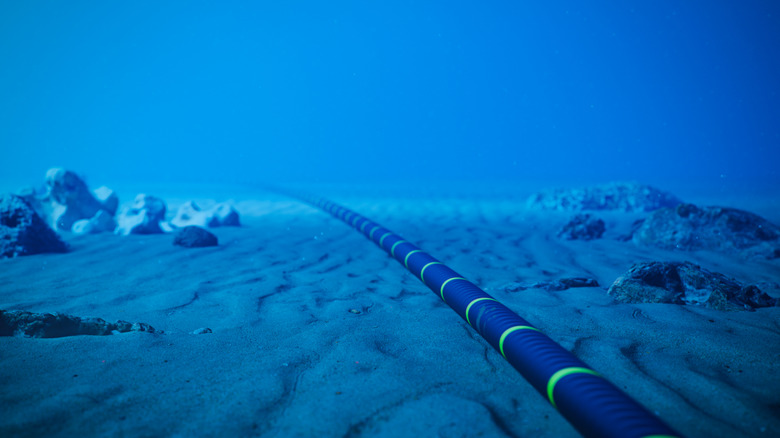
About 99% of the world's internet data is carried through high-capacity fiber-optic lines that are positioned under the sea. Nearly 750,000 miles of these underwater cables connect countries across the planet's vast oceans. In addition to your online shopping and comical cat videos, these cables help sustain critical infrastructure and services spanning financial, cloud communications, and government industries. In other words, without those cables and active connections, the web wouldn't be as worldwide as it is today. So, how do those cables stay intact and how do we avoid breaking those underwater internet cables all the time?
It may surprise you to know that, actually, they do break, for various reasons and probably more often than anyone might expect. For example, ship anchors break undersea internet cables all the time. While much less common, shark bites can sever undersea cables, as well, though they make up merely 1% of all damage to those cables. It's more likely to happen due to natural disasters like undersea earthquakes, or sabotage; the latter of which could be intentional or unintentional, such as an untimely-evacuated ship anchor.
Ultimately, the reason they don't break or sever way, way more often is because they're engineered to be tough, with designs that prioritize external and physical shielding, alongside intentional placement so they're away from ocean fault lines, shipping channels, and common fishing areas as much as possible. In shallow areas, they're also buried for additional protection.
Despite their added protections, undersea cables are extremely vulnerable
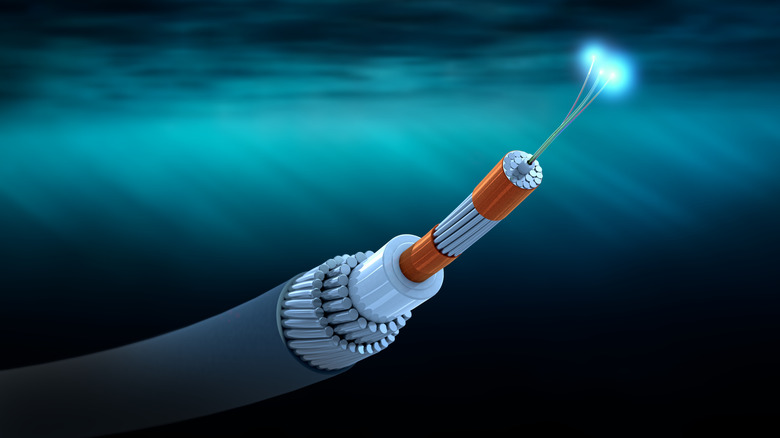
As evident by the potential for breakage, undersea or submarine cables are clearly not impenetrable. Around 100 to 150 undersea cables break every year and need to be repaired. Moreover, a vast majority of those accidents are human driven, whether from fishing boat anchors or nets, or espionage and malicious activities. Since 2023, nearly a dozen undersea cables have been severed in the Baltic Sea region, with many of those instances suspected to be sabotage. Due to growing international tensions, severed submarine cables are certainly a concern elsewhere and it's something that could happen to disrupt critical communications at any time.
All of this is to say that undersea cables are much more vulnerable than what's commonly discussed even with their redundant protections. That's before considering the inordinate costs and great difficulties of repairing broken cables in remote ocean regions. Interested parties are looking into new and fascinating ways to protect those cables. Finland, for instance, has a plan to protect its most critical internet cables with unique acoustic sensing technologies. And if you're interested, there is a neat map that actually shows all the current submarine cables in use around the globe.