

Finland Has A New Plan To Protect The Internet, And It Starts Underwater
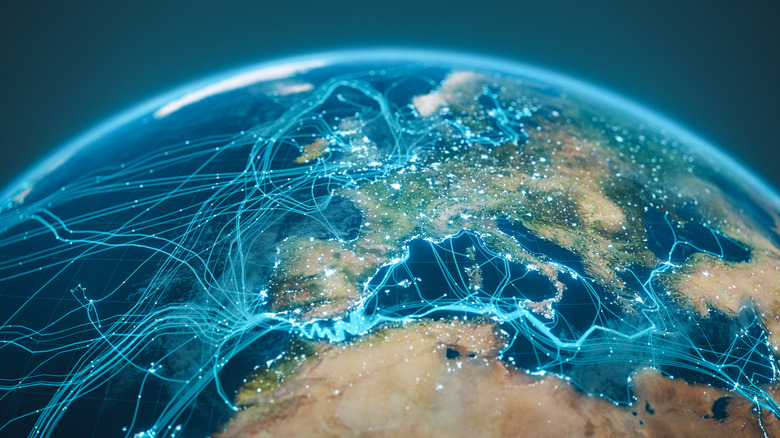
There are lots of ways your internet can go awry. At the mundane end of the scale, it might be a loose cable in your living room, a router crash, or an overloaded network. At the more sinister end, disruptions can take place far from home, deep underwater, where cables that support global internet service are increasingly seen as vulnerable targets. But Finland is trying to do something about it using Distributed Acoustic Sensing technology.
Undersea fiber-optic cables currently carry about 99% of worldwide internet traffic. The first transatlantic internet cable is being pulled up after some 40 years, having been dormant on the seabed since 2002. Today, more than 550 cables lie deep below the waves, stretching a combined distance of about 870,000 miles around the world. Incidents resulting in damage to these submarine cables have risen since 2024 and ship anchors breaking internet cables happens more often than you might expect.
While some of these scenarios are accidents, the recent uptick raises concerns about possible state-backed sabotage. In certain cases, the incidents have taken place in the Baltic Sea, which borders eight European countries plus Russia, prompting Finland to take action to protect its critical undersea infrastructure.
Listening for threats beneath the Baltic Sea
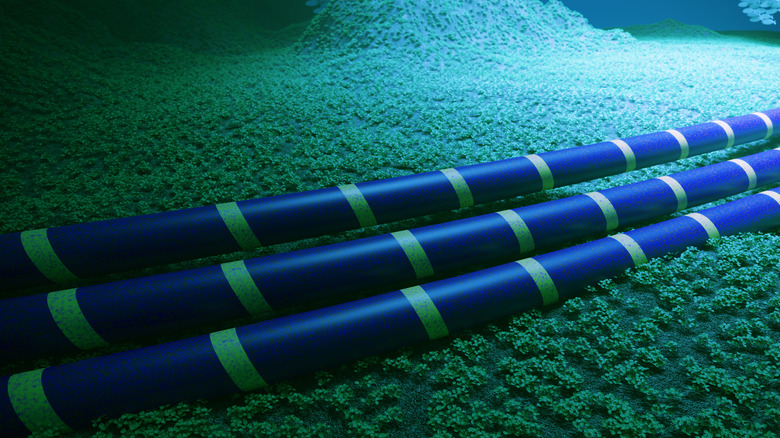
Since 2024, at least nine suspicious incidents involving ships dragging anchors raised fears of sabotage to undersea internet cables. They took place in geopolitically sensitive areas such as the Baltic Sea and waters close to Taiwan, prompting concerns that these events could be linked to states seeking to disrupt communications and economic activity.
Finland's Border Guard has been working with the Finnish Navy and telecommunications company Elisa to deploy Distributed Acoustic Sensing (DAS) technology in a bid to protect undersea cables in the Gulf of Finland. The cables suffered multiple cuts in late 2024, causing internet outages between Finland and Estonia, Finland and Germany, and Lithuania and Sweden. The DAS system uses a device that continuously sends short pulses of light through a cable's optical fiber, causing it to act like a vibration sensor.
Undersea activity, such as an anchor dragging along the seabed, disrupts the light pulses and can alert operators to a possible incident. The system has successfully completed field testing and will be used to alert the Finnish authorities and cable operators of cable events so they can respond accordingly. Elisa's Jouni Petrow described the protection of undersea infrastructure as "a nationally important task," with the goal of using the technology to notify authorities ideally before the damage happens.
Alternative ways to protect undersea cables
As countries look to improve the security of their undersea fiber-optic cables, additional solutions have emerged. Climate tech startup Indeximate, for example, collaborated with a U.K. government-backed research body to develop AI models, trained on ship tracking data, that can determine whether vibrations in DAS data are from vessel activity like anchor dragging, or natural ocean sounds that can be disregarded. This AI system helps reduce false alarms and maintenance costs for cable operators as it requires no extra hardware be placed underwater.
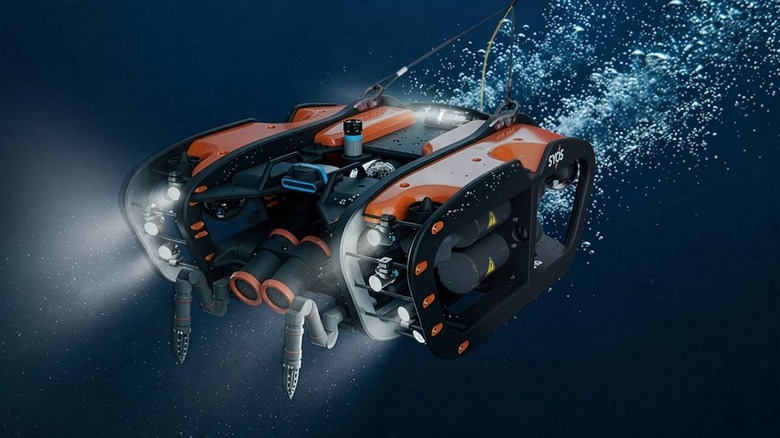
Autonomous underwater vehicles (AUVs) can also be used to help protect undersea cables. As DAS is a passive technology, it's unable to perform inspections or respond to suspicious activity. AUVs, on the other hand, can actively patrol beneath the water, looking for changes in the seabed, examining cables up close, and watching for approaching threats. For instance, New Zealand robotics firm SYOS has developed a subsea AUV that can monitor cables alongside DAS. Satellites are also increasingly used to keep the internet up and running when underwater cable damage interrupts connectivity.
SpaceX, for example, has been deploying thousands of small Starlink satellites in low-earth orbit since 2019. The space-based networks can provide a backup if hard lines are cut, maintaining internet service for remote areas and critical sites until the damaged cables are repaired. When Tonga's undersea cable was severed by a volcanic eruption in 2022, SpaceX donated Starlink terminals that kept the country online for five weeks while repairs were made.