

Not LG, Not Samsung: This TV Brand Is Getting Dolby Vision 2 Support
If you feel like you're well-versed in understanding the existing HDR formats, you have a new one to learn. Dolby Laboratories' Dolby Vision 2 improves existing Dolby Vision content with smarter picture processing, while introducing a new format standard with enhanced brightness, contrast, motion, and scene-aware optimization. The new format became available to owners of certain television models in early August. Some existing televisions will be able to begin using the new HDR format through firmware upgrades, starting with Hisense TVs.
You might expect popular high-end television brands like Samsung and LG to be among the first to jump into the Dolby Vision 2 (DV2) pool. After all, these two brands consistently lead rankings of the best smart TVs. However, neither brand is receiving firmware upgrades for Dolby Vision 2 in the immediate future. Instead, Hisense TV owners in North America, Europe, and the Pacific region of Asia will receive the upgrades first. Many of the firmware upgrades will be completed by the end of August, while all of them should be finished by the end of September.
The Hisense television models receiving the firmware upgrade first include the UX, UR9, U7, and U7 Pro models. These televisions operate using Google TV or VIDAA OS platforms and include the MediaTek Pentonic 800 chipset, which offers support for DV2. It's expected that DV2 will come included on other brands and models of televisions in the near future, including selected models from TCL and Philips before the end of 2026, but no official announcements have been made beyond the Hisense TVs.
What it means if your Hisense TV now supports Dolby Vision 2
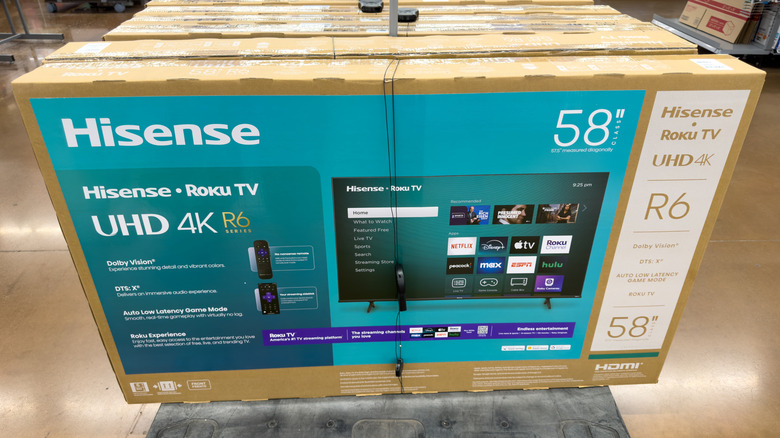
If you own one of the Hisense TV models that will work with Dolby Vision 2, you may not have to do anything to prepare for or install the firmware upgrade. If you have automatic firmware updates enabled on your compatible Hisense TV, everything will happen in the background via an over-the-air update. You can also check for the upgrade by looking for any pending system updates in the Settings menu within your Google TV or VIDAA OS interface.
You may not notice a major improvement in your screen quality after the upgrade occurs. If you are watching movies, TV shows, or UHD Blu-ray discs that already provide support for Dolby Vision, for example, you should notice some improvement, as DV2 should be able to improve the existing metadata found in Dolby Vision-compatible content. But it may be a more limited visual improvement compared to watching new content that has been graded for DV2.
Some streaming services (like Peacock) have announced that they'll provide new programming that natively supports DV2. Live sports on Peacock will likely be able to take immediate advantage of DV2, for example. Existing content will need new metadata to take full advantage of DV2's features, though, which can be time consuming for distributors to convert. Other streaming services and content creators may wait to begin directly supporting DV2 in new and existing content until compatibility appears in more televisions.
Why LG and Samsung might not support DV2 in their TVs
Many LG televisions already provide support for Dolby Vision. To check your TV's compatibility, look under the television's settings menu and check whether Dolby Vision is listed under the HDR formats that are available. Some cheaper (and non-OLED) LG televisions don't support Dolby Vision. A new picture mode from LG for OLED TVs may explain why the manufacturer might choose to not support DV2, at least for now. LG announced support in mid-2026 for a picture mode called Creator Original and included it in a few of its 2026 OLED TV models. Many of the features found in Creator Original are similar to what's available in DV2. This feature doesn't mean LG will never support DV2, but the manufacturer is offering customers another option while DV2 attempts to establish itself in the market.
Samsung, meanwhile, is leading the development of the HDR10+ format, which is a royalty-free option compared to Dolby Vision. Because of this, Samsung TVs have never supported the Dolby Vision format, which makes it unlikely that Samsung will support DV2. If you stick with high-end Samsung or LG televisions, you may not notice a huge difference between the image quality found with HDR10+ and Dolby Vision, since both options should deliver impressive results.