

What Did Data Centers Do Before AI?
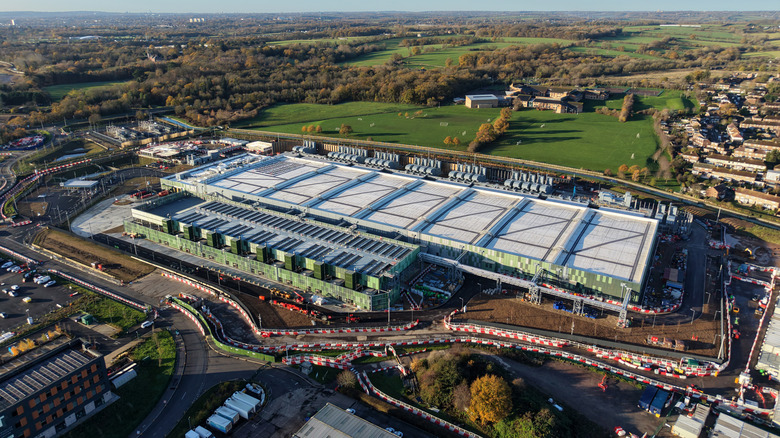
AI data centers are perhaps the most controversial topic in the tech world today. They're integral to the use of artificial intelligence programs like ChatGPT and Google Gemini, but are equally known for causing problems. Their noise makes living near a data center something out of a dystopian nightmare, and a single data center's carbon emissions can outpace those of a small nation. These issues have arisen from a sudden and exponential expansion in data centers coinciding with the AI boom, but aren't exactly new. Data centers have existed for decades, dating back to the earliest days of computing. They originated as single rooms housing the machinery of old mainframes, and have evolved alongside computers every step of the way.
The definition of a data center is pretty straightforward, being a physical space (originally rooms, now entire buildings) housing computer infrastructure that runs around the clock. Data centers have powerful generators to keep computers running even if local power grids go out, and high-capacity internet connections that allow far more traffic than the best WiFi routers can.
They're used for storing, processing, and transmitting all manner of data from email exchanges to credit card transactions to today's chatbot prompts. Each time you save something to the cloud, or enlist a cybersecurity program to keep your data safe, you're using a data center. So, where exactly did data centers come from, and how have we become so increasingly reliant on them?
A brief history of data centers
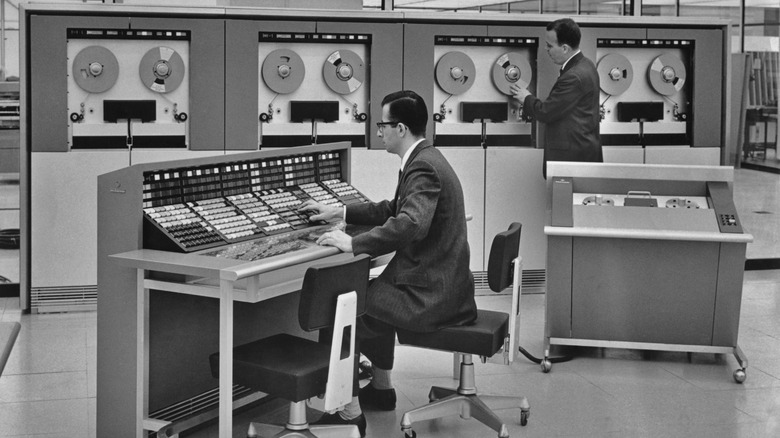
The first data centers came alongside the earliest computers of the '50s and '60s. The first version of a data center was the mainframe, a term designated to large supercomputers that could perform complex calculations, and typically required an entire room to house them. At that point, the concept of computer networks hadn't come around yet, so each mainframe was like its own, isolated data center. They grew larger throughout the '70s and '80s, but their next true evolutionary leap wouldn't come until the microprocessor boom and birth of the internet in the '90s.
That decade brought the advent of virtualization, through which one physical device is used to create multiple virtual devices, like networks or servers. By the early-'00s, virtual servers were for rent at increasingly accessible prices, and suddenly, demand for data centers started to surge. Virtualization helped to enforce a centralized system of computer networks where almost every device now relies on just a small handful of data centers.
Each step in the history of data centers has been driven by, and in turn has driven, rapidly rising demand. First came the microprocessor boom, then the cloud computing boom, and now the AI boom. Every new technology lets users demand more from data centers, which have been forced to expand to whole campuses of buildings as a result. Although they existed for decades outside the public eye, data centers are now literally too big to ignore.
There are many types of data centers today
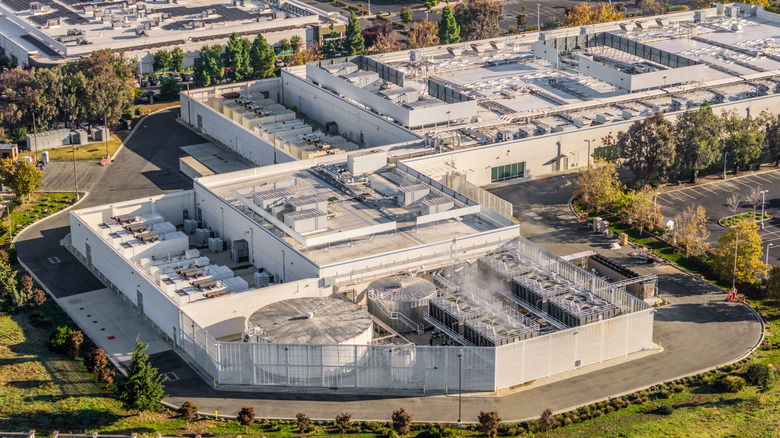
Even today, with the AI boom in full swing, not every data center is built to power artificial intelligence programs. There's a wide array of needs that data centers fulfill, and unique types of data centers to serve each purpose. The Telecommunications Industry Association (TIA) divides data centers into four tiers. All tiers provide basic services like 24/7 power and cooling supplies. However, Tier 1 data centers provide only those basic needs, while higher Tiers provide more, up to Tier 4, which operate completely isolated energy systems that can run through any disruption.
Across these tiers, you can find data centers geared toward a number of specific focuses. There are telecom data centers, which support telecommunications networks like the internet and cellular services. There are enterprise data centers, which are owned and operated internally by organizations like banks and hospitals that deal with highly sensitive data requiring extra security. Then, of course, there's everybody's favorite: crypto mining data centers.
AI data centers are just the latest member of the vast data center family. They too come in multiple subtypes, namely training AI data centers and inference AI data centers. Training centers are, as their name suggests, dedicated to training AI programs by feeding them massive amounts of data, while inference AI data centers support active AI models and their ever-growing user demands.