

What Made The CMF By Nothing Phones So Much Cheaper?
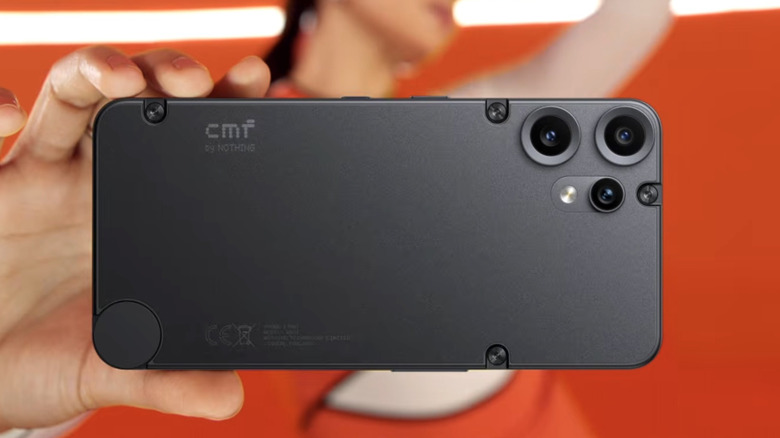
Don't be surprised if you've never heard of CMF smartphones, especially if you're in the U.S. You may know its owner, though: Nothing. Launched by OnePlus co-founder Carl Pei in 2020, London-based Nothing quickly made a name for itself as a design-forward brand selling phones, earbuds, and headphones, with its handsets in particular grabbing attention for their striking transparent backs and customizable LED Glyph lighting system. Its latest U.S.-available handset is the Nothing Phone (4a) Pro, which launched in March 2026 starting at $499.
CMF, meanwhile, arrived in 2023 as a sub-brand of Nothing, focusing on the budget market but still keeping distinctive design very much at the front and center of its approach. Its two CMF phones to date — the CMF Phone 1 and the positively reviewed CMF Phone 2 Pro — didn't get a full release in the U.S., with CMF instead prioritizing the U.K., select EU countries, and various markets in Asia. While the Nothing Phone (4a) Pro currently starts at $449, the budget CMF Phone 2 Pro launched with an even more affordable $279 price tag.
The lower price is due to the phone's use of cheaper, less premium components compared to those used by Nothing-branded handsets. CMF stands for "color, material, and finish," and those elements remain front and center in its phones, even as the company cut back on the premium components that give the high-end Nothing phones heftier price tags.
The compromises that kept costs down
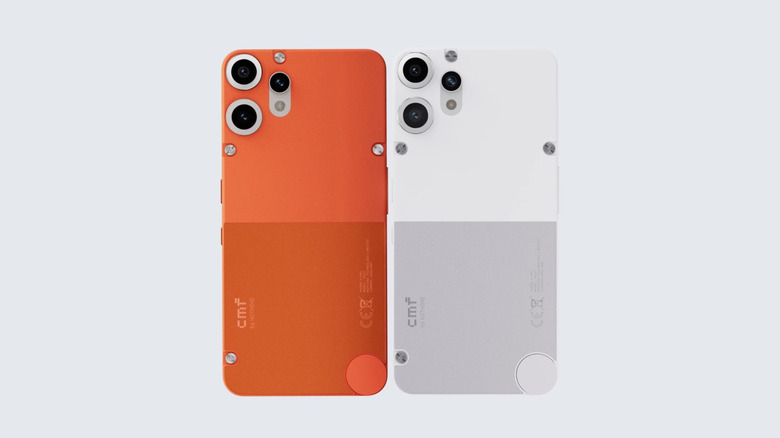
To keep costs down on the Android-powered CMF Phone 2 Pro, for example, CMF opted for a rear plastic panel and frame rather than the glass and metal ones found on pricier phones. The display uses Panda Glass, a less premium form of screen protection than the Gorilla Glass commonly found on flagship phones. CMF also used a midrange MediaTek Dimensity 7300 Pro chip, which helps to keep a lid on both chip and cooling costs. The processor can comfortably handle everyday tasks and even some games, but it falls short on more intensive tasks like advanced camera processing and demanding gaming.
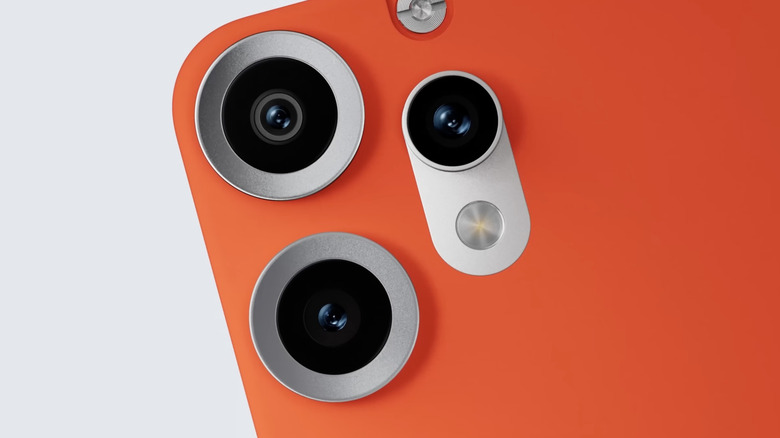
As you'd expect, camera compromises are also a big part of CMF's strategy. While the camera system on the CMF Phone 2 Pro seems impressive on paper with its 50-megapixel main and telephoto cameras plus an 8-megapixel ultrawide, the sensors and image processing can't keep up with flagship devices that cost much more. This means poorer results in low-light conditions and electronic image stabilization instead of the more capable optical alternative, along with overall image quality that falls short of pricier handsets.
The Phone 2 Pro uses older LPDDR4X memory and UFS 2.2 storage standards in a bid to keep costs down, while its microSD slot gives users an affordable way to add more storage. Such an approach makes sense considering the importance of memory cost for budget phones, and rising prices haven't done the brand any favors.
Nothing's CMF is facing challenges
The CMF Phone 1 and CMF Phone 2 Pro launched in July 2024 and May 2025, respectively, but there have been no CMF releases since. In fact, you can no longer find either of the CMF phones on the Nothing website. A new CMF phone had been expected to launch in 2026, but in June, Nothing co-founder Akis Evangelidis revealed (via X) that although his team is working on a successor to the CMF Phone 2 Pro, the high cost of phone memory is preventing it from delivering a meaningful upgrade at its target price, adding, "We've decided not to launch a new CMF phone this year." Notably, there's no promise of a new phone in 2027.
The cancellation came at an interesting time for CMF. Eight months earlier, Nothing decided to reposition the brand as an independent subsidiary based in India, with its own R&D and manufacturing facilities. Already, though, the newly established business is facing the wider challenges of the budget smartphone market. U.S. sales of sub-$100 Android phones fell 64% year-on-year in the second quarter of 2026, while the $200-$299 segment grew by nearly 200% year-on-year as brands like Motorola increased their prices, according to Counterpoint Research.
CMF's phones sit around that $200-$299 band, though its remaining phone stock has been gradually disappearing, with some markets already sold out. CMF isn't necessarily dead, but without a new phone guaranteed to launch in 2027 and memory prices rising, the bigger question is whether there will be another CMF phone at all.