

Viaim RecDot Review: Making An Argument For Dedicated AI Earbuds
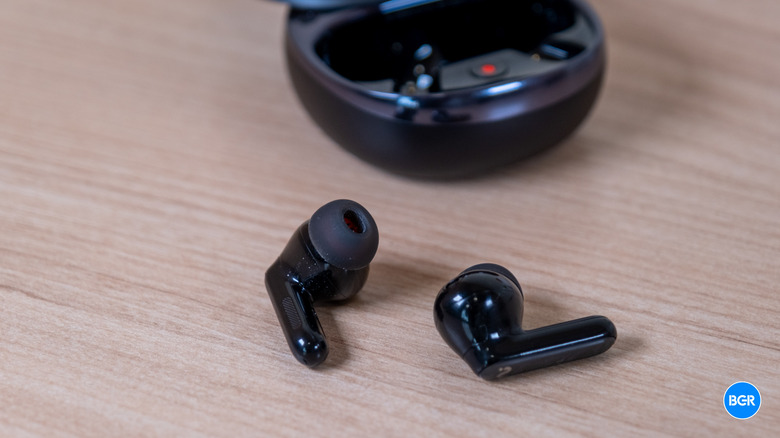
AI features are being crammed into every device category right now, and most of the time, they're little more than a checkbox on a spec sheet rather than something you'd actually use. The Viaim RecDot earbuds are an exception, though. These are true wireless earbuds that you probably wouldn't buy just because you wanted a new pair of earbuds — they're designed entirely around integrating AI features. The earbuds support features for AI voice recording, meeting capture, and transcription.
At launch, the RecDot cost $249.99, though they're now more regularly available for $199.99, which is a little more palatable. That said, they're still in pretty close competition with the likes of Apple, Sony, and Bose — so those AI features have to be really useful to make the earbuds worth buying. I've been using the Viaim RecDot earbuds for a while now to find out if they are.
Design
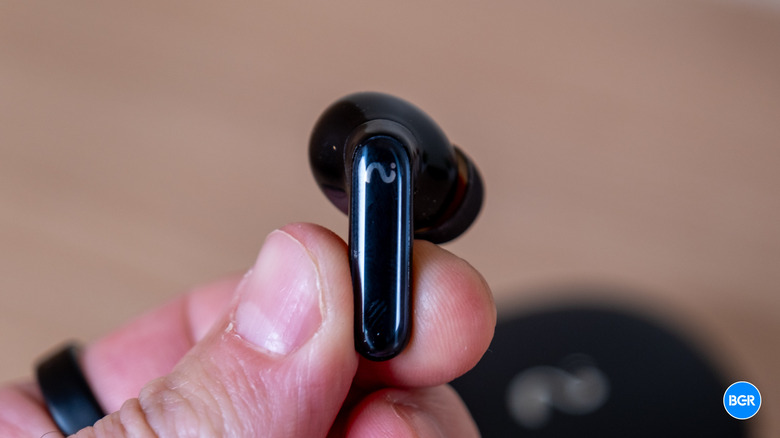
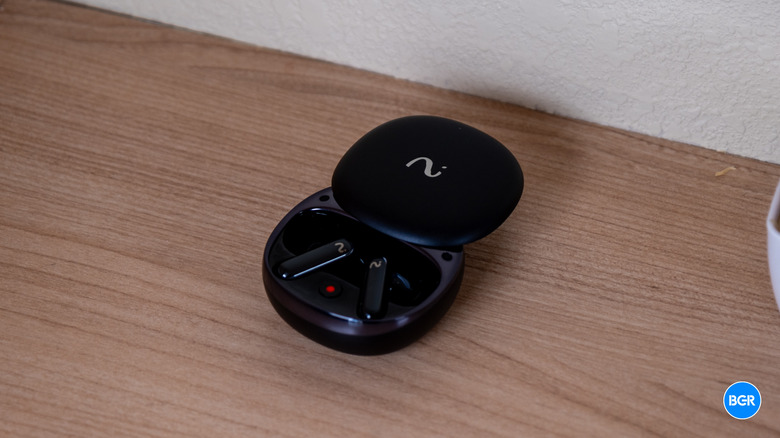
The RecDot earbuds have a familiar stem-style design that anyone who's seen a pair of AirPods will immediately recognize. They come in black or silver, and the earbuds themselves are on the lighter side for true wireless earbuds, which helps make them more comfortable. They have an IP55 water rating, which means they'll handle sweat and light rain, but probably won't survive actually being submerged.
In general, the design isn't bad at all, though it's not necessarily unique, both when it comes to the earbuds themselves and the charging case. You certainly wouldn't look at the earbuds and conclude that they're anything other than a pair of normal true wireless buds. That's kind of the point, though: they're not supposed to be dramatically different in design from other wireless earbuds, and I'm glad they don't draw too much attention to themselves.
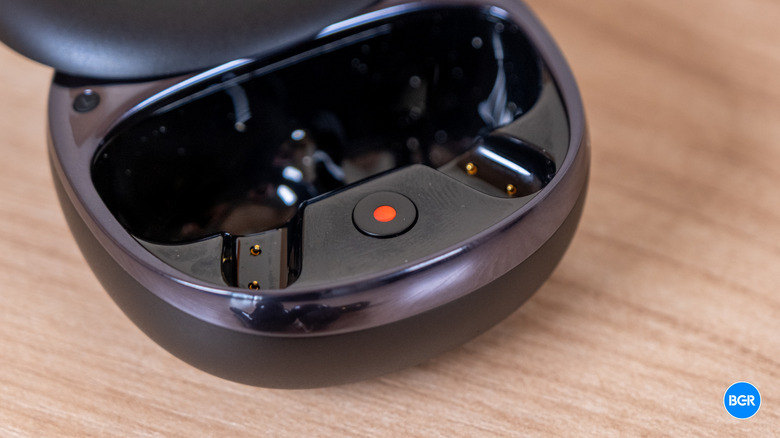
That's true of the charging case, too. It's a black case with a slide-out top that reveals a slot for the earbuds. Perhaps the only thing that sets this case apart from any other wireless earbuds charging case is the fact that it has a recording button on the inside of the lid. It's hidden when the case isn't open, but pretty prominent when it is. We'll get into what it does later.
The stems use relatively simple pinch controls, which I like. I definitely prefer pinch controls over touch or swipe controls on stem-based wireless earbuds. They're especially better than touch controls, which require you to shove earbuds deeper into your ears just to control things like playback and volume.
Comfort
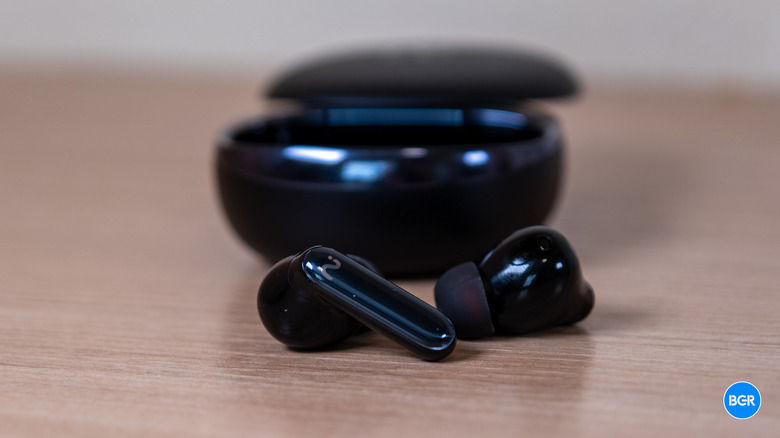
As mentioned, the RecDot earbuds have a stem design, and I generally find that earbuds with a stem are more comfortable than those without. That said, these are particularly comfortable. I'm not sure if it has to do with the shape of the bud itself, the fact that they're lightweight, or all of the above. Regardless, I found them to be some of the most comfortable earbuds I've tested in a while.
The fit is quite good, too. The earbuds stayed in my ears decently well without moving around too much, even when I myself was moving. They should be able to stay nice and snug even when you're doing things like running or working out.
Features and noise cancellation
Perhaps it's easiest to start with the noise cancellation, then move on to the more interesting and advanced features these earbuds offer. Frankly, the quality of the ANC is a mixed bag. Viaim says that its smart ANC feature delivers up to 48 dB of noise reduction, which is really just a marketing number. In practice, these earbuds are nowhere near the level of competitors like the AirPods Pro 3 or Sony WF-1000XM6 earbuds. That's not necessarily surprising. It would be surprising for a relatively unknown company to match those that have been working on their ANC technology for many years now, but it's still something that you'll want to keep in mind if you're thinking about buying these earbuds.
That's true of the transparency mode, too, which frankly is sub-par. It adds a noticeable hiss to your audio and is not very good at producing higher frequency noises or making for a natural audio response altogether. Some earbuds are very good at transparency mode these days, to the point of you almost forgetting that you're wearing them. That is far from the case for these earbuds.
ANC, of course, perhaps isn't the reason you're buying these earbuds in the first place, though. Instead, you'd buy them for the AI recording and transcription features. The RecDot earbuds can be used to record and transcribe any call you make, whether it be over Zoom, WhatsApp, your standard cellular connection, or anything else. Transcription is actually pretty quick and decently accurate — though I wasn't necessarily surprised to see that, given the fact that I've found AI transcription tools to be generally excellent all around.
Real-time transcription supports 78 languages, and the app leans on third-party LLMs like ChatGPT, Gemini, and Claude to automatically generate meeting minutes and to-do lists from what it captures. In my testing, the transcription is fast and generally accurate, and having a searchable archive of every meeting genuinely changes how you work. That said, it's not perfect. Speaker identification can struggle in multi-speaker scenarios, particularly with accents, so you'll want to double-check transcripts before treating them as gospel.
I also found actually using it to be kind of confusing. You can use the transcription feature with the earbuds in or out of the case, but in order to use the recording button on the case itself, at least one earbud has to be in that case. I had to go digging through support documents to find that out. Thankfully, there is still a way to use transcription features without the case at all by holding down on the stem to activate recording mode. This means that you can still use the transcription features with the earbuds actually in your ears, which is to be expected.
There is, of course, a subscription that you'll need to think about signing up for — though thankfully, most will be able to get by just fine with the free plan. You'll get 600 minutes of cloud transcription for free every month, which should last you around 10 hours and be more than enough for most use cases. Power users, however, can pay $10 per month for 1,800 minutes on the Pro tier, or $20 per month for unlimited minutes on the Ultra tier. You'll have to figure out for yourself if it's worth paying an ongoing cost.
Unfortunately, some more advanced features are also gated behind the subscription, like multilingual support. In other words, if you plan on using the earbuds for tasks like real-time translation, you may need to subscribe to the Pro or Ultra plan.
As you might expect, many of the features require using the Viaim companion app, which is fine but not incredible. The Viaim app allows you to access your transcriptions, manage your subscription, and manage the settings of the earbuds themselves. It's relatively easy to navigate, and most will get used to how the app is designed decently quickly. Finally, connectivity runs through Bluetooth 5.2 with multipoint support, so you can stay paired to a laptop and phone simultaneously, which is helpful for the work-focused use case here.
Battery
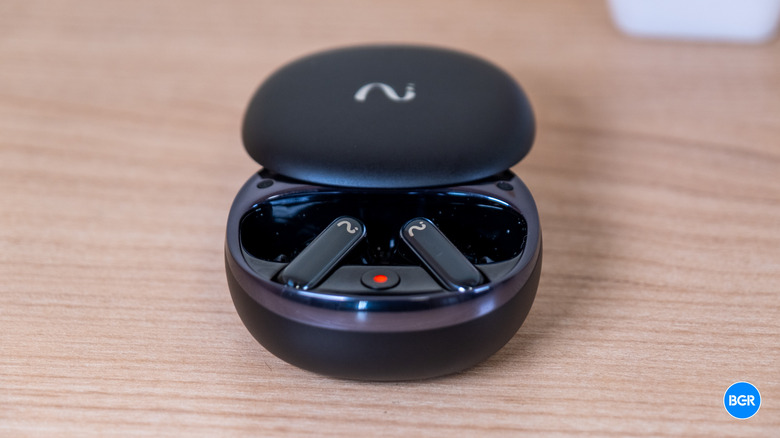
The battery life built into the earbuds is actually pretty solid. You'll get nine hours of continuous playback and an additional 27 hours for a total of 36 hours with the charging case — that's on the upper end of standard. And while there are earbuds that offer a longer battery life, what's on offer here is perfectly acceptable.
Charging is quick, too. Twenty minutes on USB-C gets you to 70%, or roughly six hours of playback, and even a five-minute top-up buys you an hour. A full earbud charge takes 40 minutes. The case also supports Qi wireless charging, which is always nice to see.
Sound
On paper, the RecDot earbuds have solid audio features. Each bud offers an 11mm dynamic driver, and they're Hi-Res certified with support for the LHDC codec.
In practice, the sound is solid but not exceptional. The default tuning is a little scooped, emphasizing bass and treble with slightly recessed mids. It's an energetic, crowd-pleasing sound that works well for most music and podcasts. The bass leans heavy out of the box, though, and depending on your taste, you may want to spend some time with the 8-band EQ in the companion app to dial things back toward a more balanced profile.
The audio response isn't quite as impressive as most flagship wireless earbuds in this price bracket, though the AirPods Pro 3 definitely sound better and offer more detail than what you'll get here. These certainly don't sound bad, but they can't compete with the best earbuds out there, which happen to cost only a little more.
Conclusions
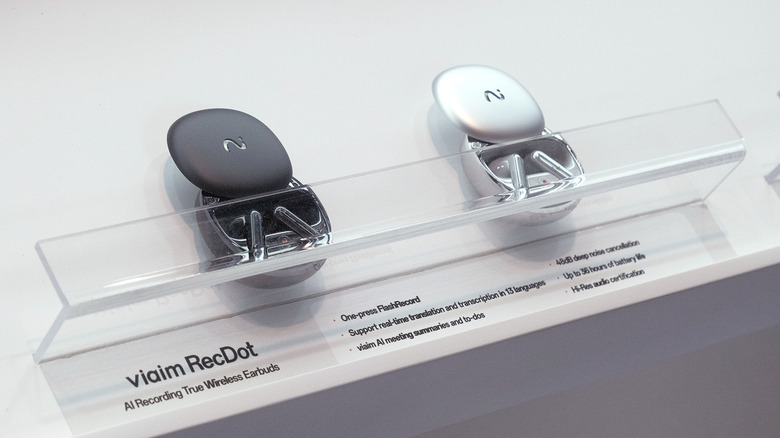
The Viaim RecDot earbuds aren't bad at all, but they suffer from the same thing any other AI-focused device suffers from. The question is: why buy these earbuds when you have a smartphone in your pocket and presumably standard wireless earbuds that may offer some AI features while sounding better? I'm not sure these earbuds answer that question. I don't think it's worth buying earbuds for their AI features right now, especially given the fact that the earbuds from the likes of Apple, Sony, and others are gaining AI features that are similar to what's on offer here without the subscription.
Again, though, these certainly aren't bad earbuds, and if you like the idea of what they offer in the way of AI and don't mind giving up some ANC quality and audio fidelity in order to get it, then maybe they're the earbuds for you. Just be ready to pay a subscription fee to get the most out of them.
The competition
If you mostly care about audio, the AirPods Pro 3 offer much better ANC and sound, and you can approximate some of the RecDot's tricks by pairing them with an AI app on your phone.
The other option is a dedicated AI voice recorder, which may fill the AI gap for some users who want to stick to better-sounding, non-AI earbuds but still want an AI transcription device. That, however, may not work quite as seamlessly for those who don't want to carry a multitude of devices around.
Should I buy the Viaim RecDot earbuds?
Maybe, but only if you want AI features built into your earbuds and don't like what's on offer from the others.