

One Of CA's Biggest Solar Farm Projects Could Threaten Endangered Tortoise Population
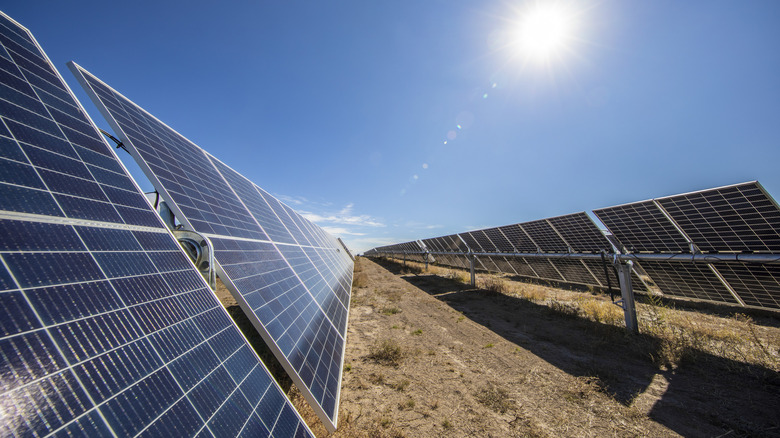
Solar farms have the potential to solve our energy problems. However, many subtly change the environment around them. Sometimes these changes are beneficial, such as a Chinese solar farm that is greenifying a desert. But changing the environment is always a risk, especially when endangered species are involved.
In 2025, a collection of conservation councils published a paper on the dangers of Overnight Solar, a projected solar farm in San Bernadino, California. According to the paper, the installation could pose a huge threat to the local desert tortoise, an animal that is considered endangered under the California Endangered Species Act. A study found that solar farms produce a "heat island" effect that increases the land's surrounding temperatures. Ironically, the danger stems from the shade of these solar panels.
Although solar panels over canals can provide shade that reduces surface evaporation, in the desert, solar-panel shade temperatures are higher than normal shade temperatures. Here is where the tortoises come in. According to the study, these higher temperatures can make it harder for tortoises to retain water. This might not be a problem for fully grown desert tortoises, but it poses a severe dehydration risk to hatchlings and juveniles due to their small size and larger surface-to-volume ratio. Although the coalition of conservation councils isn't opposed to the Overnight Solar Energy project per se, it would prefer the installation (or the tortoises) be relocated to minimize any potential threats to the population.
Overnight Solar isn't the only solar farm that threatens tortoises
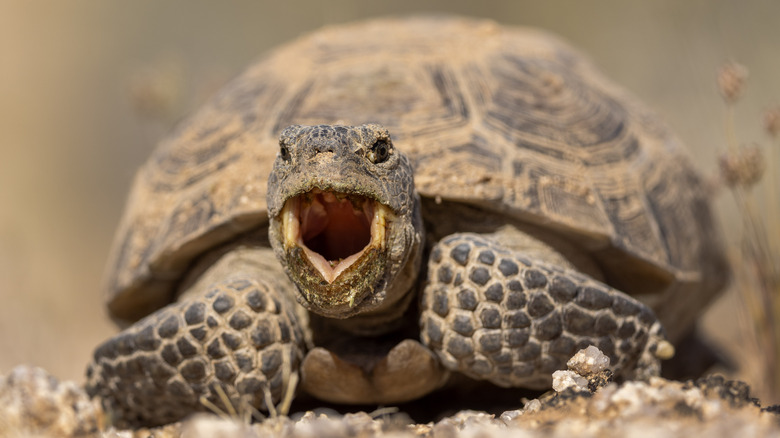
The desert tortoise, while endangered, can be found across the southwestern U.S. As its name suggests, anywhere there's a desert in the U.S., you might find a desert tortoise. Unfortunately, Overnight Solar isn't the only project trying to install solar panels in a desert, threatening the desert tortoises.
Earlier this year, the California Energy Commission approved a $700 million project to build a large solar farm next to (but not on) the Mojave National Preserve. This installation, dubbed Soda Mountain Solar, will stretch almost 3,000 acres, but it will sit right in the middle of migration paths of animals such as the desert tortoise and bighorn sheep. The planned location is problematic for both populations as desert tortoises have lost much of their natural habitat. Meanwhile, the bighorn sheep rely on this "migration corridor" to travel between mountains — a process that keeps their population healthy.
Although the California Energy Commission claims that Soda Mountain Solar's final plan integrates ideas that reduce any potential threats to the habits of local animals to "less than significant," many scientists who raised these concerns have their doubts. According to conservationists, the commission didn't implement any of the measures they suggested. More importantly, the approval went over the heads of the Desert Renewable Energy Conservation Plan, which is supposed to have the final say in where to — and where not to — install solar farms in the desert. However, Soda Mountain Solar farm isn't built just yet, because California's Bureau Land of Management needs to give its approval before construction begins.