

These 4 Motorola Phones Were Ahead Of Their Time
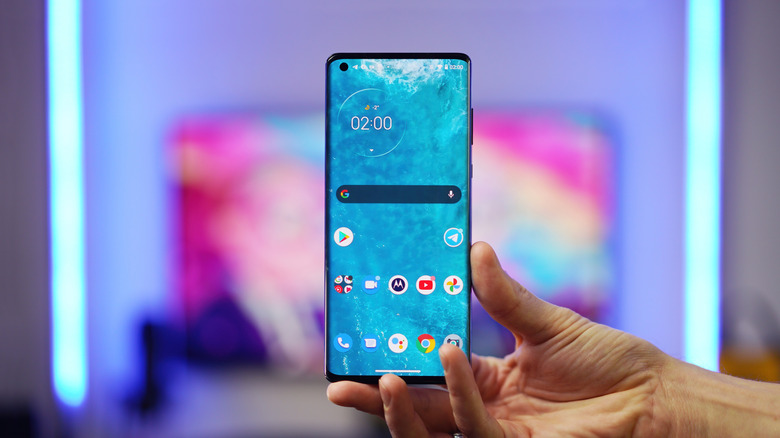
Take a close look at the current landscape of mobile phones, and you would never guess Motorola was, at one point, a literal trailblazer. It's wild to think that a company that had been in the game since the '80s and dominated the 2000s with its Razr line (sales figures peaked at 130 million) ended up being relegated to the mid-ranger category. Yes, it's considered a solid alternative to both Samsung and Apple in North America, but there are a few disadvantages you'll have to endure with Motorola that are stopping it from regaining its glory. Mainly, its software updates are subpar, which is a known fact. Most owners agree that Motorola's hardware is solid, but the software hasn't historically offered much in terms of longevity. The camera system itself is often described as just meh across various models, and if you're going to challenge the big two, you've got to bring your A game.
While Motorola at this point is a shadow of its former self, the brand has put out plenty of products that were ahead of their time. This isn't limited to its flip phones, mind you, as one could argue that Motorola's 2020 Razr foldable was a great attempt to inject some life back into the brand (despite Samsung eventually stealing its thunder). Going backward, Motorola's Atrix 4G was also revolutionary in that it tried to fully replace a laptop — in 2011, no less — and the Motorola Droid from 2009 helped popularize the Android OS. It all pales in comparison to the iconic Razr V3 that nailed the style in an era when phones and fashion were an oxymoron. The forgotten relic from 2004, however, that you could say was truly future-facing, was the A845 that supported video conferencing long before Apple made it cool.
Motorola's crowning technological ideas
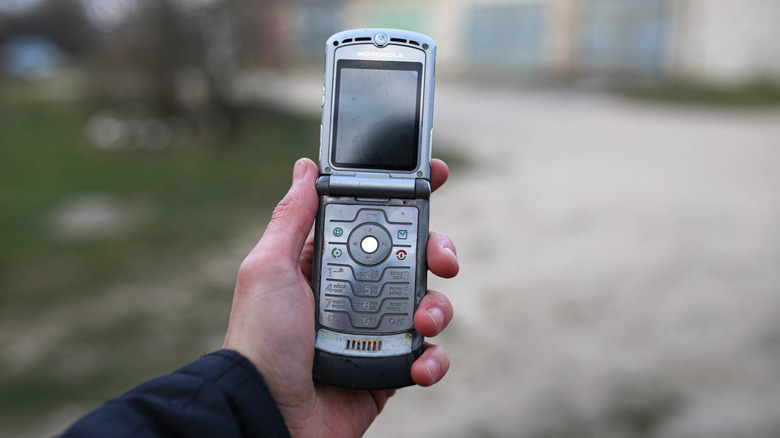
FaceTime who? The Motorola A845 was the first phone to ever support video calling in the United States. That's about six years before the HTC Evo 4G became the first modern smartphone to support the functionality, and even longer before Apple rolled out FaceTime on the iPhone 4. In fact, the tech was in its infancy when Motorola made it a feature. Reviewers couldn't even test it because its functionality was limited to a few areas like San Francisco, and it also required another UMTS phone to make it work. Then, ask anyone alive at the time which old Motorola phones are iconic, and they'll mention the Razr V3, which launched the same year as the A845, meaning that it likely overshadowed this quirky revolutionary device.
Looking at the reviews back from the day, the Motorola Razr V3 was not universally praised. One reviewer was pointing out how bad the camera was compared to its competitors (funny how that stuck with Motorola to this day) and complained about the phone being overpriced. Yet, it's also the first device that looked like a fashion accessory at a time when phones were only starting to become more than utilitarian devices you'd use for making calls. It looked like nothing else on the market, and the gamble paid off, as the Razr V3 remains one of the best-selling phones of all time.
Motorola in the modern era
Motorola's innovative streak didn't end there, although the brand arguably failed to reach its former commercial heights. 2009's Motorola Droid, for instance, was one of the first widely successful Android phones. It was a slider phone with a keyboard at a time when keys were in the process of being fully phased out in favor of touchscreens. Only two years later, Motorola put out the Atrix 4G featuring a "lapdock" add-on that basically allowed you to transform the relatively small device into a laptop — something still considered a novel concept today with the NexPhone and similar devices. Though not first by any means, the Atrix 4G was also one of the first major releases that sported a fingerprint scanner, which would become a standard just a few years down the line.
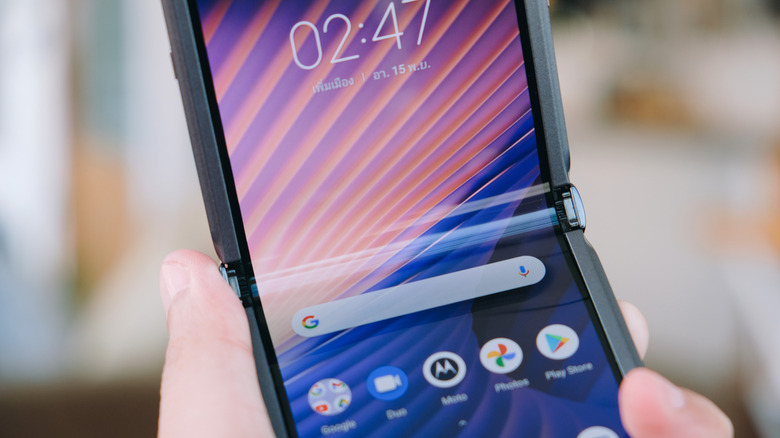
The last gasp in Motorola's innovations is perhaps the Motorola Razr 5G from 2020. Motorola announced it only a few months after Samsung debuted its Galaxy Fold in 2019, when a foldable screen was still a massive gamble, leaning into its past.Announced only a few months after Samsung debuted its Galaxy Fold in 2019 (a time when a foldable screen was still a massive gamble), it leaned into Motorola's past. Yet, the midrange specs and questionable cameras (again) stopped it from becoming the de facto fold model of the time. Credit where it's due, it was the best thing Motorola could do at the time, but this Razr gamble didn't necessarily pay off.
Today, the line survives through the likes of the Motorola Razr Ultra. It's a solid phone that comes with only three years of full OS updates, and the cameras are nothing special. The company is okay with bringing its B game, but fans (and there are plenty of them) are screaming for more oomph and longer support. If Motorola delivers, it may one day be able to make a tried-and-true comeback worthy of its early 2000s run.