

3 Disadvantages Of Buying Motorola Phones
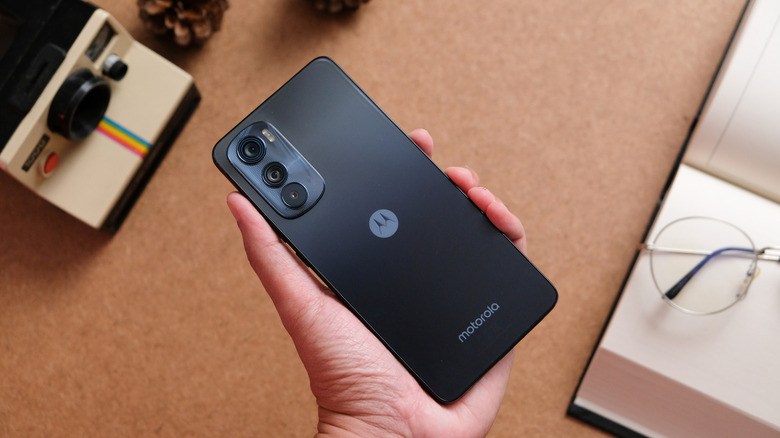
Motorola has been a big part of the Android landscape since the start, thanks to its Verizon-locked Droid that dropped back in 2009, only a year after Android's first phone, the T-Mobile G1. Motorola found a good bit of success, to the point that Android phones were mostly called Droids for those initial years, hitting mainstream appeal thanks to the company's successful flashy marketing around the term "Droid," which even Samsung and HTC contributed to.
One could argue Motorola contributed heavily to Android's early appeal, so it wasn't surprising when Google bought Motorola Mobility in 2012. Under Google's reign, Motorola's revenue dropped, and the company was sold again in 2014, this time to Lenovo. While Lenovo is plenty profitable, continuing Motorola's budget and midrange offerings, its biggest move as owner of the brand has been the revival of the Motorola Razr in 2019. That was followed by the Motorola Edge series, and then came the high-end Motorola Signature. The company is ingrained in Android's history and is still kicking today, with both budget and high-end offerings standing the test of time in a very turbulent market. But this doesn't mean the current lineup is without disadvantages, especially now that the company has traded hands several times, losing much of its original identity.
Nowadays, Motorola is perhaps best known for its budget devices, the G series, and these are often the fodder of prepaid carriers like MVNOs — cheap phones paired with cheap plans. Sometimes, these phones are subsidized, which means they can contain ads and bloatware, and that isn't helped by Lenovo's limited support across its hardware and software. Compared to its competitors, certain disadvantages are sure to stand out, and they're worth considering before you make your next Android phone purchase.
Software support is limited
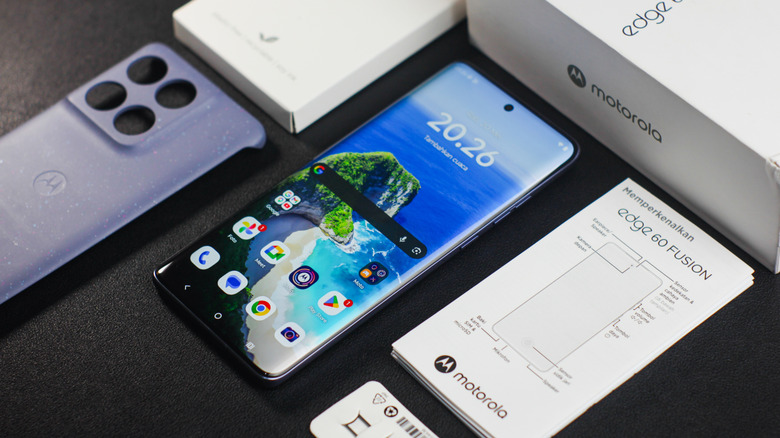
When it comes to software support for smartphones, there are two very important things to consider. One, how long is the device supported with OS updates? For Motorola, this varies and is far too often less than competitors'. Two, how frequent are security updates? For Motorola, they often lag behind the competition. Add these two up and it's not a pretty picture for long-term software support — but this can also help to keep costs down, which Motorola does seem to pass on to the consumer.
While a few premium Motorola handsets offer a competitive seven years of support, by and large, the company's midrange and budget offerings are where support tends to fall apart. The Lenovo-owned Motorola Mobility isn't well known for its software support these days, comparing more favorably to budget brands who also dial back support to keep prices low, rather than the likes of Samsung or Google's high-end smartphones. Basically, with modern Motorola phones, you get what you pay for: If your device is on the cheaper side, software support may have been one of the corners cut to keep costs down.
All of this boils down to fewer OS upgrades and fewer security updates, and when updates do roll out, they can be fairly delayed compared to competitors, leaving users susceptible to attacks. And once you get down to certain G-series models targeted mostly at prepaid offerings, zero OS updates are guaranteed by Motorola. None. On the flip side, Motorola's high-end devices come with high-end support guarantees nowadays — in fact, the Motorola Signature is one of the few Android phones with the longest software support. Once again, you get what you pay for, so it's best to stick with Motorola's premium devices if you are looking for a premium experience.
Lackluster cameras
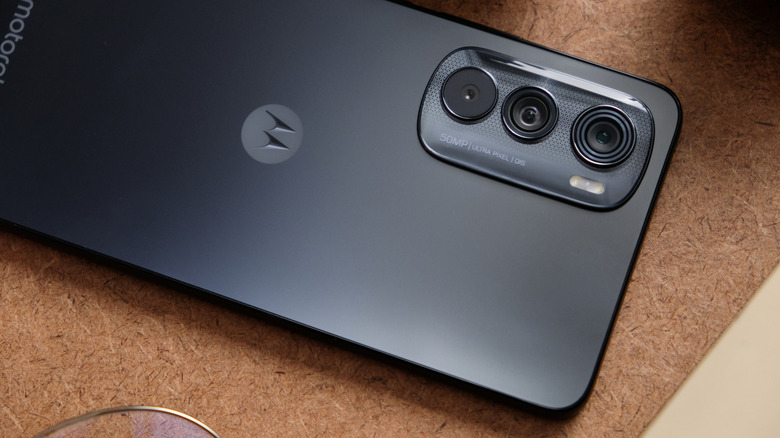
Following the trends of budget brands, another way to save money when designing a phone is by skimping on the cameras, something Motorola is familiar with. After all, it comes with the territory when manufacturing budget and midrange devices; the camera these phones ship with often isn't that great, which explains why Motorola comes in last when Android phone brands are ranked from worst to best, according to users. Couple this hardware issue with the fact that small cameras require powerful computational software to clean up their images (this is what Pixel phones are known for, after all), and image optimization on Motorola devices typically leaves users wanting. Once again, this is a double gut punch, as both the camera hardware and software can be lacking on Motorola devices.
Conversely, Motorola's higher-end devices, like those in the Edge line, are typically equipped with high-megapixel camera sensors, which you can then pair with a hacked version of the GCam app to bypass Motorola's camera software if you find that it's lacking. So it's not that the issue can't be solved with the right Motorola phone — first and foremost, you have to start with a good sensor if you want good photos. This is precisely where Motorola's budget and low-end offerings fall short, and even a sideloaded version of GCam won't be able to fix the shots from low-quality sensors.
So if you are in the market for a new phone and have been considering a Motorola, make sure you look into what kind of camera sensors are equipped. The higher the megapixels, the better the resolution — and from there, you can use third-party or modified camera apps to bridge the image-processing gap.
Ads and bloatware
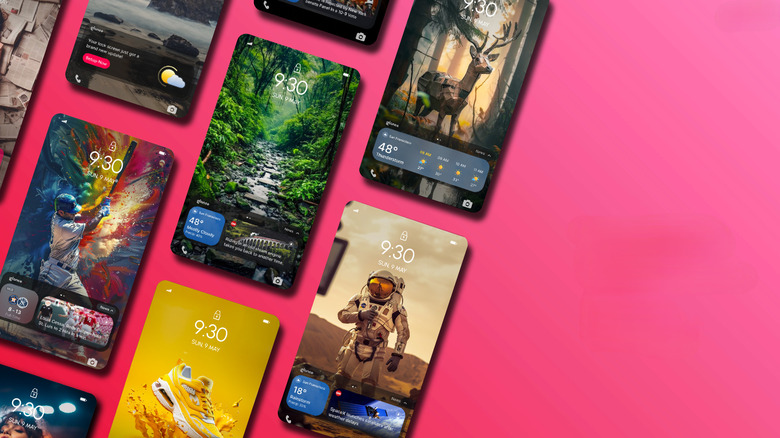
Lastly, another way to keep costs down when manufacturing smartphones is through subsidization, which can be done by selling ad or app space on the smartphone itself. While Motorola owners say their phones usually last three to four years, that time might come with ads and bloatware, depending on the smartphone model. For instance, the Glance for Motorola app is a lock screen replacement installed by default on certain Edge and G-series models, and it includes an AI-curated recommendation system for shopping, sports, and news. In other words, it's a default app that serves ads to the user in a core part of the phone's software: its lock screen.
Motorola has also been caught hijacking links and replacing them with affiliates, though it claims to have stopped this practice. Third-party apps like TikTok can also be found on Motorola devices, which may be evidence of paid placement with the intent of reducing the friction of initially using these apps. Motorola takes things further by installing games, as well, and these are often free-to-play titles that are heavily monetized, like Monopoly GO and Candy Crush Saga, games designed from the ground up to get you spending.
The good news is that many of these apps can be disabled, and even in the case of Glance, it can be turned off and easily replaced with a third-party app to serve the same purpose, like AcDisplay. So it's not like the user has no control over which apps their Motorola phone runs, but at the end of the day, it takes extra work to get around this sometimes excessive subsidization. Still, this is how Motorola keeps costs down, ensuring it stays competitive in the midrange and low-end smartphone spaces.