

How Long Will Your Old Cassette Tapes Actually Last?
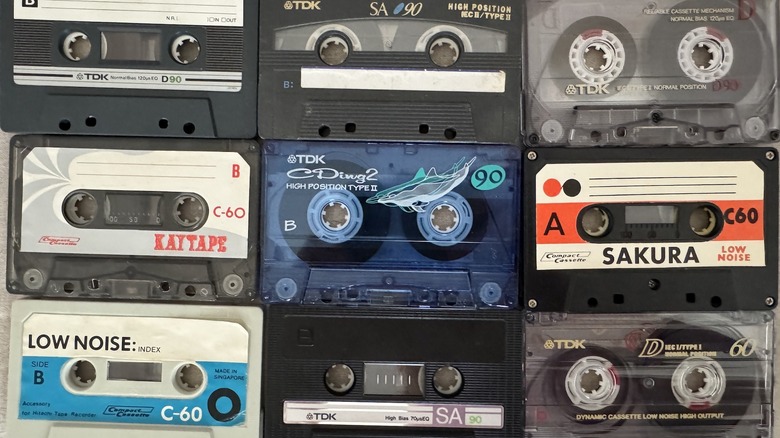
If you grew up between the 1960s and 1980s, audio cassette tapes were almost certainly a big part of your life. Any tape collections you might have had probably included prerecorded music by your favorite bands, as well as blank cassettes filled with songs you recorded from the radio to create your own mixtapes. You might even have used a cassette recorder's microphone to create recordings of yourself, family, and friends. While many of those tapes may have been discarded long ago, it's possible that you held onto some of them. But will they still work? And what about if you bought a cassette tape today — how long can you expect it to remain playable? Various estimations exist, but the general consensus appears to be that tapes can last for 30-60 years, although possibly longer if they're kept under ideal conditions.
A cassette tape — essentially a small plastic case containing a delicate strip of magnetic tape wound between two reels — stores audio content as magnetic patterns. A cassette player reads the magnetic tape and turns the patterns back into sound that it plays through a speaker. Each cassette has two sides (A and B), both of which can hold a recording. Earlier thinking commonly suggested a tape lifespan of between 10 and 30 years, but more recent research suggests cassette tapes can remain playable for much longer, generally in the range of 30 to 60 years. That research indicates that longevity is also influenced by both manufacturing quality and the conditions under which the tape is stored.
The ideal conditions for storing cassette tapes
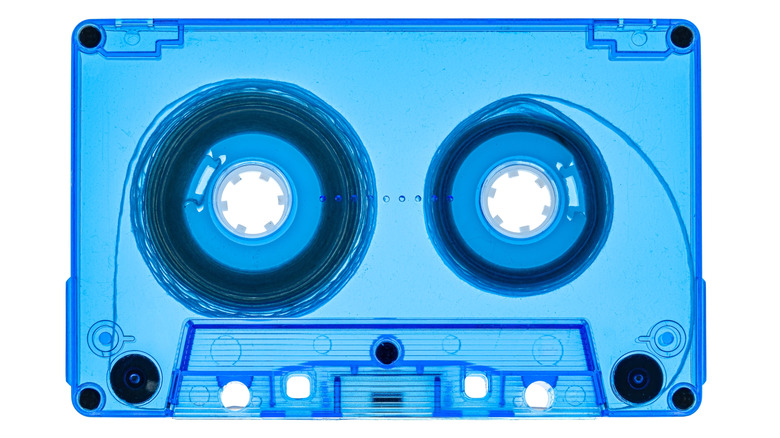
Lifespan estimates for cassette tapes vary widely, as so much depends on how the tape is handled and stored over the years. If you've had a box of cassettes in the attic for decades — lost among other memorable gadgets from way back – those tapes might still work, though if they've experienced extreme temperatures year after year, the content may already be lost. However, if you bought cassettes more recently (like during their current revival) or plan to purchase some, then careful storage should keep them playable for years.
Library archivists recommend the ideal long-term storage temperature for cassettes as 40 to 54 degrees Fahrenheit, as cooler conditions slow chemical deterioration. Also, the ideal humidity conditions for tape storage are around 30 to 50% RH (Relative Humidity), as high humidity accelerates deterioration and can encourage mold. Keeping the tapes out of direct sunlight and away from extreme heat sources like radiators and other types of heaters is important, too. It's also recommended to store cassette tapes like most people do books, in other words, vertically rather than horizontally, as stacking could put pressure on the cassette tapes at the bottom of the pile.
Additionally, it's important to keep tapes away from magnets and electrical equipment like speakers since their electromagnetic fields could affect the recordings. Keep the cassettes in their box whenever you're not using them, too, rather than leave them lying around, unprotected from dust and knocks. Another tip is to keep cassette players clean and well maintained, as dirty tape heads and pinch rollers can accelerate tape wear, or even physically damage the tape. Finally, be sure to fully rewind tapes after use to reduce the risk of loosening and damage during playback.
How to digitize an audio cassette tape

If you have some old cassette tapes that still work (yes, you'll need a cassette player to find out), then you might want to keep the recording. If so, you might want to digitize them before it's too late. It might be a nostalgic mixtape or a recording of you and your family when you were little, so it'd be a shame if it stopped working and you could never listen to it again.
A simple way to digitize cassette tapes is to play them through a cassette player and record the audio onto a computer. You'll need a cassette player, an appropriate audio cable (likely a 3.5-millimeter-to-3.5-millimeter stereo cable), a computer, and recording software (like Audacity). If your computer doesn't have a suitable audio input, you'll need a USB audio capture device or audio interface that accepts the cassette player's audio output. Then, just connect the player to the computer, hit record on the audio software, and play the cassette from beginning to end. Repeat for the other side of the tape and save the finished recording (WAV and FLAC formats are best for high-quality archival copies). Audacity offers detailed instructions on how to use its software for this process to achieve the best results.
If you don't want to do it yourself, services exist that will do the job for you. You simply send in your cassettes and choose the format that you want the content to be transferred to (e.g., thumb drive, DVD, or digital download), and the job should be finished about six weeks later. Of course, sending your cassettes off into the wild always comes with the risk that they might get lost or damaged.