

Are EVs Really More Likely To Make You Carsick?
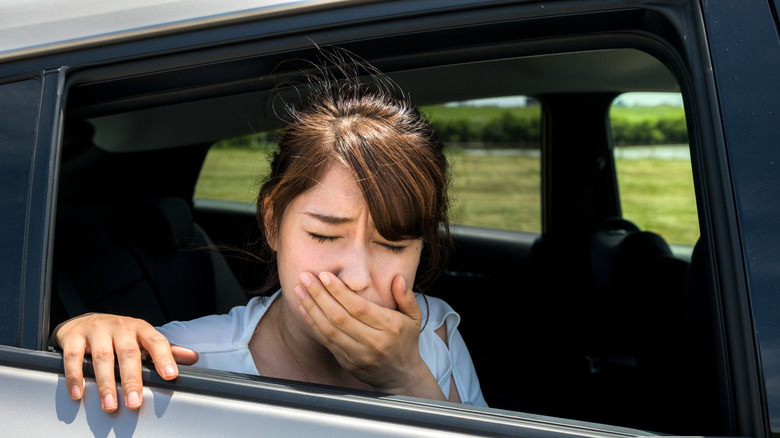
Electric vehicles are becoming a bigger part of everyday transportation in the U.S. At the end of 2025, the Alliance for Automotive Innovation reports that there were 7.3 million EVs operating in the country. But while EVs stand out for their reliability, they're also known for something a little less glamorous: carsickness. With that, many have wondered if they simply aren't used to the EV's motions the way they're used to gas-powered cars. According to an article from The Guardian, a more tangible cause of carsickness in EVs is the absence of engine vibrations and sounds.
Unlike gas-powered cars, EVs are designed with an electromagnetic system that produces less noise. A study published in Science Direct shows that some people may encounter what the CDC refers to as "sensory conflict" whenever they are in a battery-powered vehicle, because our brains require the proper quantity of environmental or sensory cues to determine how we can move and balance ourselves. So, if you're used to gas-powered cars, your brain may not be able to recognize quieter cues and therefore trigger carsickness.
The lack of vibration and sound can trigger carsickness in EVs
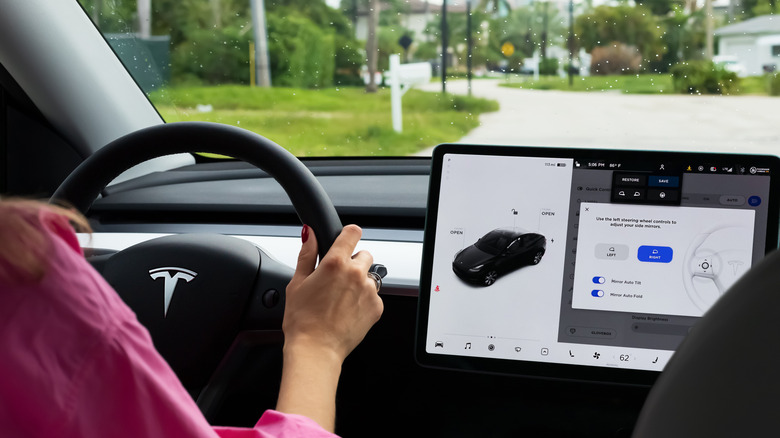
One of the first things you'll notice when riding in an EV is how quiet it is. These battery-powered autos use an electric motor in place of the traditional gas-powered car engine, so the usual vibrations emitted are more subtle or totally absent. Moreover, the way an EV slows down can contribute to carsickness. This is because most EVs use regenerative braking, which allows the motor to help slow the vehicle while recovering some energy and sending it back to the battery. Additionally, some EVs also have a one-pedal driving function, where the driver can control most acceleration and deceleration using just the accelerator pedal.
Regenerative braking and one-pedal driving can make the car's acceleration and deceleration feel more noticeable, so adjusting these settings, along with other common problems with electric vehicles, may help reduce future carsickness encounters. If the whole EV experience still makes you feel queasy, give yourself some time to acclimate to the car's motions. This means sitting in the front passenger seat for now, and knowing when and how long to put your smartphone down during your trips and instead focusing your sights on the road.