

5 Sci-Fi Movie Villains Who Were Actually Right
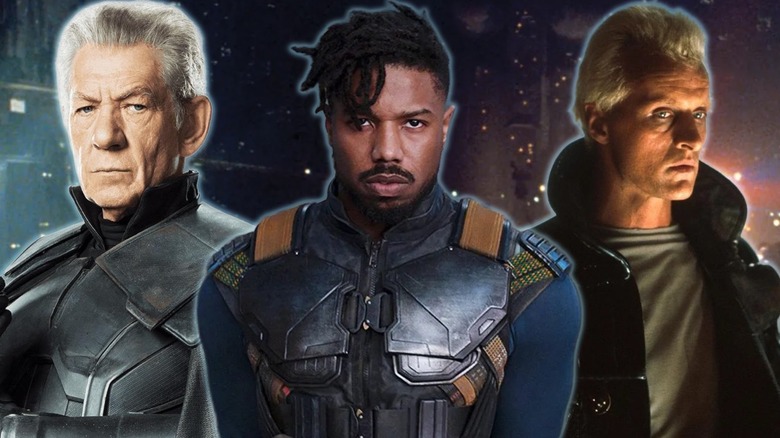
Good bad guys are the ones that leave you cursing at the screen for being monsters. Great bad guys are the ones that, even with all the chaos and destruction they might cause, actually have something that makes them a foe worth fearing — valid points. Science fiction is full of them, often existing in a future that isn't necessarily bright but posits some compelling questions that leave you wondering if the hero's mission really has to lead to bringing down their nemesis. There are even times that, by the end of their drawn-out battle, the one fighting the good fight often ends up victorious, but is still burdened by a truth they choose to ignore — that they might actually be wrong themselves, in the end.
With that, we've handpicked some of the best antagonists to ever turn up in science fiction stories and cause a fuss. The kind of villains who stay memorable and whom you secretly wish had managed to accomplish their mission, except, you know, without the criminal activity, body count, or occasional world-ending master plan. To begin with, we're going to cast a light on one of the movie villains not just in science fiction, but arguably one of the greatest filmic foes ever to grace the screen with a bleached-blonde head of hair.
Batty - Blade Runner
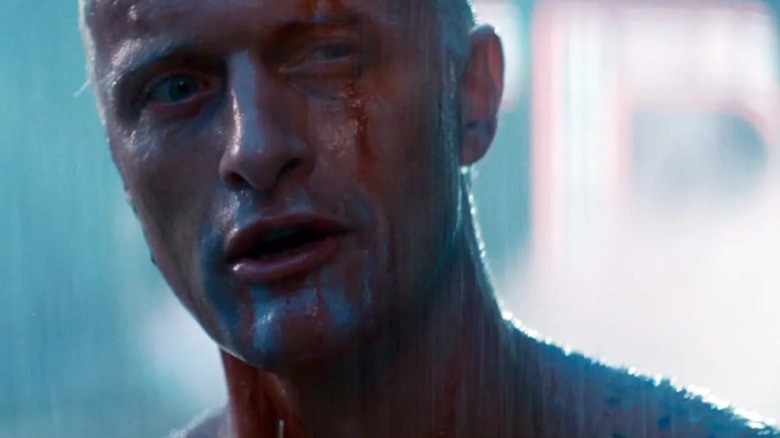
Roy Batty is only a threat in the cyberpunk classic "Blade Runner" because of his one simple demand: to live. After ignoring his prime directive off-world, he and a band of other Replicants escape to Earth, hoping to blend into society and evade capture and reprogramming. Of course, thanks to Rick Deckard (Harrison Ford), that doesn't happen. Instead, Batty quite literally fights for his life, or what's left of it, but only after coming face-to-face with his creator and demanding more of him. He might be programmed for violence, but that's what Batty and the rest of the escapees are fighting against. It's really not that much to ask, is it? A long life of peace, as opposed to one that can get lost like tears in the rain?
Instead, Batty is forced to take an alternative route. Through a cat-and-mouse chase laced with fear and pain, the Replicant shows Deckard just what it means to be truly alive, and that living and questioning whether to live in fear is any life at all. Now, depending on what you believe, both "Blade Runner" and "Blade Runner 2049" imply the bittersweet irony that Deckard and Rachael (Sean Young) managed to briefly accomplish what Roy fought to the death to try and obtain. With that in mind, it assures that the lines between hero and villain are very grey in the "Blade Runner" universe and that Batty isn't necessarily a bad guy; his programming just tried to make him that way.
David Nix - Tomorrowland
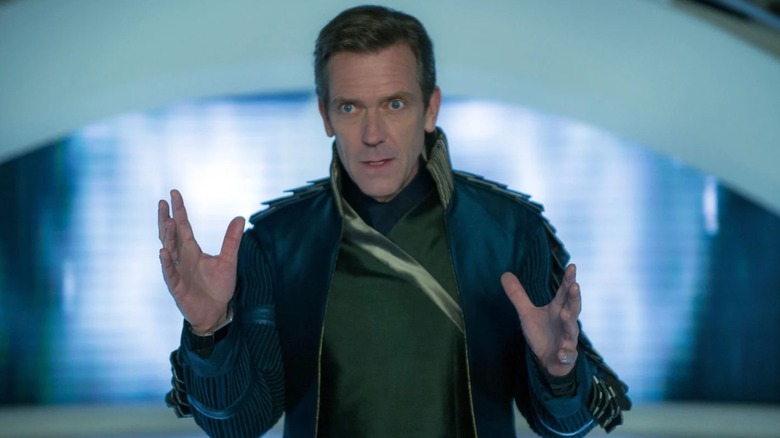
"Tomorrowland" didn't turn that many heads when it was released back in 2015. Be that as it may, there's a shining sliver of entertainment in the form of David Nix, Hugh Laurie's snide and matter-of-fact foil to George Clooney's hero of the piece. As the leader of Tomorrowland, Nix has a great monologue in the film's third act when it's revealed that, even with the power to divert humanity from its own destruction, their ignorance led him to give up trying to lend a hand and remain in the titular utopia while the rest of the world crumbles. It might be a cruel tactic, but in Nix's case it's not for lack of trying, which is brilliantly laid out in his stellar argument.
"They didn't fear their demise; they re-packaged it," Laurie's villain proclaims. "It could be enjoyed as video games, as TV shows, books, movies, the entire world wholeheartedly embraced the apocalypse and sprinted towards it with gleeful abandon." It's a razor-sharp statement in an argument that hits every note and is loaded with a bittersweet truth. Like this overlooked adventure, Nix's message gets overlooked when it absolutely shouldn't, making him another bad guy with a very good point, whether we like it or not.
Magneto - X-Men Franchise
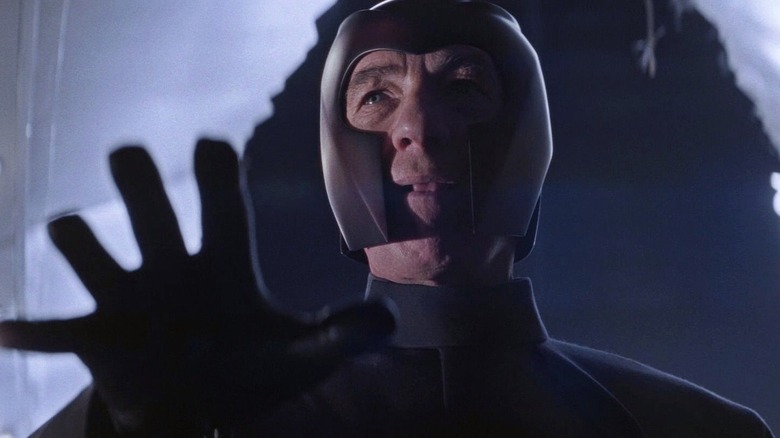
Growing up with the "X-Men" as such a staple in popular culture, you eventually realize that even with his often hostile methods, Magneto was right, after all. Humanity's fear of what they don't understand makes them dangerous to minorities that have a right to exist just like everyone else. Sure, Charles Xavier (Patrick Stewart) might be taking the noble approach of protecting those that need it, but Magneto is a little more clear-cut in who he sides with and for good reason. Seeing minorities being ostracised or vilified is a history lesson that Erik Lensherr hasn't just seen before — he was a part of it during WWII, even before he became the Master of Magnetism.
It's this history, and the hatred aimed at others like him, that makes Magneto's mission to protect and lead homo superior to a brighter future a completely understandable one. It's just his terrorist like tactics in the "X-Men" movies, which include ripping apart the Golden Gate Bridge or turning everyone into mutants, that put him on the wrong side of mutant history. It's also why, given the X-Men's impending arrival into the MCU with an all-new cast, a new Magneto could arrive after Ian McKellen's appearance in "Avengers: Doomsday." Whoever does pick up his iconic crimson helm, we can only hope that time is spent further exploring one of Marvel's most complex characters, who hovers on a fine line between anti-hero and outright villain.
Erik Killmonger - Black Panther
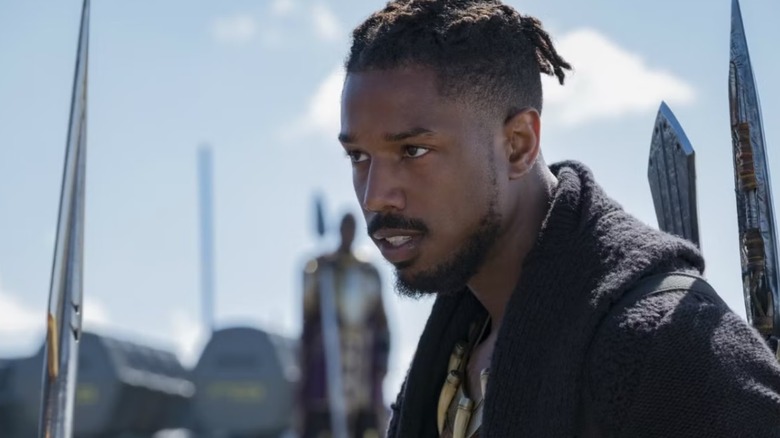
Ever since he appeared in 2018, Michael B. Jordan's Erik Killmonger has cemented himself as one of the greatest movie villains in the Marvel Cinematic Universe. That's quite a feat when the franchise includes characters like the finger-snapping tyrant, Thanos (Josh Brolin), or the master of mischief and God of Stories, Loki (Tom Hiddleston). Like every great villain, though, Killmonger's aims and reasons for them are justified, as a forgotten child of Wakanda who wields hatred at the kingdom and its former ruler who abandoned him. Thanks to the brilliant writing of Ryan Coogler and Joe Robert Cole, this hits home on both sides of the story. While T'Challa (the late, great Chadwick Boseman) learns about the dirty family secret that became "a monster of our own making," Killmonger is set on burning down a civilization that he sees as hiding itself from a world and a people that could benefit from their advancements.
It's this solid and thought-out view that makes Killmonger a villain you really do back for most of the movie, even up until his final moments. He delivers such magnetism that he made a surprise cameo in "Wakanda Forever," as well as appearances in "What If...?" Killmonger is a character we still can't get enough of, and one that fans would absolutely allow to be brought back from the dead somehow in the future if Marvel Studios were brave enough to do so.
Koba - Planet of the Apes
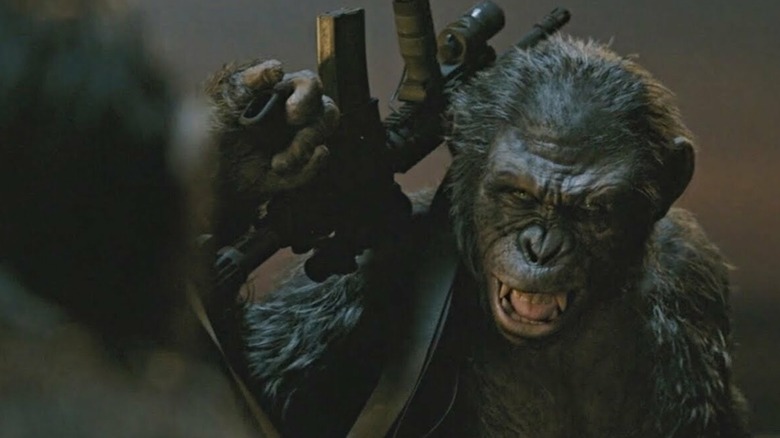
So much praise is thrown Andy Serkis' way in the Caesar era of "Planet of the Apes" movies, and rightfully so, but one actor and their character that doesn't get enough attention is Toby Kebbell as Koba in the 2014 film, "Dawn of the Planet of the Apes." Briefly introduced in "Rise of the Planet of the Apes" (then played by Christopher Gordon), Koba is a mistreated ape and a vengeful product of "human work," even before gaining increased intelligence like Caesar and his allies. By the time "Dawn" comes around, his hatred for humanity has only grown greater, regardless of his loyalty to the noble leader who set him free.
It's not enough, though, and unfortunately, Koba's quest to wipe out the remaining survivors of the ape virus leads to treachery and a fight for leadership that not all of the apes were on board with. Thankfully, Caesar, after being presumed dead, returned to take back his rightful place, but not before a fight to the death with Koba that saw the scarred simian fall to his doom. Even then, though, the bad monkey haunted Caesar's dreams long after his passing, proving that while Koba's methods were executed in a cutthroat fashion, his agenda and aims still lingered in the leader's mind, making him question whether his old frenemy made some good points after all.