

The Invention Of Digital Cameras Was Almost Buried At Kodak - Here's Why
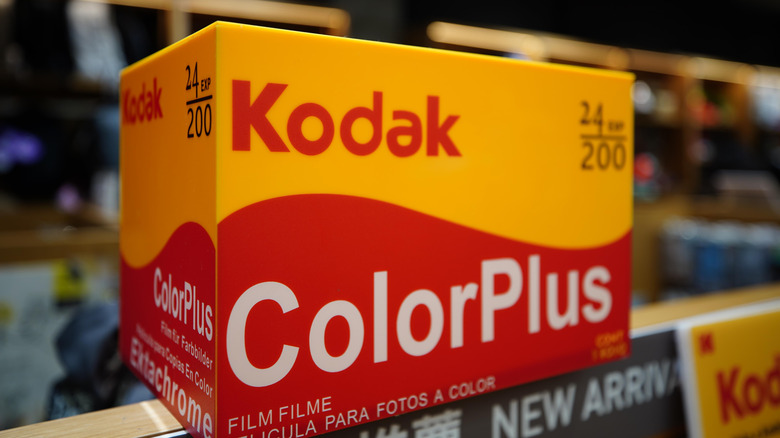
When you think of Kodak, you think of film. It's always fascinating to look at how prominent companies respond when new technology threatens to upend their existing business, and Kodak's clash with the digital revolution is a fascinating example. In the 1970s, when Kodak dominated the photographic film market and offered gadgets that shaped an entire generation, the New York-based company hesitated to embrace digital photography because of poor image quality and, more importantly, because digital threatened its hugely profitable business. The astonishing part of the story is that Kodak wasn't caught off guard by another company pushing the technology, as Kodak itself had invented it.
The story begins in 1975 when a 24-year-old Kodak engineer named Steven Sasson was given what seemed like a fairly minor task: find out if a new electronic sensor called a charge-coupled device (CCD) had any practical use. Sasson's curious mind led him to build what turned out to be the world's first digital camera. As you might imagine, it was a far cry from the kind of high-tech digital cameras enjoyed by vast numbers of people today. For example, the rudimentary device took 23 seconds to record a photo to a cassette tape (yes, tape!), and even then it was in black and white and 100 pixels square. After inspecting the results, Kodak's top team wasn't particularly impressed, concluding that people would much prefer prints over subpar digital images. But as digital image quality improved, Kodak became increasingly aware that digital photography posed a serious threat to a business model that generated huge profits from the entire photography process, from cameras and film to processing and prints. Still, Kodak knew it couldn't ignore the technology and so continued to work on it to see where it could take it.
Kodak's big choice
By 1989, it was clear that digital photography was coming down the track, whether Kodak was at the forefront or not, and Sasson's prediction in 1975 that it would challenge analog photography in 15-20 years was looking ever more prescient. The challenge for Kodak now was whether to go all in on digital photography, knowing full well that it could undermine its lucrative film business, or to hold back and protect it for as long as possible.
As major companies like Sony and Canon built electronic photography technologies through the 1980s, Kodak was also pursuing its own digital photography technologies. In 1989, for example, Sasson and his colleague Robert Hills produced a 1.2-megapixel digital SLR (single-lens reflex) with image compression and memory cards, bringing digital cameras a step closer to the form that we know today. Sasson's camera was actually good enough to sell, but in a crucial decision, the company chose not to make it, apparently fearful that it would ruin its film sales.
By this point, it seemed like the issue for Kodak was no longer about whether digital photography would become a viable option for consumers, but about when it would become a real competitor to film. In the 1990s, Kodak continued to work on digital technology while still giving full backing to its film business, which continued to generate healthy profits. In a weird way, the company seemed to be preparing for a future that at the very same time it had an incentive to delay. But the changes were happening fast, and in the end, Kodak's hand was forced.
Decline of film and Kodak reorganization
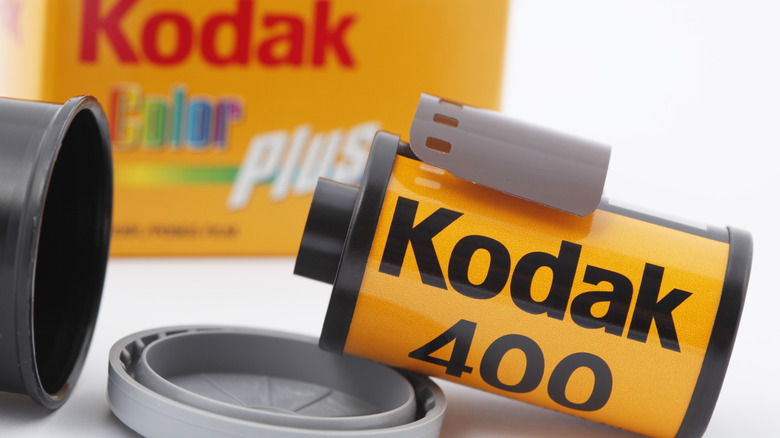
When the 1990s started, other firms were already bringing early digital cameras to market, with Fujifilm, for example, unveiling the FUJIX DS-X in 1989, and Dycam's Model 1 following a year later. The shift toward digital photography was gathering pace, putting pressure on Kodak to respond. It did so in 1991 with the Professional Digital Camera System (DCS). But the DCS still clung to Kodak's analog roots as the device, though capable of capturing 1.3-megapixel images, was built as an attachment for a modified Nikon F3 film camera.
For most of the 1990s, film sales remained profitable as camera makers continued to work on more advanced digital cameras. But by 2002, with better digital cameras on the market — some of them are even cool again — the new devices were outselling film cameras. Kodak's own digital cameras were proving popular, too, bringing it more than 20% of the U.S. market in 2004. But while making progress in the fledgling sector, Kodak's once-profitable film business was collapsing, with global third-quarter film sales falling by 20% in 2005.
Ironically, Kodak wasn't doing a bad job with its digital efforts, but the economics were vastly different than what came before. As photographers abandoned film, Kodak watched its bottom line rapidly decline since it couldn't sell enough cameras to replace its film revenue. The situation worsened, and Kodak filed for bankruptcy in 2012 before emerging as a much smaller company a year later. While Kodak saw the future, it failed to embrace it swiftly and effectively enough to transition smoothly from film, and paid the price in a drastic reorganization and a hefty tumble in overall revenue.